














Along the lines of ‘Event 201’, Public Health England conducted 11 secret pandemic modelling exercises between 2015 and 2019 to test responses to public health emergencies.
These exercises proposed measures such as restricting movement, temperature screening, and population triage, which were later implemented during the covid pandemic.
At the same time, the Connected Health Cities project was being trialled. This project aimed to use health data as a “currency for inclusive economic growth.” It links datasets across healthcare, social care and other sectors, aimed to develop a “social license” for using data-driven transformation.
Let’s not lose touch…Your Government and Big Tech are actively trying to censor the information reported by The Exposé to serve their own needs. Subscribe to our emails now to make sure you receive the latest uncensored news in your inbox…
The Real Left is publishing a series of essays titled ‘The Health and Social Care Reset for the Big Data Economy’. You can read the first part, ‘The Great Health and Social Care Reset for the Big Data Economy Part 1.1’, which is a timeline of NHS capture during the years 1970s-2013, HERE.
The following is a section of the second part, which is a timeline of NHS capture during the years 2014-2019. We have published the essay in several parts because, totalling a little under 10,500 words, it’s longer than most would read in a single sitting.
The Great Health and Social Care Reset for the Big Data Economy Part 1.2
By Emily Garcia, as published by Real Left on 27 January 2026
Table of Contents
Pandemic Preparedness Exercises: 2015-2018
Whilst the Johns Hopkins University-hosted ‘Event 201’ has been the subject of significant scrutiny in the wake of the covid-19 pandemic, less attention has been paid to the eleven secret pandemic modelling exercises Public Health England (now subsumed into the UK Security Agency [142]) conducted in collaboration with government departments between 2015 and 2019. [143]
These included the Ebola Preparedness Surge Capacity Exercise in March 2015; Exercise Alice to test response to Middle Eastern Respiratory Syndrome Coronavirus (“MERS-CoV”) in February 2016; Exercise Cygnus to test impact of a hypothetical flu pandemic in October 2016; Exercise Cerberus to assess preparedness and response to public health emergencies in February 2018; and Exercise Pica to test NHS primary care preparedness and response to pandemic influenza in Sept 2018. [144]
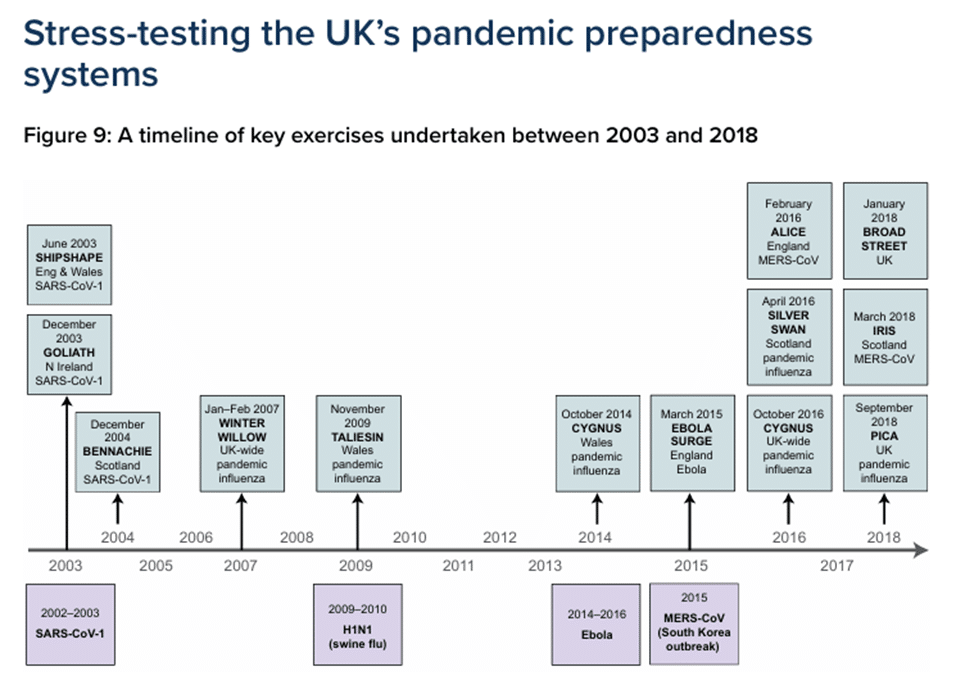
Public Health England only released details of the exercises, which were previously deemed secret on the grounds of national security, when forced to respond to a hospital consultant’s Freedom of Information request [145] after much hedging, in May 2021. The UK COVID-19 Inquiry report, released in 2024, discloses that the Local Government Association itself:
… only obtained disclosure of the [Exercise Cygnus] report as a result of legal proceedings brought by another body in 2020. It was not aware of Exercise Alice until the autumn of 2022, when its existence became known through the work of this Inquiry. There was no local government involvement in Exercise Alice, nor were its report or recommendations shared. [146]
Counter to dominant covid-19 narratives which bemoaned pandemic “unpreparedness” and the lives lost due to poor adherence to contingency plans (evident in the spin attached to some of the mainstream [corporate] media coverage [147] of the declassified documents), many of the ostensibly novel and unprecedented methods that were implemented to (purportedly) suppress covid-19 infection by the health and social care services were planned and deliberated during these exercises.
Exercise Alice recommended, “options to restrict the movement of symptomatic, exposed and asymptomatic patients” – whether voluntary or “through the imposition of restriction”; [148] temperature screening of returning travellers; [149] a web-based “live tool or system to collect data from MERS-CoV contacts”; [150] and “community sampling” [151] all of which were operationalised (see article 1.3 for more info on the latter) during the covid-19 event.
Guidance from the ‘Pandemic influenza briefing paper: NHS surge and triage’ was also enacted, which gave detailed instructions on how to carry out “population based triage,” i.e. denial of care to patients categorised as either less likely to survive, or whose lives were deemed less valuable to save in the event of surge demand. The document, which gives away that it was never intended for public consumption where it states, “The majority of the detail in this paper will not be replicated in any publicly available documentation,” explicitly calculates the number of deaths in the thousands that could be expected should it become necessary to “suspend critical care to support the wards,” [152] and advises to “cease ventilation” and “withdraw ventilation” in the event of a ‘severe pandemic’. [153]
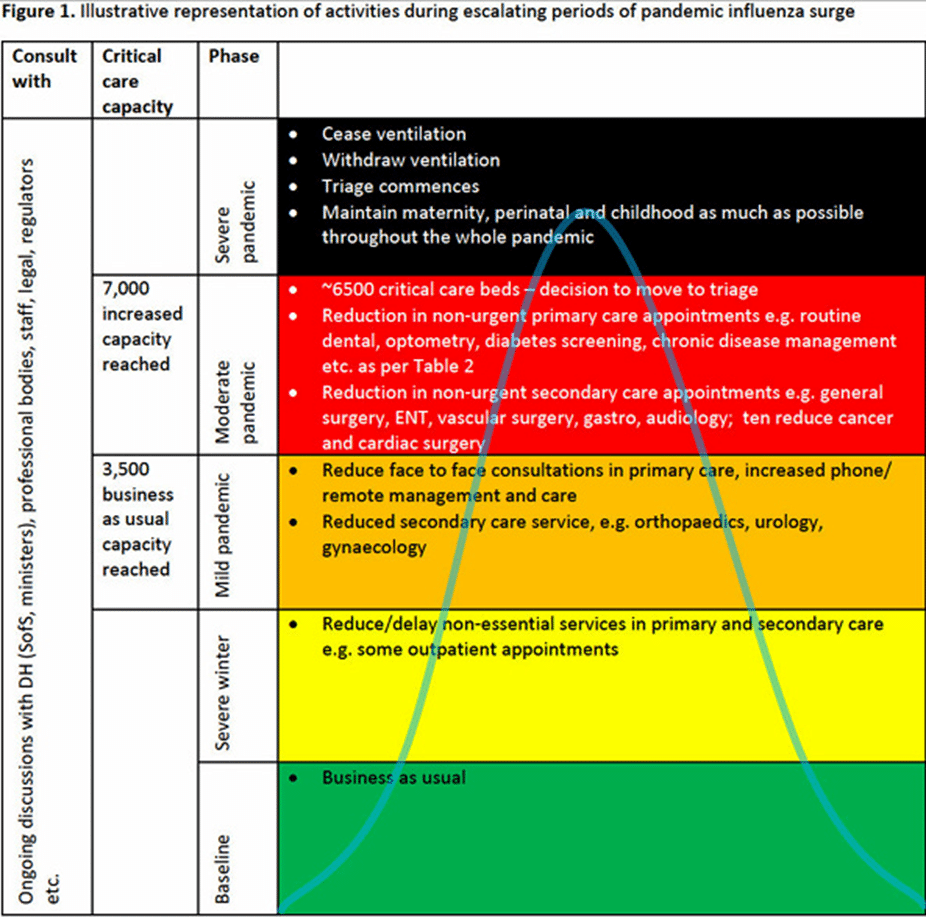
Similarly, Exercise Cygnus proposed, “Reverse-triage plans, under which patients from hospitals would be moved into social care facilities,” [154] in addition to population triage, i.e. “The emptying of all intensive care beds in the country in order … to save more lives.” [155] Then Secretary of State for Health and Social Care, Jeremy Hunt, testified at the Inquiry to expressing an unwillingness to authorise such measures during Exercise Cygnus. As a result, “entirely new protocols” were developed to allow such (non) authorisation to be circumvented.
The Parliamentary and Health Service Ombudsman’s 2024 released report, ‘End-of-life care: improving “do not attempt CPR” conversations for everyone’ found the misuse of Do Not Attempt Cardio-Pulmonary Resuscitation (“DNACPR”) notices during the pandemic raised serious questions about “whether a human rights-led approach is being taken to patients’ care”: [156]
On 20 March 2020, the National Institute for Health and Care Excellence (NICE) released guidance stating: “all adults on admission to hospital, irrespective of COVID-19 status, should be assessed for frailty using the Clinical Frailty Scale (CFS) and that comorbidities and underlying health conditions should be considered.” Different interpretations of this guidance led to allegations of blanket DNACPR decisions in hospital and residential care settings, especially for disabled people and older people. [157]
The Coronavirus Act, decried by Big Brother Watch as “the most draconian powers ever proposed in peace-time Britain,” [158] was also premeditated, at least in outline, years ahead. The 2017 ‘Pandemic Influenza Briefing paper’states:
The concept of a pandemic influenza bill has been discussed within health [sic] and across government. A number of aspects of legislation and regulations are being considered that could be amended during pandemic … [which] include things around teacher/ carer to child rations, death certification, and regulations around clinicians returning to the NHS after leaving the service for retirement or other reasons. [159]
The latter two specific concerns were legislated for in the Coronavirus Act (Schedule 2, Section 18, and Schedule 13). [160]
In Exercise Pica’s report, the emergency response to the hypothetical pandemic, including withdrawal of all but “essential skeleton services” and drastically reduced public transport provision, was envisaged as ongoing over a period of four months with a potential further winter wave. [161] If this was the timeframe for a lockdown scenario predetermined by NHS leadership, the “three weeks lockdown to flatten the curve” messaging [162] broadcast as official public health strategy to secure initial compliance, appears to have been deceptive. Second and third waves of infection were also anticipated in the report, along with potential vaccine refusal from a segment of the public, which would necessitate adapting messaging accordingly:
“There needs to be focus on an anticipated second wave vaccination programme, with members of the public potentially showing lethargy or non-compliance during the second wave which could reduce uptake.” [163]
The Connected Health Cities Project: 2016-2020
The inspiration for Connected Health Cities has been attributed to Professor Iain Buchan, [164] Associate Pro Vice Chancellor for Innovation at the University of Liverpool, who went on to lead the Liverpool Combined Intelligence for Population Health Action (“CIPHA”) project from 2020 (see Part 1.3).
The Department of Health-funded £20 million pilot was delivered by the Northern Health Science Alliance: a partnership of over 20 organisations [165] established by Universities and NHS Trusts in the North, and the Northern Academic Health Science Network. It worked to actualise a vision of health data as a “currency for inclusive economic growth” [166] through a number of initiatives.
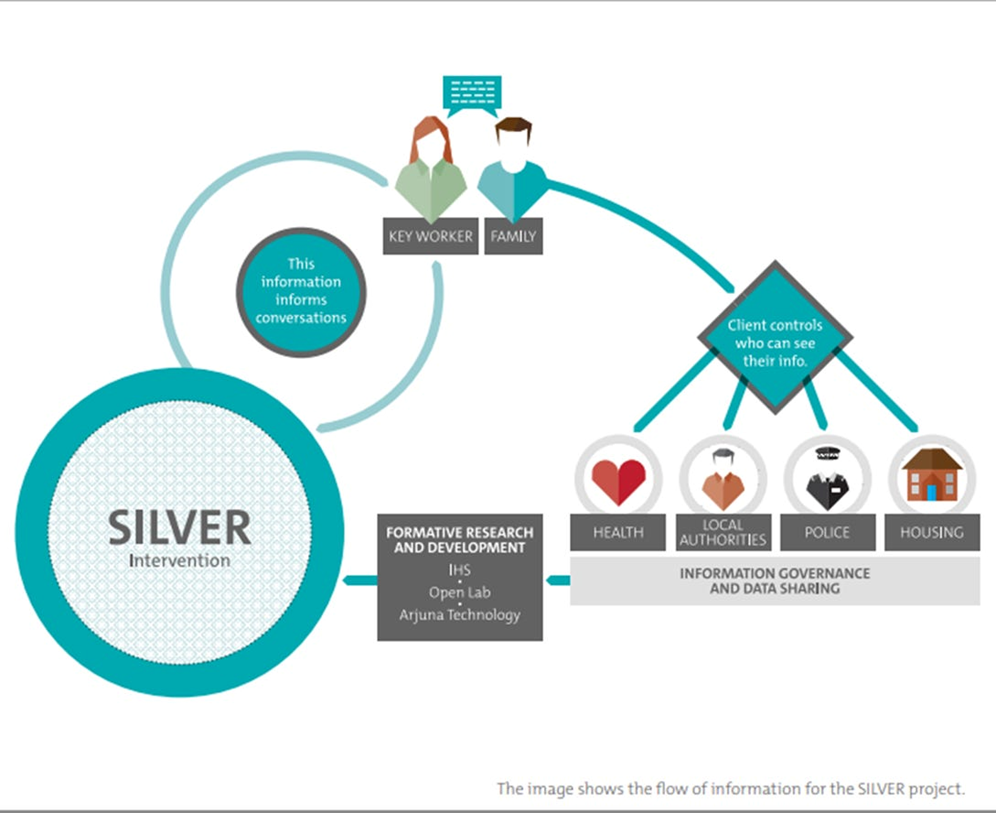
These included the Great North Care record [167] – one shared care record for the 3.6 million patients across the North East and Cumbria available to all NHS personnel and services; the Newcastle University led SILVER (Smart Interventions for Local Vulnerable Residents) project that linked datasets across healthcare, social care, criminal justice, housing and education to help agencies develop “sustainable interventions” for vulnerable families; [168] and Born in Bradford, a large-scale birth cohort research study tracking the lives of 30,000 Bradfordians [169] through linked datasets across primary care, hospital, community, laboratory, radiology and education records to “test how data linkage can support tailored and effective interventions in early childhood.” [170] This data collection included joining Born in Bradford participants’ health records with personal data, including genomics, metabolomics (i.e. the systematic study of the unique chemical fingerprints that specific cellular processes leave behind, tied to precision medicine development) and biobank samples.
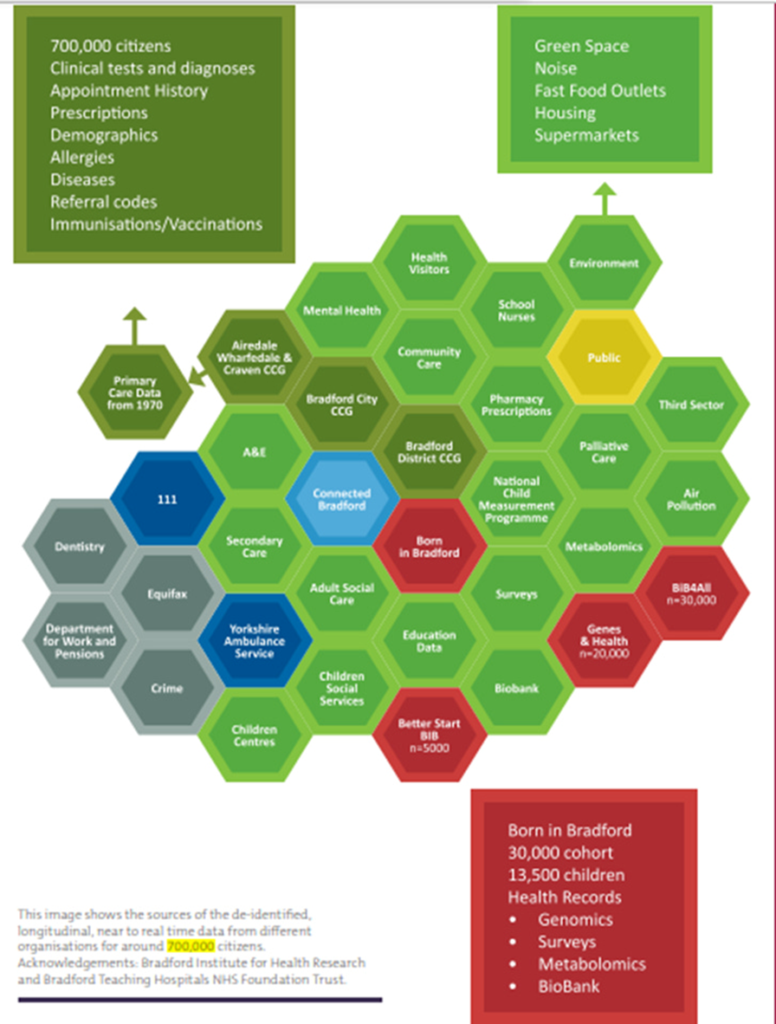
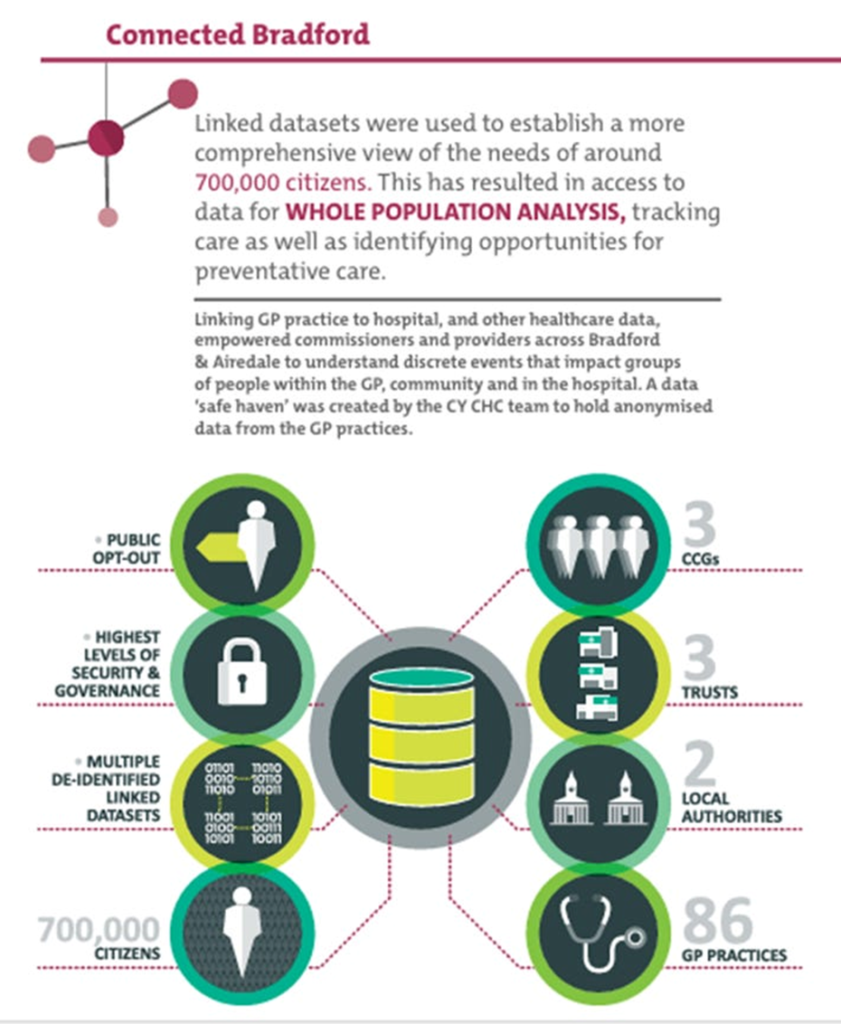
It is worth highlighting that in the same time frame that the CHC’s ‘Connected Bradford’ project was opening up access to linked datasets of 700,000 residents, the first social impact bond (“SIB”) in the city aimed at reducing rates of full-time residential care entry for children with learning disabilities and challenging behaviour, ‘Bradford Positive and Included’, [171] was launched (April 2017).
Social Finance engaged with Bradford District Council, NHS Airedale and Wharfedale Craven Clinical Commissioning Groups and the Schools Forum to secure financial support from Care, Health and Education budget holders to co-commission the SIB. A ‘Schools Forum’ document mentions that the proposed new service aligns with the focus of the National Transforming Care Plan led by NHS England, “to provide more care in the community, with personalised support delivered by multi-disciplinary health and care teams.” [172]
One of the Connected Health Cities stated three principal objective was to “develop a social license for the use of data driven transformation.” [173]
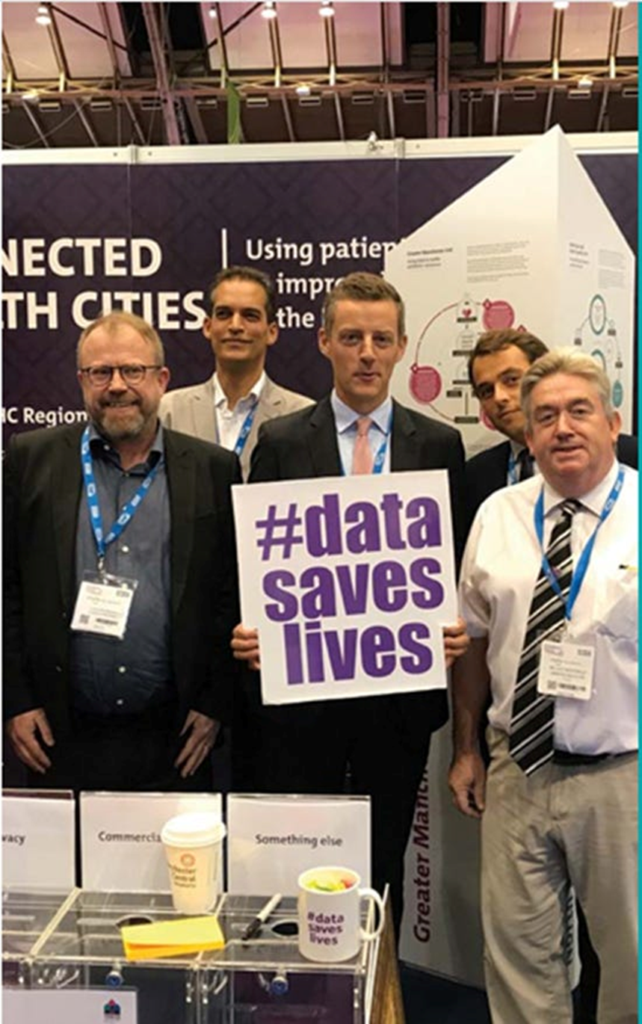
The report states, “Citizen involvement and civic pride are key to harnessing whole system data and analytics without controversy … media coverage of Connected Health Cities has been overwhelmingly positive with the #DataSavesLives movement spreading as far afield as Australia.” [174]
Their approach to gaining public trust in the use of sharing health data for “research purposes” [175] included citizens’ juries; focus groups and public debates; and, musical performances and immersive games. [176] An immersive ‘Earworm Game’ was deployed at the 2018 Bluedot festival and other subsequent festivals, which involved “[P]layers working together to uncover the best treatment for a virus that attacks the brain over five minutes. The better they are at accessing patient data, putting data security in place and gaining public trust, the more likely they are to win.” [177]
‘The Digital Think Tank’ led by the University of Cumbria was also employed, seemingly, to disabuse healthcare professionals of their “reluctance to share data for clinical purposes (due to data confidentiality and security concerns).” [178] “Active liaison and engagement activities” carried out with clinicians and GPs resulted in 100% of the 86 GP practices selected for the Born in Bradford study agreeing to sign new data-sharing agreements. [179] These agreements included access to historical datasets up to 30 years backdated, for “research, improvement and innovation projects.” [180] There is no information provided about whether individual patients at these practices were notified or given an opt out option for their pseudonymised data being used thusly.
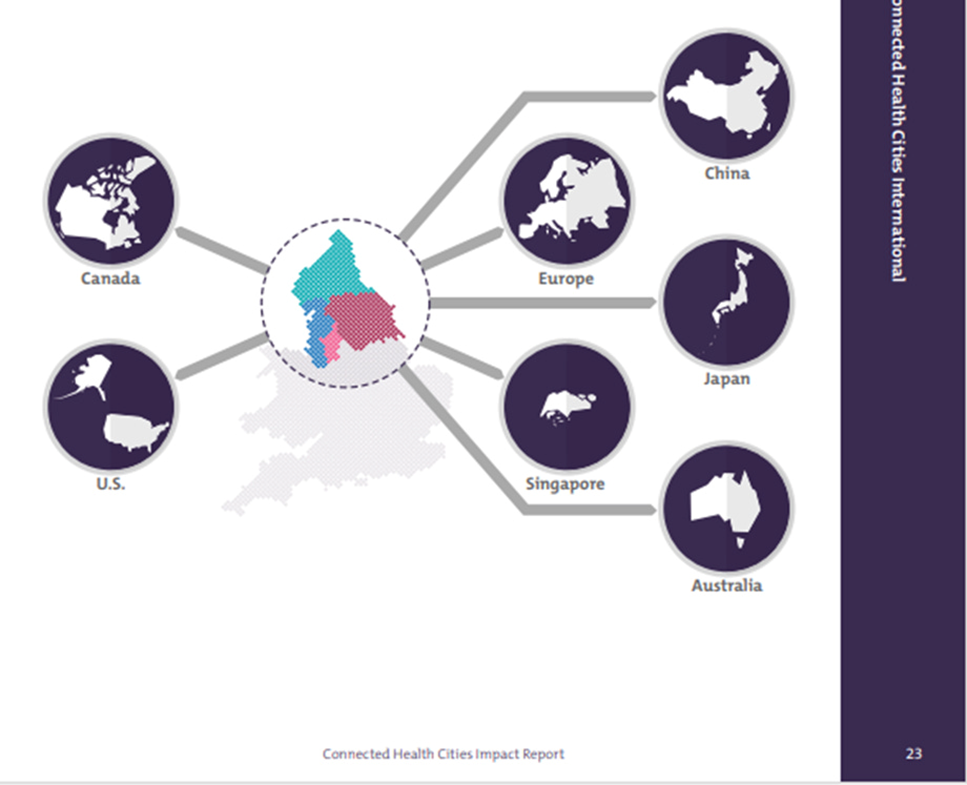
Connected Health Cities developed a pipeline of international collaborations by health system leaders for “scale-up, sustainability and knowledge transfer,” which included the Institute for Global Health Policy Research, and the ‘WEF Centre for the Fourth Industrial Revolution’, Japan. [181]
References
- [142] Digicomply. ‘Public Health England (PHE) – Transitioning to UK Health Security Agency (UKHSA).’ 29 October 2023. [Online]: https://www.digicomply.com/food-regulatory-bodies-standards-and-authorities/public-health-england-phe-transitioning-to-uk-health-security-agency-ukhsa (https://archive.is/Eb4AC)
- [143] Dalton, J. ‘Eleven Pandemic Exercises were Carried out Before Covid, Government Admits.’ The Independent. 11 June 2021. [Online]: https://www.independent.co.uk/news/uk/home-news/pandemic-exercise-covid-coronavirus-phe-nhs-b1863753.html (https://archive.is/CZajc)
- [144] Baroness Hallett. UK Covid-19 Inquiry module 1: The resilience and preparedness of the United Kingdom. A report by The Rt Hon the Baroness Hallett DBE Chair of the UK Covid-19 Inquiry. London: HH Associates Ltd, 18 July 2024. [Online]: https://covid19.public-inquiry.uk/wp-content/uploads/2024/07/18095012/UK-Covid-19-Inquiry-Module-1-Full-Report.pdf p. 198
- [145] CyngusReports. ‘Timeline.’ [Online]: https://cygnusreports.org/timeline/ (https://cygnusreports.org/timeline/)
- [146] Baroness Hallett. UK Covid-19 Inquiry module 1: The resilience and preparedness of the United Kingdom. A report by The Rt Hon the Baroness Hallett DBE Chair of the UK Covid-19 Inquiry. London: HH Associates Ltd; 18 July 2024. [Online]: https://covid19.public-inquiry.uk/wp-content/uploads/2024/07/18095012/UK-Covid-19-Inquiry-Module-1-Full-Report.pdf p. 116
- [147] Booth, R. ‘Coronavirus Report Warned of Impact on UK Four Years Before Pandemic.’ The Guardian. 7 October 2021. [Online]: https://www.theguardian.com/politics/2021/oct/07/coronavirus-report-warned-of-impact-on-uk-four-years-before-pandemic (https://archive.is/9P0zE)
- [148] Public Health England. Report: Exercise Alice: Middle East Respiratory Syndrome coronavirus (MERS Cov-2). 15 February 2016. [Online]: https://s3.documentcloud.org/documents/21080373/report-exercise-alice-middle-east-respiratory-syndrome-15-feb-2016.pdf p. 12
- [149] Ibid., p. 11
- [150] Ibid., pp. 13, 16.
- [151] Ibid., p. 4
- [152] NHS England. Pandemic influenza briefing paper: NHS surge and triage. 8 September 2017. [Online]: https://cygnusreports.org/wp-content/uploads/2021/07/Pandemic-Influenza-Briefing-Paper-NHS-Surge-and-Triage.pdf p. 4
- [153] Ibid., p. 12
- [154] Baroness Hallett. UK Covid-19 Inquiry module 1: The resilience and preparedness of the United Kingdom. A report by The Rt Hon the Baroness Hallett DBE Chair of the UK Covid-19 Inquiry. London: HH Associates Ltd; 18 July 2024. [Online]: https://covid19.public-inquiry.uk/wp-content/uploads/2024/07/18095012/UK-Covid-19-Inquiry-Module-1-Full-Report.pdf p. 113
- [155] Ibid., p. 148
- [156] Parliamentary and Health service Ombudsman. End-of-life care: improving ‘do not attempt CPR’ conversations for everyone. 2024. [Online]: https://www.ombudsman.org.uk/sites/default/files/End_of_life_care_improving_do_not_attempt_CPR_conversations_for_everyone.pdf p. 7
- [157] Parliamentary and Health service Ombudsman. End-of-life care: improving ‘do not attempt CPR’ conversations for everyone. 2024. [Online]: https://www.ombudsman.org.uk/sites/default/files/End_of_life_care_improving_do_not_attempt_CPR_conversations_for_everyone.pdf p. 15
- [158] Big Brother Watch. ‘”Two Years is too Long” for “Draconian” Coronavirus Bill Warn MPs and Rights Groups.’ 23 March 2020. [Online]: https://bigbrotherwatch.org.uk/press-releases/two-years-is-too-long-for-draconian-coronavirus-bill-warn-mps-rights-groups/ (https://archive.is/lRKxN)
- [159] NHS England. Pandemic influenza briefing paper: NHS surge and triage. 8 September 2017. [Online]: https://cygnusreports.org/wp-content/uploads/2021/07/Pandemic-Influenza-Briefing-Paper-NHS-Surge-and-Triage.pdf p. 8
- [160] Great Britain. Coronavirus Act 2020. London: The Stationery Office. 25 March 2020. [Online]: https://www.legislation.gov.uk/ukpga/2020/7/notes/division/39/index.htm (https://archive.is/yuo0E)
- [161] Public Health England. Report on Exercise Pica: NHS primary care preparedness and response to pandemic influenza. 5 September 2018. [Online]: https://cygnusreports.org/wp-content/uploads/2021/10/Exercise-Pica-full-report.pdf p. 19
- [162] Lilico, A. ‘Three Questions the Covid Inquiry Must Answer.’ The Telegraph. 14 June 2023. [Online]: https://shorturl.at/2YoeX
- [163] Public Health England. Report on Exercise Pica: NHS primary care preparedness and response to pandemic influenza. 5 September 2018. [Online]: https://cygnusreports.org/wp-content/uploads/2021/10/Exercise-Pica-full-report.pdf p. 15
- [164] Northern Health Science Alliance. Connected Health Cities impact report 2016-2020. Newcastle: The Northern Health Science Alliance; May 2020. [Online]: https://86a0896d-fe0e-4794-831e-b6daadd07e7c.usrfiles.com/ugd/86a089_bb3031f66a974501a2f4437bc3c3c631.pdf p. 4
- [165] Ibid., p. 7
- [166] Ibid., p. 11
- [167] Ibid., p. 124
- [168] Ibid., p. 129
- [169] Ibid., p. 46
- [170] Ibid., p. 113
- [171] Government Outcomes Lab. ‘Bradford positive and included.’ [Online]: https://golab.bsg.ox.ac.uk/knowledge-bank/indigo/impact-bond-dataset-v2/INDIGO-POJ-0112/ (https://archive.is/le0gz)
- [172] Bradford Council. Matters arising 20 July 2016: social impact bond (update). [Online]: https://bradford.moderngov.co.uk/documents/s13012/MATTERS%20ARISING%20-%20SIB.pdf (https://archive.is/5GPNk)
- [173] Northern Health Science Alliance. Connected Health Cities impact report 2016-2020. Newcastle: Northern Health Science Alliance; May 2020. [Online]: https://86a0896d-fe0e-4794-831e-b6daadd07e7c.usrfiles.com/ugd/86a089_bb3031f66a974501a2f4437bc3c3c631.pdf p. 17
- [174] Ibid., p. 10
- [175] Ibid., p. 94
- [176] Ibid., p. 30
- [177] Ibid., p. 36
- [178] Ibid., p. 71
- [179] Ibid., p. 113
- [180] Ibid., p. 114
- [181] Ibid., p. 23
Featured image taken from ‘NHS75 – History of the NHS’, NHS North East London, 4 July 2023
The Expose Urgently Needs Your Help…
Can you please help to keep the lights on with The Expose’s honest, reliable, powerful and truthful journalism?
Your Government & Big Tech organisations
try to silence & shut down The Expose.
So we need your help to ensure
we can continue to bring you the
facts the mainstream refuses to.
The government does not fund us
to publish lies and propaganda on their
behalf like the Mainstream Media.
Instead, we rely solely on your support. So
please support us in our efforts to bring
you honest, reliable, investigative journalism
today. It’s secure, quick and easy.
Please choose your preferred method below to show your support.

Categories: Breaking News, UK News
My it’s very inception the NHS was set up for the primary purpose of tax fraud, for the benefit of the pharmaceutical industry and various elite characters.
https://www.youtube.com/watch?v=N-Q34vnNaWs everyone should c this
Ever since the doctors at Brighton eye hospital refused to discuss my assertion that convid was a hoax, I have refused to engage with the National Harm Service. They said they ‘weren’t allowed’ to talk about it. Wtf? Allowed? By whom? Very dodgy.