














Fashions in medicine can be just as fleeting and ill-conceived as those in clothing. The difference is: fashions in medicine have potentially deadly consequences.
In the following, Dr. Vernon Coleman describes historical examples of medical fashions to demonstrate, before highlighting that in modern times, these medical fashions are driven by drug companies promoting their new products.
Let’s not lose touch…Your Government and Big Tech are actively trying to censor the information reported by The Exposé to serve their own needs. Subscribe to our emails now to make sure you receive the latest uncensored news in your inbox…
Badly conceived fashions in clothes may embarrass you, but ill-conceived fashions in medicine may kill you. And the fashions in medicine have, by and large, as much scientific validity as the fashions in the rag trade.
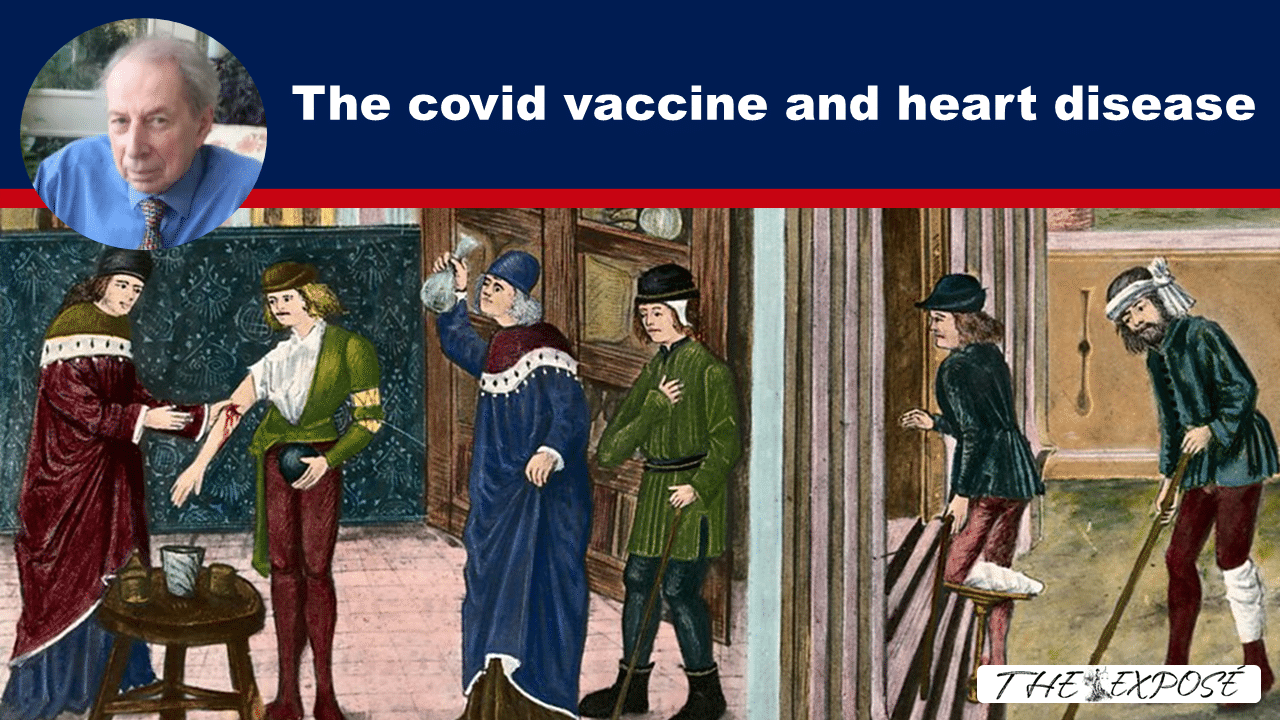
The most obvious fashions in medicine relate to treatments. For example, a couple of centuries ago, enemas, purges and bleedings were all the rage. In 17th century France, Louis XIII had 212 enemas, 215 purges and 47 bleedings in a single year. The Canon of Troyes is reputed to have had a total of 2,190 enemas in a two-year period; how he found time to do anything else is difficult to imagine. By the mid-19th century, enemas were a little last year’s style and bleeding was the in-thing. Patients would totter into their doctor’s surgery, sit down, tuck up their sleeves and ask the doctor to “draw me a pint of blood.” Bleeding was the universal cure, recommended for most symptoms and ailments. Feeling a little under the weather? A little light bleeding should soon put you to rights. Constant headaches? We’ll soon have that sorted for you, sir. Just roll up your sleeve. Bit of trouble down below, madam? Not to worry. Slip off your frock and hold your arm out.
A little later, in the 19th century, doctors put their lancets away and started recommending alcohol as the new panacea. Brandy was the favoured remedy in the doctor’s pharmacopoeia. People took it for almost everything. And when patients developed delirium tremens, the recommended treatment was more alcohol. If things got so bad that the brandy didn’t work, doctors added a little opium. Those were the days to be ill. Hypochondriacs must have had a wonderful time.
In the years from the 1930’s onwards, removing tonsils became the fashionable treatment. Tonsils were removed from between a half and three-quarters of all children in the 1930’s. This often useless and unnecessary (and always potentially hazardous) operation is less commonly performed these days, but in the 1970’s over a million such operations were done every year in Britain alone. Doctors used to rip out tonsils on the kitchen table and toss them to the dog. Between 200 and 300 deaths a year were caused by the operation. One suspects that few, if any, of those unfortunate children would have died from tonsillitis.
Diseases go in cycles, too. In the early 19th century, the fashionable diagnosis was “inflammation.” Then, when patients and doctors tired of that, the new keyword was “debility.” Doctors didn’t know terribly much and so their diagnoses, like their treatments, tended to be rather general.
These days, patients expect more specific diagnoses and doctors are invariably happy to oblige.
One year, everyone will be suffering from asthma. It will be the disease of the moment, just as the mini skirt or ripped jeans may drift mysteriously in and out of fashion. Another year, arthritis will be the fashionable disease as a drug company persuades journalists to write articles extolling the virtues (and disguising the vices) of its latest product. The cycle is a relatively simple one. The drug company with a new and profitable product to sell (usually designed for some long-term – and therefore immensely profitable – disorder) will send teams of well-trained representatives around to talk to family physicians, give them presents and take them out for expensive luncheons. The sales representatives will be equipped with information showing that the disorder in question is rapidly reaching epidemic proportions, lists of warning symptoms for the doctor to watch out for and information about the drug company’s new solution to the problem. Because the product will be new to the market, there will probably be very little evidence available about side effects and the sales representative will be able to accurately describe the drug as extremely “safe.” Older drugs, well-tried, possibly effective and probably safer than the new replacement, will be discarded as out-of-date. After all, their side effects will, over the years, have been well-documented.
There are even non-existent diseases which seem to me, and, I suspect, a growing number of other physicians, to have been originally invented in order to find a use for expensive medicinal compounds (and enthusiastically welcomed by parents who find the fictitious disease to be a handy and enormously useful explanation for bad behaviour).
Not surprisingly, thousands of family doctors will respond to this hard sell system by diagnosing more of the disease in question and handing out fistfuls of prescriptions for the recommended product. As the disease subsequently seems to become more widespread, articles will appear about it in newspapers and magazines and television pundits will start to talk about it. Every patient who has the appropriate symptoms (however mildly) will be convinced that he or she is suffering from the disease in question. Special groups will be set up (usually supported by one or more drug companies), and another industry will be born. And the number of prescriptions being written for the new wonder product will soon rocket – pushing up drug company profits dramatically.
Then, a year or so later, patients and doctors alike will become aware of the many side effects associated with the new alleged wonder product, and prescribing levels will fall. It is then the turn of some other product and some other disease to take the limelight and some other drug company to enjoy a dramatic boost in its profits.
There are fashions in diseases and treatments just as much as there are fashions in frocks and suits.
NOTE: The above is extracted from the book `101 Things I have Learned’ by Vernon Coleman.
About the Author
Vernon Coleman, MB ChB DSc, practised medicine for ten years. He has been a full-time professional author for over 30 years. He is a novelist and campaigning writer and has written many non-fiction books. He has written over 100 books, which have been translated into 22 languages. On his website, HERE, there are hundreds of articles which are free to read. Since mid-December 2024, Dr Coleman has also been publishing articles on Substack; you can subscribe to and follow him on Substack HERE.
There are no ads, no fees and no requests for donations on Dr. Coleman’s website or videos. He pays for everything through book sales. If you would like to help finance his work, please consider purchasing a book – there are over 100 books by Vernon Coleman available in print on Amazon.
Featured image: A medieval illuminated manuscript showing doctors treating a patient. The doctor on the left is examining the patient’s urine while the other is bleeding him into a bowl. Source: BBC Bitesize
The Expose Urgently Needs Your Help…
Can you please help to keep the lights on with The Expose’s honest, reliable, powerful and truthful journalism?
Your Government & Big Tech organisations
try to silence & shut down The Expose.
So we need your help to ensure
we can continue to bring you the
facts the mainstream refuses to.
The government does not fund us
to publish lies and propaganda on their
behalf like the Mainstream Media.
Instead, we rely solely on your support. So
please support us in our efforts to bring
you honest, reliable, investigative journalism
today. It’s secure, quick and easy.
Please choose your preferred method below to show your support.

Categories: Breaking News, World News