













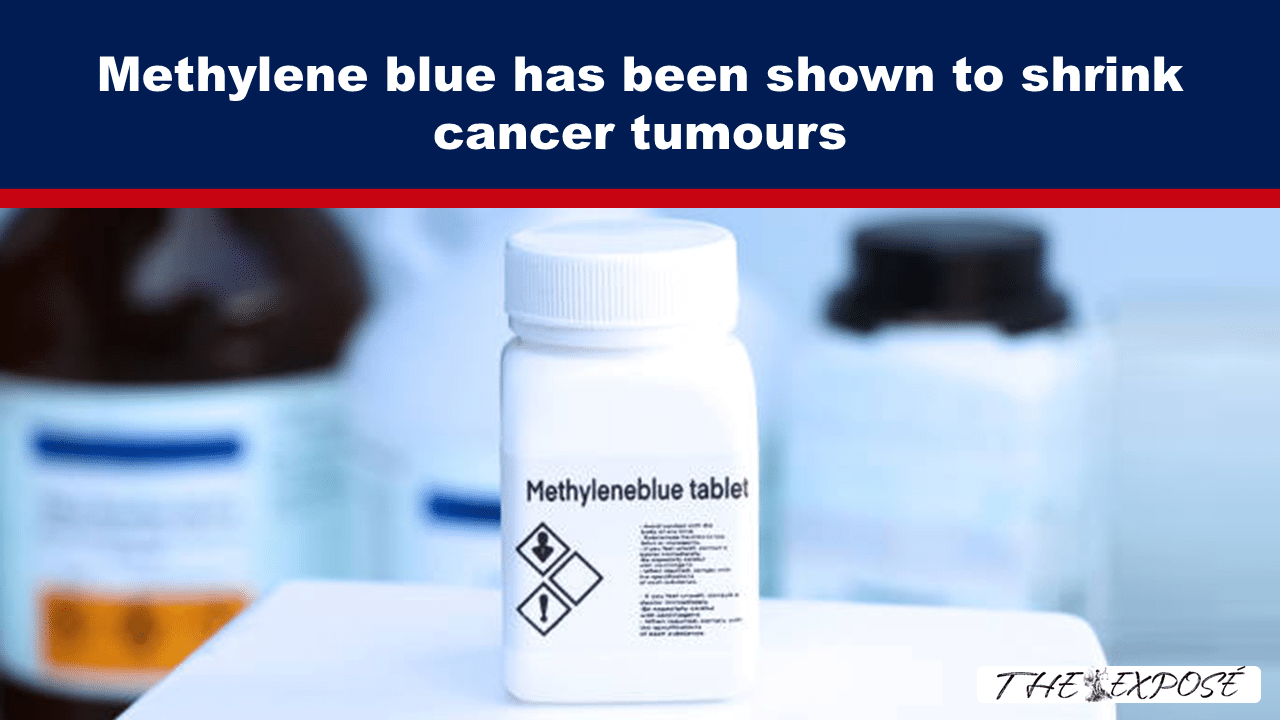
Methylene blue has been shown to shrink tumours and slow cancer growth by targeting cancer cell metabolism and energy production.
Photodynamic therapy with methylene blue uses light activation to destroy cancer cells while leaving healthy cells unharmed, making it a more precise treatment option.
Research on ovarian cancer found that methylene blue forces tumours to shift away from their preferred energy source, making them more vulnerable to treatment.
Unlike chemotherapy, methylene blue treatment does not cause significant side effects or toxicity, making it a promising option for patients with drug-resistant cancers.
Proper dosing is important. Just 5 milligrams of pharmaceutical-grade methylene blue per day is enough to reduce cellular stress and support mitochondrial health.
Let’s not lose touch…Your Government and Big Tech are actively trying to censor the information reported by The Exposé to serve their own needs. Subscribe to our emails now to make sure you receive the latest uncensored news in your inbox…
A Closer Look at the Anticancer Properties of Methylene Blue
Table of Contents
- Introduction
- Methylene Blue Photodynamic Therapy Shrinks Tumours
- New Technology Improves Bioavailability of Methylene Blue
- Methylene Blue Disrupts Cancer Cell Metabolism
- Safety and Dosage Recommendations for Methylene Blue
- My Personal Way of Taking Methylene Blue
- Frequently Asked Questions About the Anticancer Potential of Methylene Blue
- Sources and References
- About the Author
Introduction
Conventional cancer treatments often come with debilitating side effects. For example, chemotherapy and radiation therapy not only target tumours but also damage healthy cells, leaving patients weakened and vulnerable to infections. In an effort to find safer treatment options for patients, researchers are now testing the efficacy of methylene blue – a commonly used dye that enhances cellular energy production – in treating cancer.
Methylene Blue Photodynamic Therapy Shrinks Tumours
A systematic review published in Frontiers in Pharmacology analysed the effects of methylene blue in photodynamic therapy for cancer treatment. Researchers reviewed 10 preclinical studies from different countries assessing how methylene blue, when activated by light, impacts tumour growth.
• Methylene blue targets different cancers. The analysis covered different types of cancer, including colorectal tumours, melanoma and carcinoma, highlighting methylene blue’s ability to shrink tumours through a highly targeted mechanism that spares healthy tissue. A total of 133 mice were used, with 59 receiving methylene blue photodynamic therapy and 74 serving as untreated controls.1
• Antitumour properties of methylene blue. The researchers found that methylene blue significantly reduced tumour sizes in seven of the 10 studies, with reductions ranging from 12% to complete tumour elimination.
The largest effects were seen in colorectal cancer models, where tumours shrank by up to 99.9%, while some breast cancer models showed slower tumour progression rather than outright shrinkage. These results show that methylene blue has strong anticancer effects, though its impact varies depending on tumour type and drug delivery method.2
• The use of light to fight cancer. Photodynamic therapy relies on methylene blue’s ability to absorb light in the 630 to 680 nanometre wavelength range. When exposed to this specific type of light, methylene blue generates reactive oxygen species (“ROS”), highly reactive molecules that destroy cancer cells from within.
This process selectively targets tumour cells because methylene blue accumulates in malignant tissue while sparing healthy cells. The review found that this light-activated destruction was particularly effective in skin and colorectal tumours, leading to significant tumour reduction within weeks of treatment.3
New Technology Improves Bioavailability of Methylene Blue
One of the most promising findings involved the use of nanotechnology to enhance methylene blue’s anticancer effects. Five studies included in the review used nano formulations – tiny carriers designed to improve the drug’s stability and absorption.4
• Increased bioavailability. According to the researchers, the nano-based versions of methylene blue led to even greater tumour reduction than traditional injections. For instance, a breast cancer study using methylene blue-loaded nanoparticles resulted in complete tumour eradication.5
• Experiments in dosages. Tumour response also depended on the number of methylene blue treatments administered. While some studies used a single injection, others administered up to seven doses over time. More frequent treatments generally resulted in greater tumour shrinkage. For example, one carcinoma model that received seven doses showed significantly slower tumour growth compared to models that received only one or two doses.6
• Results are positive, but sometimes inconsistent. While methylene blue photodynamic therapy was effective in most studies, the review noted some inconsistencies. In a few cases, tumours did not shrink but instead grew more slowly than untreated tumours. This was observed in some breast cancer models, where tumour reduction was not as dramatic as in other cancers.
Researchers theorise that this variation is due to differences in how well methylene blue is absorbed in different tissue types. Some cancers may require modifications in dosing, delivery methods or additional combination therapies to enhance treatment effects.7
• Improved antitumor response. Beyond its ability to destroy cancer cells, methylene blue also helps enhance the immune system’s response to tumours. The meta-analysis shows that ROS generated during photodynamic therapy triggers immune activation, helping the body recognise and attack remaining cancer cells.
This immune-boosting effect likely explains why some tumours continued to shrink even after photodynamic therapy sessions ended. However, more research is needed to confirm this mechanism to help improve long-term treatment outcomes.8
• Safe to use. Methylene blue’s safety profile is another advantage noted in the review. Unlike chemotherapy and radiation, which cause widespread damage to healthy cells, photodynamic therapy with methylene blue resulted in minimal side effects in animal models.
The treatment selectively targeted cancerous tissue without causing significant harm to surrounding healthy cells, making it a promising option for patients who cannot tolerate conventional treatments. Additionally, methylene blue is relatively inexpensive, meaning it offers a more affordable alternative to expensive targeted cancer therapies.9
These findings reinforce methylene blue’s growing reputation as a powerful tool in cancer treatment. By leveraging light-activated therapy, this compound offers a way to precisely target tumours while minimising damage to healthy cells.10
Methylene Blue Disrupts Cancer Cell Metabolism
In an animal study published in Cancers, a team of Canadian researchers explored how methylene blue affects ovarian cancer growth at the metabolic level. The findings revealed that methylene blue significantly slowed tumour growth, and more importantly, targets cancer cell metabolism, altering how tumours generate energy and making them more vulnerable to destruction.11
• Methylene blue works as a chemotherapy adjunct. The researchers used an ovarian cancer model where human tumour cells were implanted into immunodeficient mice. These particular cells were resistant to carboplatin, a chemotherapy drug commonly used to treat ovarian cancer. This resistance is a major problem in real-world treatment, as many patients eventually stop responding to standard chemotherapy.
The study compared multiple treatment groups – mice receiving methylene blue alone, methylene blue combined with carboplatin, carboplatin alone and an untreated control group. Tumours in the methylene blue group grew significantly slower than those in the control and carboplatin-only groups, demonstrating its effectiveness even against drug-resistant cancer.12
• Cancer cell energy production is affected. Cancer cells thrive on a dysfunctional metabolism known as the Warburg effect, which prioritises glucose fermentation over normal oxygen-based energy production. This metabolic switch allows tumours to grow rapidly and resist many treatments.
With this in mind, the study found that methylene blue disrupted this process, forcing cancer cells to rely on oxygen-based energy production again. This shift puts immense stress on the tumour cells, making it harder for them to survive and multiply.13
• Mitochondrial genes are targeted. Cancer cells treated with methylene blue had lower expression of key respiratory chain genes, particularly those involved in complex IV, which is responsible for oxygen reduction.
In other words, methylene blue interfered with the tumour’s ability to efficiently process oxygen, further disrupting its energy supply. This effect was much more pronounced in cancer cells than in normal cells, reinforcing methylene blue’s selective action against tumours.14
• Virtually nontoxic. Methylene blue did not cause noticeable toxicity in the test mice. Unlike chemotherapy, which often leads to severe side effects like weight loss and immune suppression, mice receiving methylene blue maintained stable body weight and showed no signs of distress.
This is a critical advantage, as one of the biggest challenges in cancer treatment is balancing effectiveness with patient quality of life. The ability to target tumours without causing widespread damage makes methylene blue an attractive option for future therapies.15
These findings provide strong evidence that methylene blue is not just a photodynamic agent but also a metabolic disruptor in cancer therapy. By forcing tumours to shift away from their preferred energy source, methylene blue makes them more vulnerable to treatment.16
Safety and Dosage Recommendations for Methylene Blue
Based on these findings, it’s easy to fall into the idea that “more is better” when it comes to taking methylene blue for your health. However, don’t fall into this trap. As mentioned in my interview with metabolic health expert Georgi Dinkov, getting the proper dose is important to avoid severe adverse effects. One example is serotonin syndrome – a fatal condition caused by excessive serotonin levels in the brain.
• Contraindications of methylene blue. It is a potent monoamine oxidase type A (“MAO-A”) inhibitor. This means that when it is combined with a selective serotonin reuptake inhibitor (“SSRI”) or other serotonergic drugs, your serotonin levels can increase to dangerous levels.
Methylene blue can interact with other medications, too, including other anti-depressants and anti-malarials, altering their efficacy or causing adverse reactions. In addition, methylene blue is contraindicated for people diagnosed with glucose-6-phosphate dehydrogenase (“G6PD”) deficiency due to the risk of haemolytic anaemia (a blood disorder wherein your red blood cells break down faster than your body can replace them).
• Your urine will turn blue. Be aware that methylene blue can stain your urine and occasionally, your tongue. While these effects are harmless, it will most likely surprise you when it happens.
• False pulse oximeter readings. High doses can also interfere with pulse oximeter readings due to its light absorption properties, resulting in falsely low oxygen saturation readings.
• A note for those with kidney damage. If you have severe renal insufficiency, it would be wise to use methylene blue with caution and under close medical supervision, as impaired kidney function influences how fast drugs clear from your system.
• Other side effects of methylene blue. Examples include mild and transient gastrointestinal discomfort, such as nausea and diarrhoea. While rare, a wide range of allergic reactions, from skin rashes to life-threatening anaphylaxis, can also occur. Headaches and confusion have also been reported. Though less common, cardiovascular effects, such as increased blood pressure and palpitations, could also occur.
• Low doses are better. Methylene blue is better taken at small, daily doses, ranging from 5 to 15 milligrams (mg), according to Dinkov, especially for long-term use. This is the sweet spot for the diverse benefits of methylene blue without increasing your serotonin levels. High doses of methylene blue are generally reserved for therapeutic applications, and even then, it needs to be done under the supervision of a medical practitioner.
If you’re considering adding methylene blue to your health routine, consult with a knowledgeable medical professional first. Together, you’ll be able to work out the dosage specific to your needs, as well as warn you of potential harmful interactions with any medications you’re currently taking.
My Personal Way of Taking Methylene Blue
When it comes to buying methylene blue, you’ll find three types for sale: industrial-grade, chemical-grade (laboratory-grade) and pharmaceutical-grade.
• Buy pharmaceutical-grade methylene blue. Out of the three, the only one you should ever use is the pharmaceutical-grade variety, ideally in solid, capsule or tablet forms. Avoid liquid solutions of methylene blue as dissolving it in water significantly decreases its effectiveness after 48 to 72 hours.
• Don’t use methylene blue for aquariums. You’ve probably seen methylene blue used in maintaining aquariums. That’s because it contains antifungal, antiparasitic and oxygen-transporting properties. While those benefits also sound enticing for therapeutic usage, this type of methylene blue often contains additional harmful contaminants, even posing serious health risks to your aquatic pets.
Never use methylene blue designed for aquariums or other animal-related applications. To protect your health, always choose pharmaceutical-grade products, as it undergoes rigorous testing to confirm it is free from impurities.
• Methylene blue will help with reductive stress. Remember not to over-rely on methylene blue to achieve optimal health. In my own case, I have eliminated my regular intake of methylene blue. I find that my daily walks by the ocean are incredibly helpful in managing reductive stress naturally.
However, during times when I’m unable to take a walk by the beach, I would consider taking 5 mg of methylene blue daily, adjusting to 3 mg if I were 75 pounds lighter in weight, and doing so six days a week.
If you’re considering taking methylene blue for its anticancer (or other metabolic) benefits, visit your doctor first to check if it’s suitable for your case. The reason for this is because the appropriate way to use methylene blue is through a prescription, and misuse will put your health at risk.
Frequently Asked Questions About the Anticancer Potential of Methylene Blue
Q: How does methylene blue help fight cancer?
A: Methylene blue works in two ways: photodynamic therapy and metabolic disruption. In photodynamic therapy, it accumulates in cancer cells and, when exposed to specific wavelengths of light, produces reactive oxygen species that destroy tumours while sparing healthy tissue. It also disrupts the altered metabolism of cancer cells, forcing them to rely on normal oxygen-based energy production, weakening and slowing their growth.
Q: What types of cancer has methylene blue been shown to affect?
A: Studies have demonstrated that methylene blue significantly shrinks tumours in colorectal cancer, melanoma and carcinoma. Research also shows that it slows the growth of chemotherapy-resistant ovarian cancer, making it a promising option for hard-to-treat cases.
Q: Is methylene blue safe to use as a cancer treatment?
A: Unlike traditional chemotherapy and radiation, methylene blue does not damage healthy cells. Animal studies have shown minimal toxicity, no severe side effects and a strong safety profile. However, pharmaceutical-grade methylene blue should always be used, and improper dosages or interactions with certain medications, like SSRIs, should be avoided.
Q: How is methylene blue taken for cancer therapy?
A: The most effective and safest method is pharmaceutical-grade methylene blue in capsule or tablet form, with a standard dosage of 5 mg once daily for mitochondrial support.
Q: Can methylene blue be combined with other cancer treatments?
A: Yes, research shows that methylene blue enhances the effects of chemotherapy drugs like carboplatin. It also strengthens the immune system’s response to tumours, which will help improve long-term outcomes. More studies are needed to determine the best combinations and dosing strategies for different cancer types.
Sources and References
- 1, 2, 3, 4, 5, 6, 7, 8, 9, 10 Frontiers in Pharmacology, 14:1264961
- 11, 12, 13, 14, 15, 16 Cancers, 2024, 16(2), 355
About the Author
Dr. Joseph Mercola is the founder and owner of Mercola.com, a Board-Certified Family Medicine Osteopathic Physician, a Fellow of the American College of Nutrition and a New York Times bestselling author. He publishes multiple articles a day covering a wide range of topics on his website, Mercola.com.
The Expose Urgently Needs Your Help…
Can you please help to keep the lights on with The Expose’s honest, reliable, powerful and truthful journalism?
Your Government & Big Tech organisations
try to silence & shut down The Expose.
So we need your help to ensure
we can continue to bring you the
facts the mainstream refuses to.
The government does not fund us
to publish lies and propaganda on their
behalf like the Mainstream Media.
Instead, we rely solely on your support. So
please support us in our efforts to bring
you honest, reliable, investigative journalism
today. It’s secure, quick and easy.
Please choose your preferred method below to show your support.

Categories: Breaking News, World News
Before anyone start trusting any modern medicine, please understand that big pharma companies are using strategy of “create the disease, offered a solutions”.
Every doctors are still puzzled on why human cells goes rouges, berserk and attack other cells.
The truth is so simple, everything we eat and everything put on our skin (lotion) are the cause.
Every GMO products we consumed causing our body to reject in harsh way. Cells will rebelled after certain period of time continuously taking GMO. Corns, grapes and Peanuts are most dangerous GMO.
Corn produce own pesticide that kills all insects and we eat this dangerous pesticides on regular basis.
Lotion with heavy chemical ingredients to preserve the contents to last longer actually marketed as health care products. Insane..!
People using sunblock products on beach for “sunbath” are highly (99.9%) likely to contract a cancer. This is clinically proven.
Never trust modern medicine by giant pharma companies.
Is methylene blue effective for skin cancers when taken internally or used topically?
https://sayerji.substack.com/p/the-blue-brain-effect-methylene-blues