














Folic acid is not the same as folate (vitamin B9).
From 13 December 2026, almost all non-wholemeal wheat flour in the UK must contain folic acid, and mills have been legally able to start adding it since Autumn 2024.
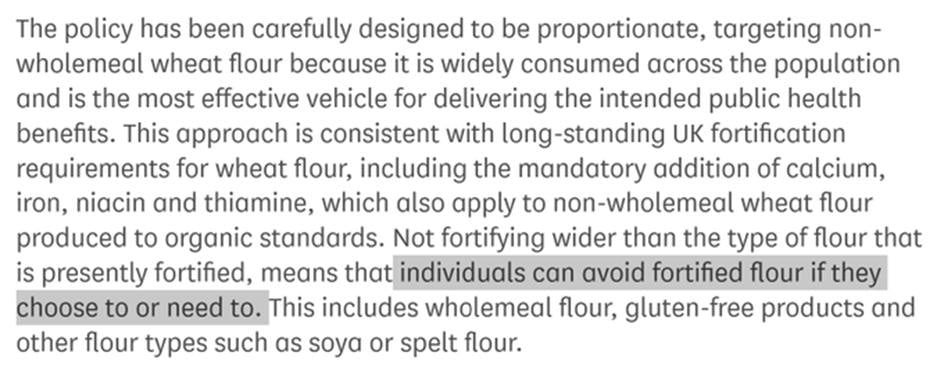
Asked to let people opt out, the Government replied that people can “avoid fortified flour if they choose to or need to.”
Choice was meant to be in the form of wholemeal, gluten-free products and ancient grains. Products in every one of those supposedly protected categories now contain folic acid. Even organic is no guarantee.
So, what do British shops look like in 2026? Is it as easy to opt out of ingesting folic acid as the Government suggests?
Let’s not lose touch…Your Government and Big Tech are actively trying to censor the information reported by The Exposé to serve their own needs. Subscribe to our emails now to make sure you receive the latest uncensored news in your inbox…
The Impossible Shop
By Dr. Clare Craig, as published by Health ethics Advocacy and Research Team (“HART”) on 4 September 2026
Table of Contents
Introduction
Folic acid is an oxidised, synthetic licensed medicine. It is not the same molecule as folate (vitamin B9). As with all drugs, it comes with negative effects and the NHS warns millions to be careful of it.
These millions have been neglected in government decision-making. The only nod towards people who might need to avoid it was that “not fortifying wider than the type of flour that is presently fortified, means that individuals can avoid fortified flour if they choose to or need to.” They then named the alternatives: “wholemeal flour, gluten-free products and other flour types such as soya or spelt flour.”
Is that true? This article will shop around and see.
The Model Assumed A Reduction In Voluntary Fortification
First, it is important to note that government modelling that was relied on to justify a dose of 250 microgrammes per 100 grammes assumed there would be a cap on exposure from non-mandatory sources including breakfast cereals, spreads and supplements. The model was based on a legal cap on exposure from these sources.
The Scientific Advisory on Nutrition (“SACN”) included capping as a condition to its recommendation in 2006, repeated it in 2009 and repeated it again in 2017. Voluntary fortification was to be restricted so that mandatory fortification did not push more people over the upper limit.
The regulations made in 2024 did not include any cap. The response from industry has been to add folic acid “voluntarily” to far more food items than ever before.
Although the amount in a single product may be small, it is the cumulative effect of fortification across a diet that matters. Much of the voluntary fortification predates the mandate but the recommendation was that such sources should be reduced.
Let’s take a walk round the shop.
The Bread Aisle
Wholemeal bread must legally contain only wholemeal flour. Wholemeal flour is exempt, so the obvious solution is to buy wholemeal bread.
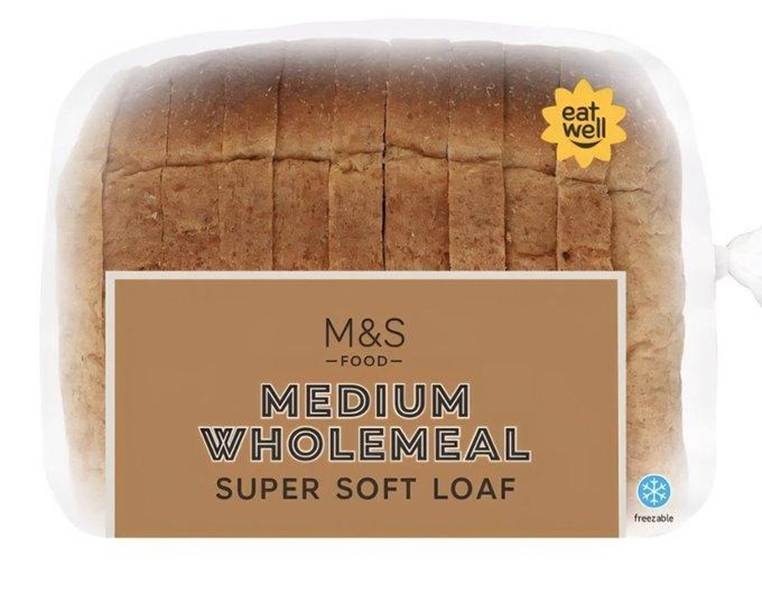
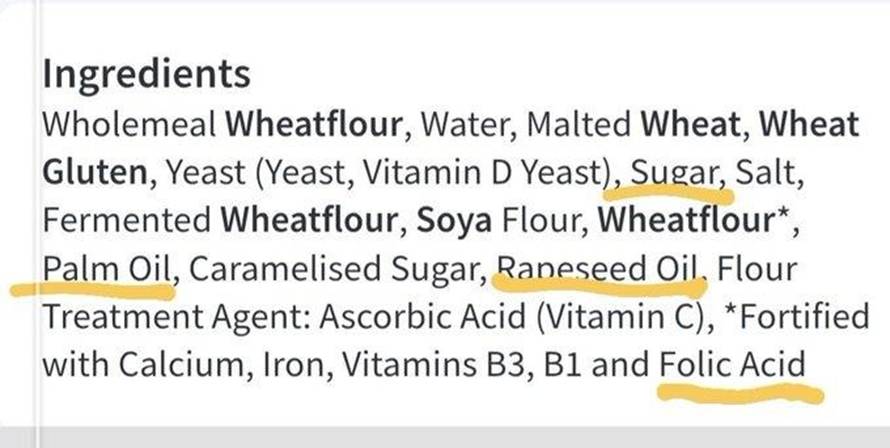
The M&S Medium Wholemeal Super Soft Loaf begins with wholemeal wheat flour but further down the same list white wheat flour is added, containing folic acid.
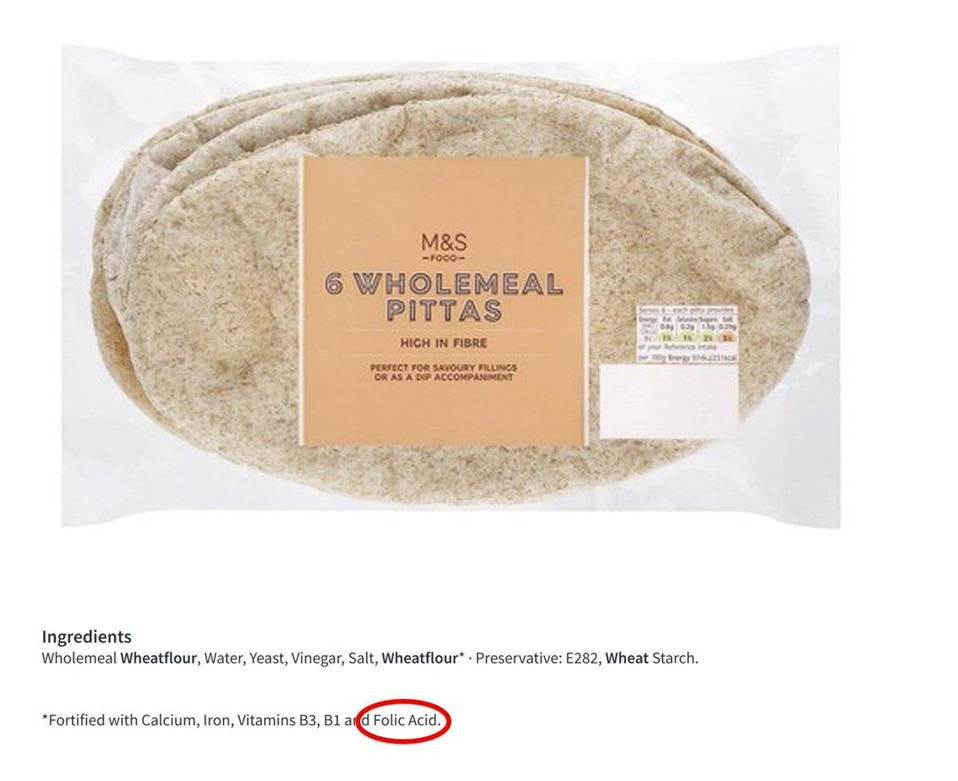
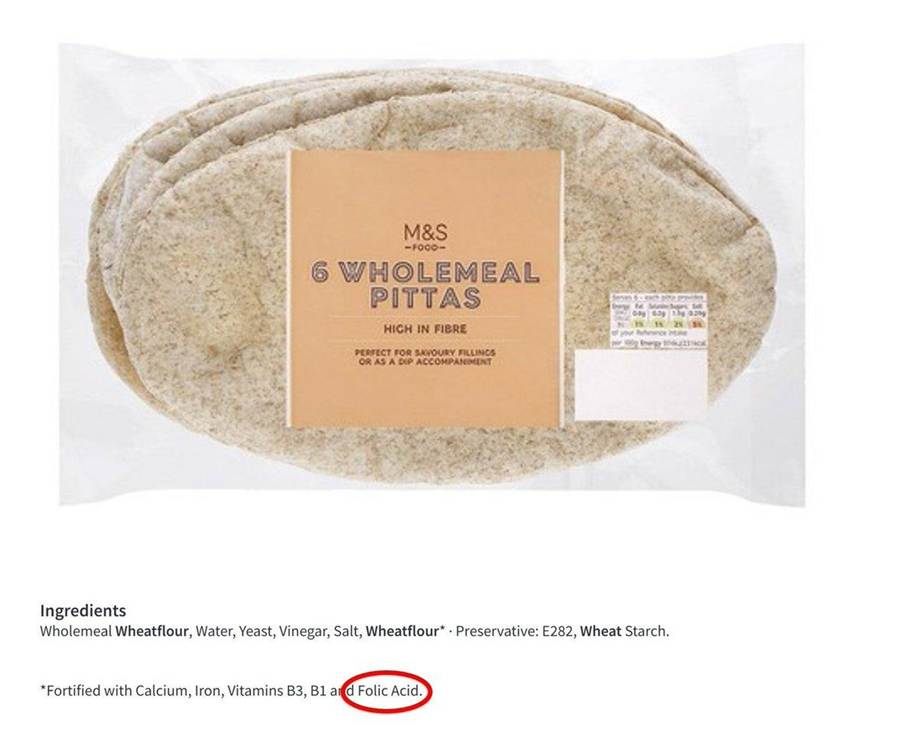
The wholemeal pittas and many other wholemeal products add white flour and expose people to folic acid, which they might need to avoid.
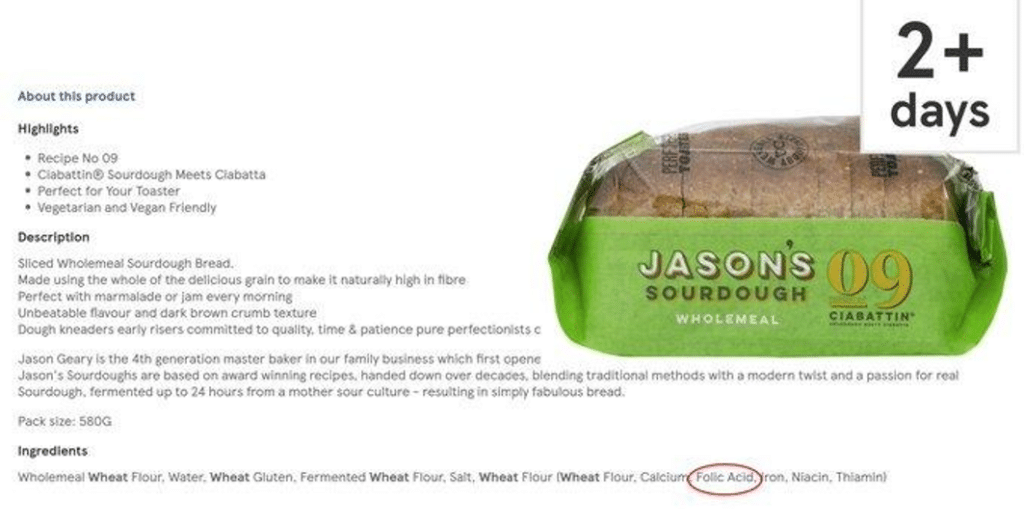
This photograph of Jason’s sourdough wholemeal loaf is now out of date, and in response to customer complaints, they have removed folic acid from this one type of loaf.
How about one of the products claiming only four ingredients?
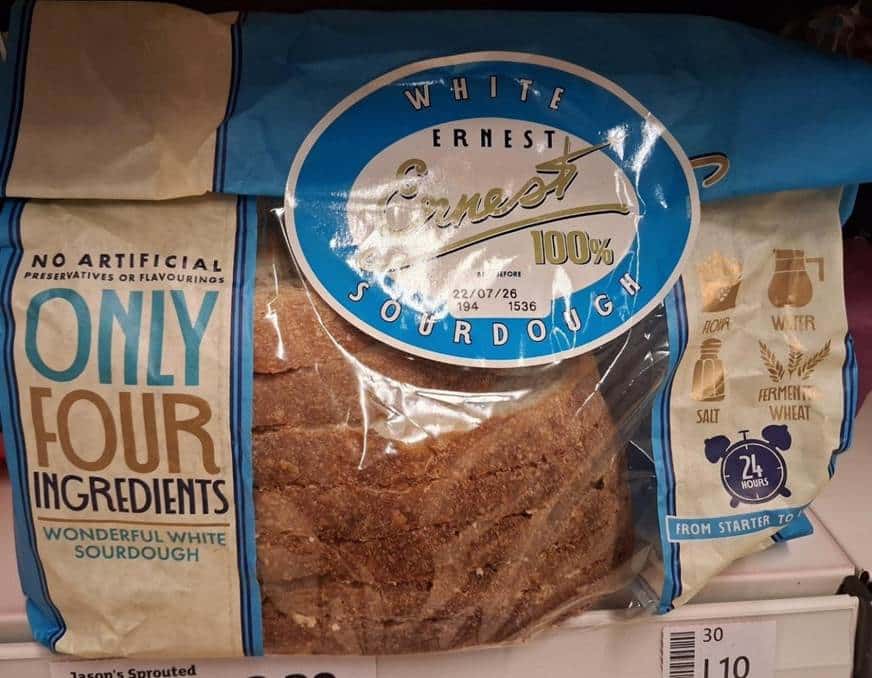
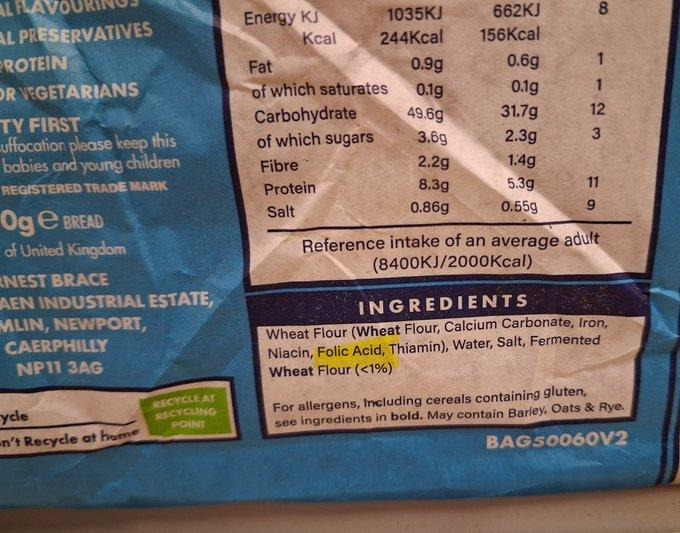
There it is.
OK – wheat bread is not a good option. What about ancient grains? They are exempt.
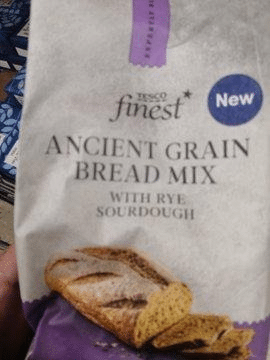
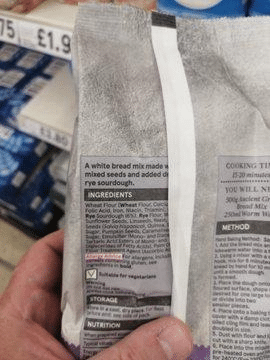
Maybe gluten-free bread could work? That is also exempt from the mandate.
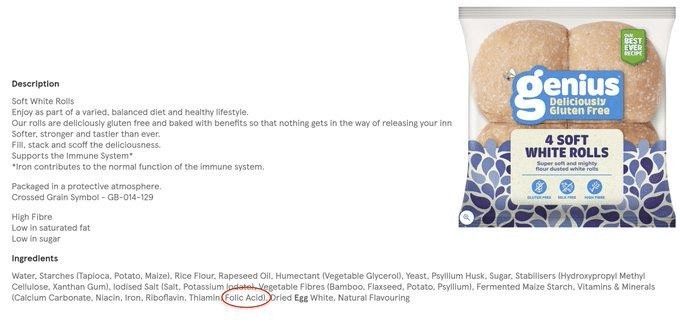
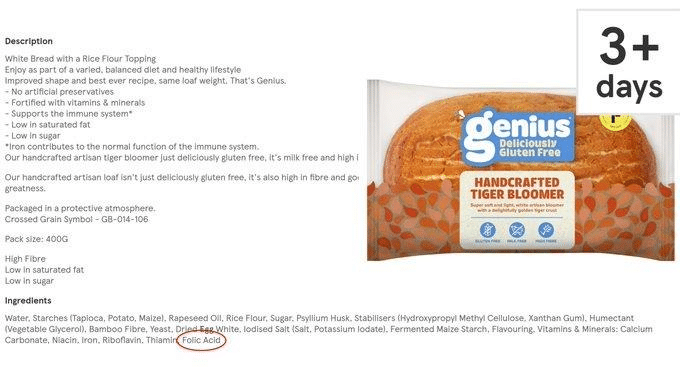
Genius celebrates this, saying it fortifies its breads so that they are “as nutritious as wholegrain wheat bread.”
Maybe a different brand of gluten-free bread? An M&S sandwich?
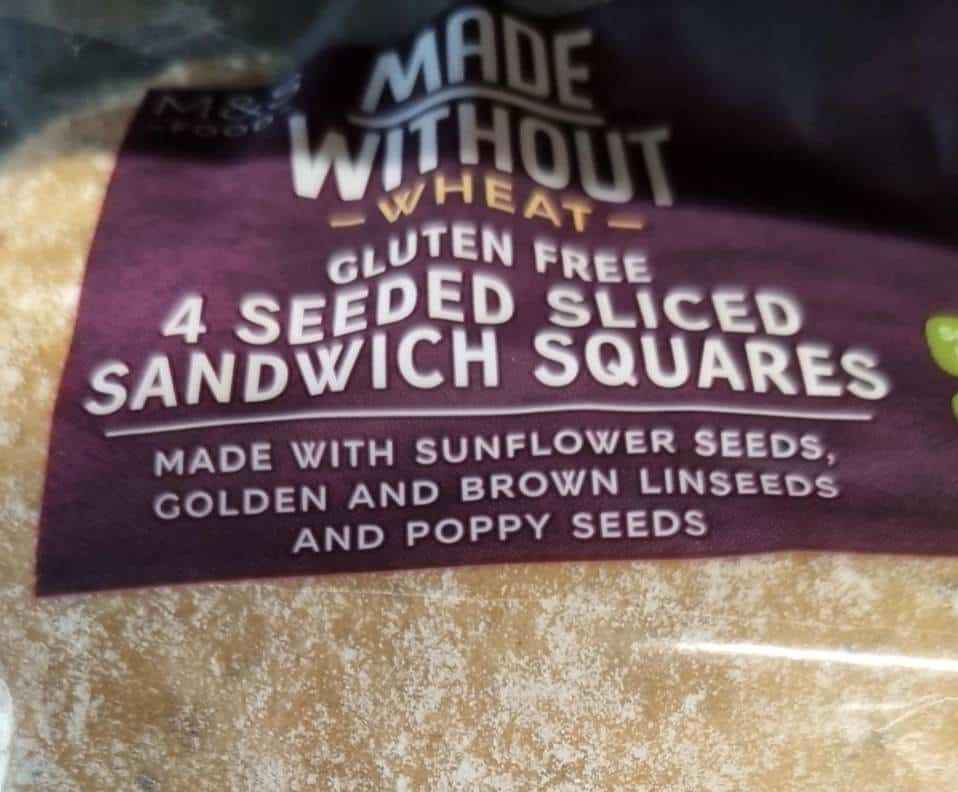
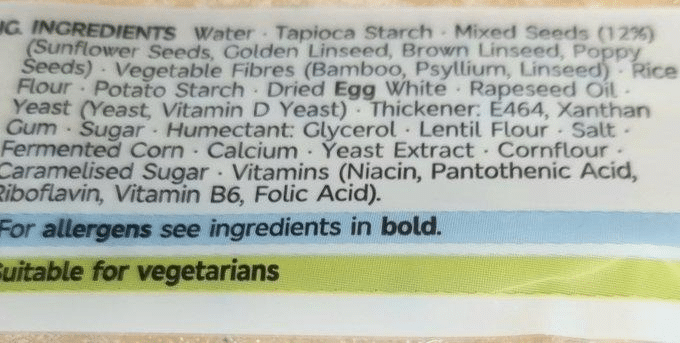
Even these M&S gluten-free squares are adding it.
In July, a shopper went into a Boots in London for a sandwich. Every sandwich the customer looked at listed folic acid, including the wholemeal ones. He checked M&S, Sainsbury’s and the Co-op the same day and found the same thing.
We have to leave the bread aisle empty-handed. Perhaps we can head to the baking aisle and make our own bread? No luck. All non-wholemeal flour, including organic and imported flour, is covered by the mandate.
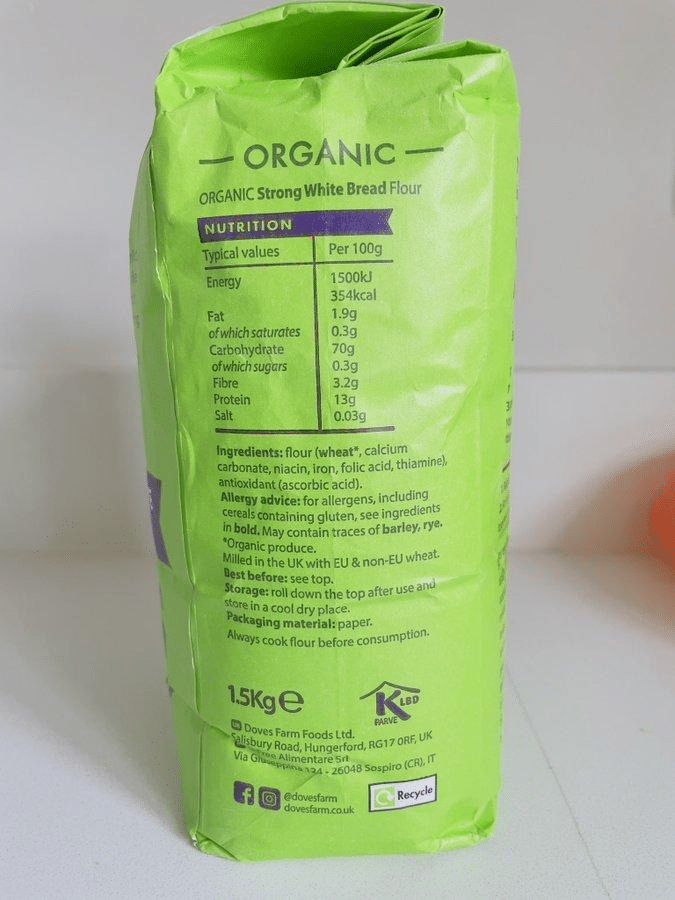
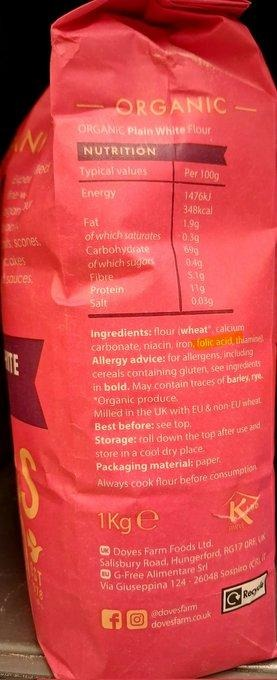
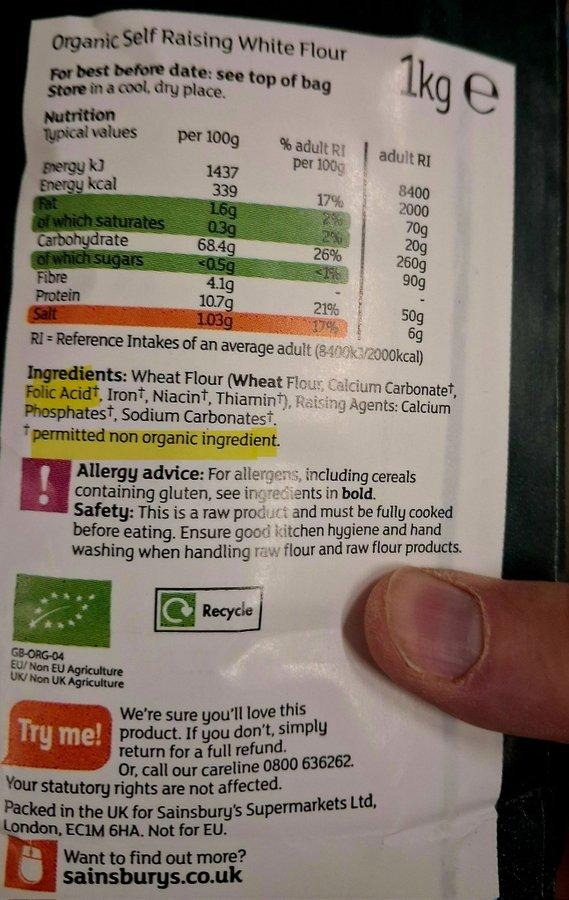
Organic bread flour. Organic plain flour. Organic self-raising flour.
Lunch
Sandwiches are off. Can we manage a wrap? They are made of corn tortillas, right?
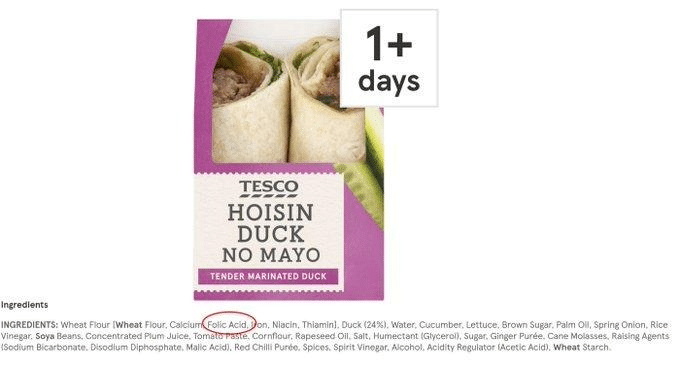
No.
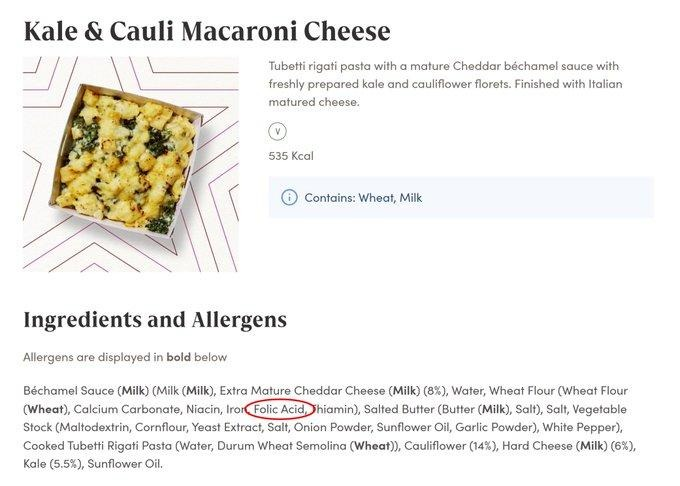
Maybe some hot food from Pret. The folic acid is in the béchamel.
Chicken and Noodles
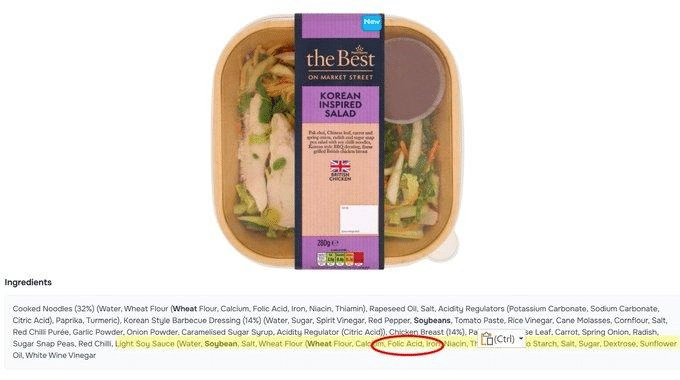
A supermarket Korean salad, where folic acid appears twice. Once in the noodles, and again in the light soy sauce.
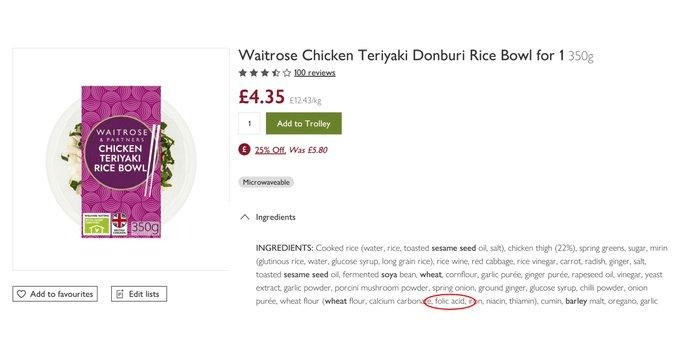
A chicken teriyaki rice bowl. Cooked rice, sesame, chicken thigh, spring greens and wheat flour with folic acid near the end of a long list.
No lunch. After a long day, perhaps you might want something quick to make once you get home?
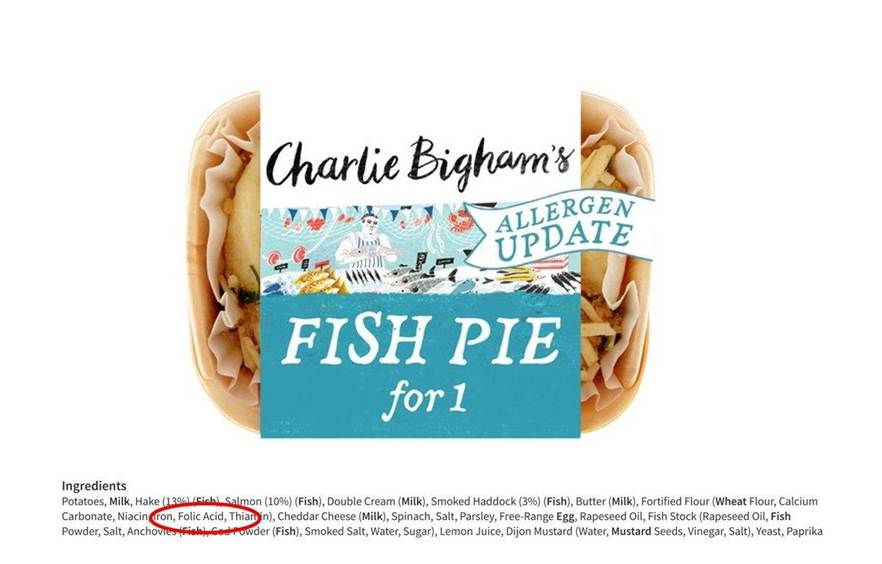
A fish pie. Potatoes, milk, hake, salmon, cream, smoked haddock, butter, and then fortified flour.
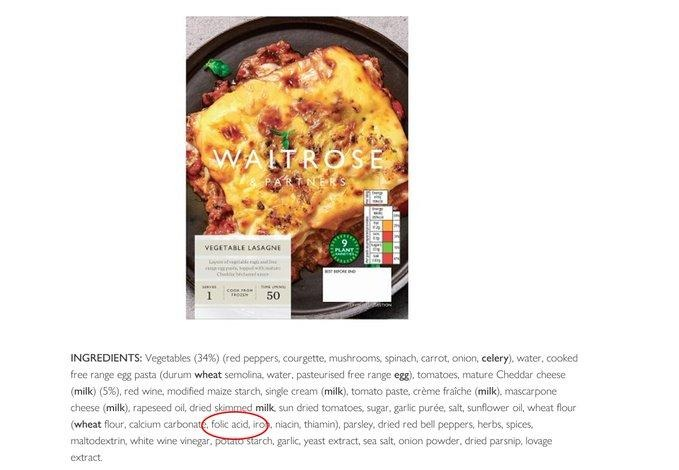
The same applies to cottage pies and lasagnes.
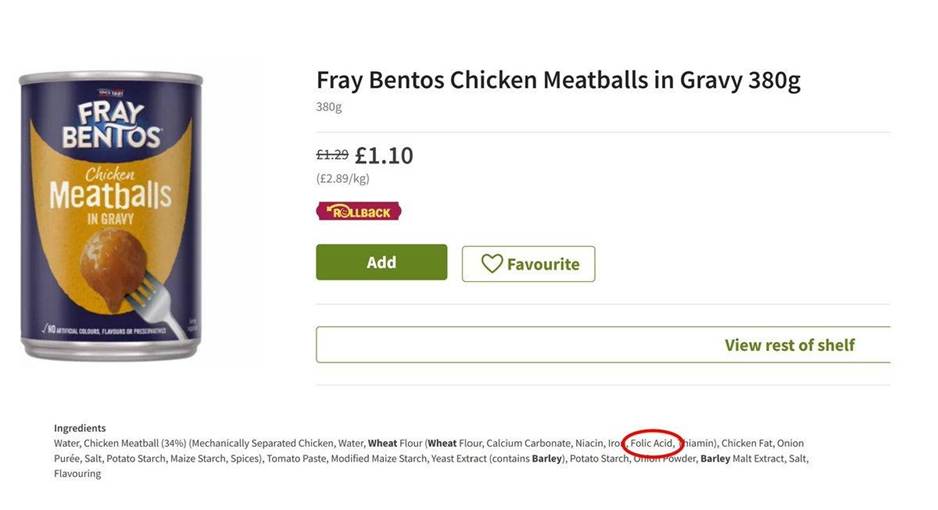
Chicken meatballs in gravy with folic acid inside the meatballs.
What about other meat products?
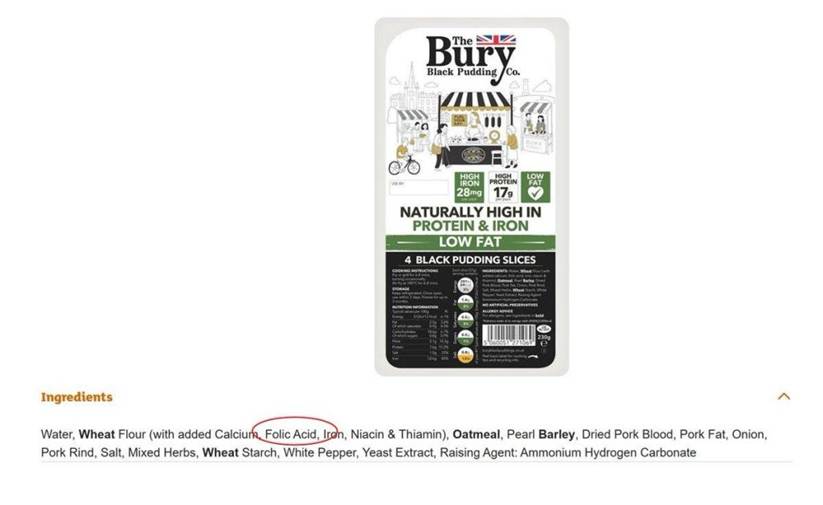
No black pudding.
Surely organic meat would be safe?
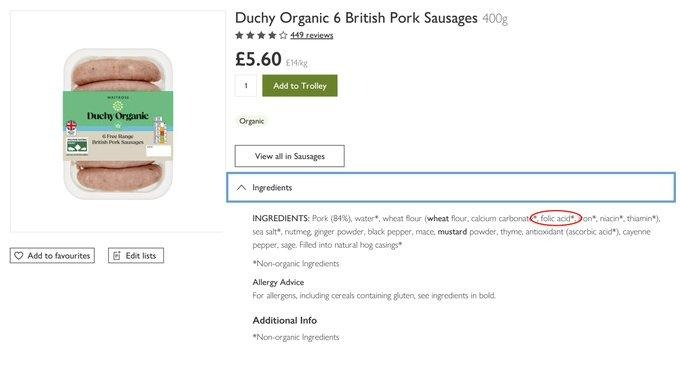
Organic pork sausages. Sausages need a binder and the binder is … fortified wheat flour.
Perhaps vegetarian sausages would be a better bet?
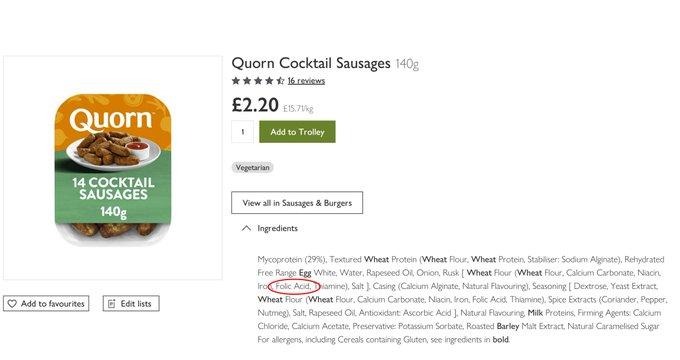
The meat-free version is no different. In Quorn cocktail sausages, fortified wheat flour appears three separate times, in the textured wheat protein, in the rusk and in the seasoning.
The Store Cupboard
By now the shopper is resigned to cooking from scratch with ingredients that must each be checked. Even this is a huge problem. Ingredients where they may never think there was an issue contain it.
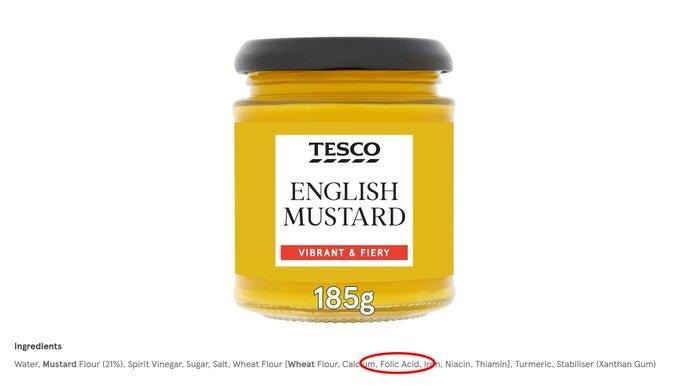
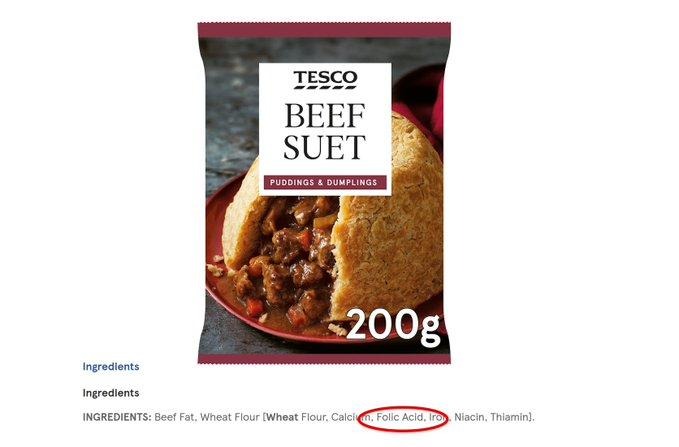
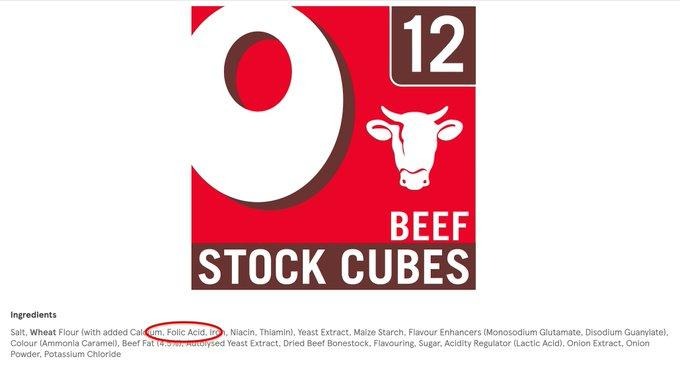
Mustard. Beef suet. Stock cubes.
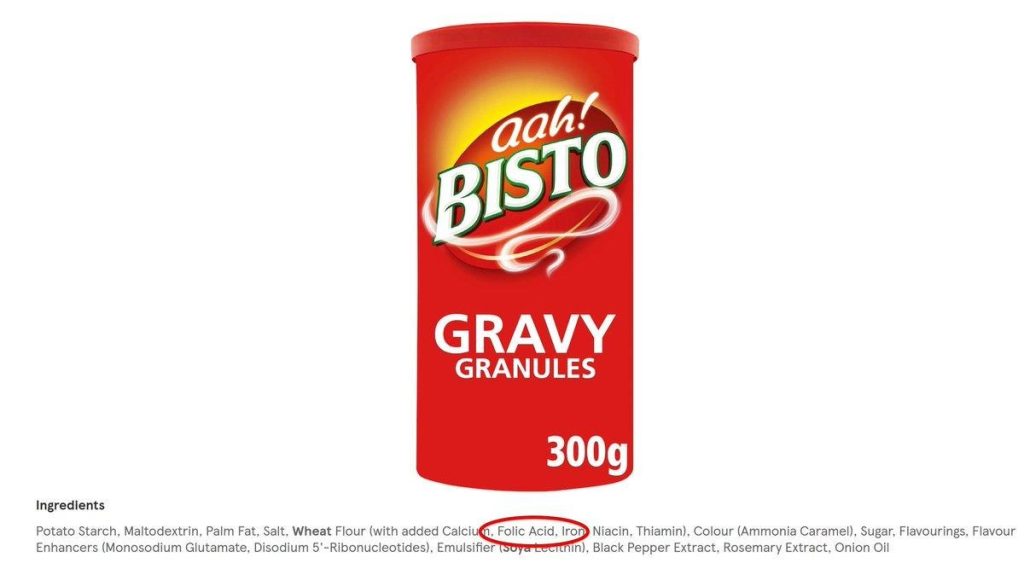
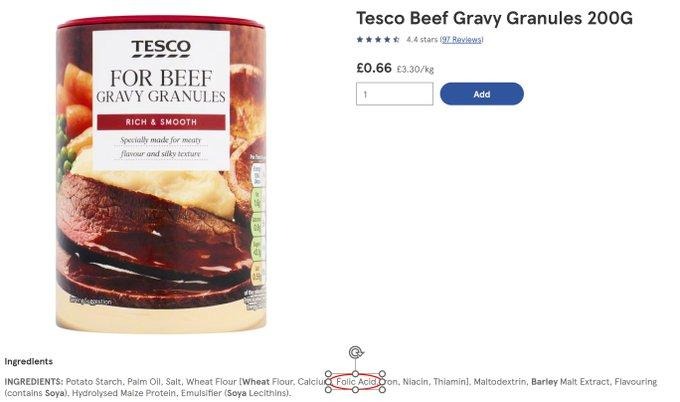
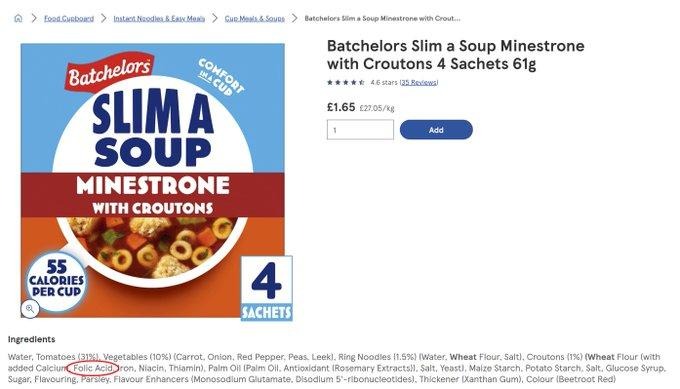
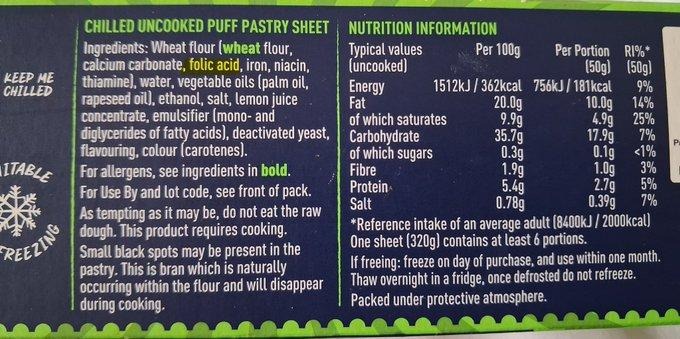
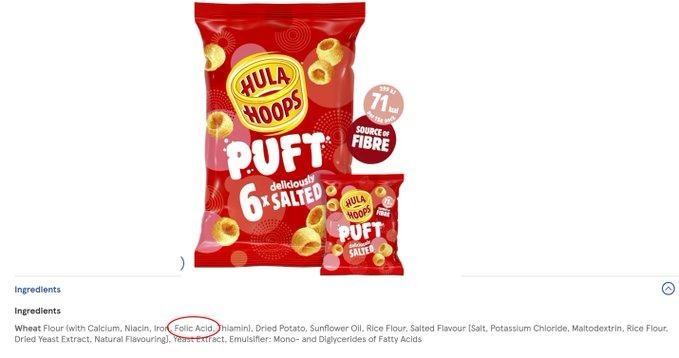
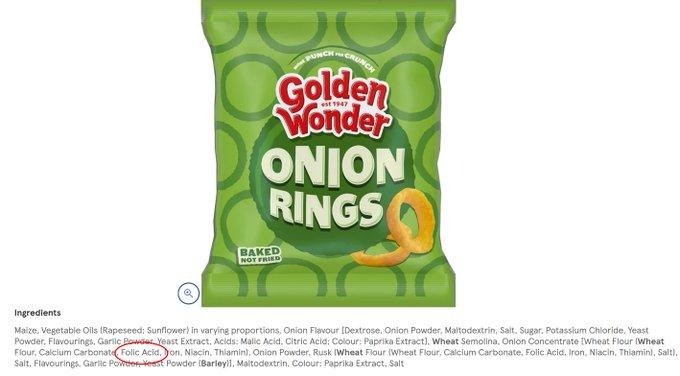
Snacks
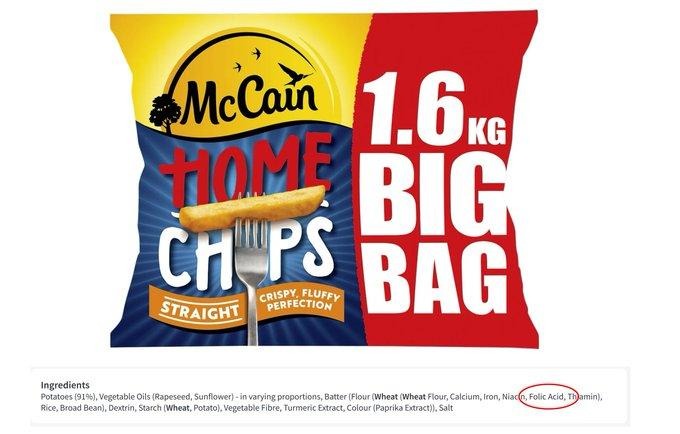
Oven chips, where the folic acid is in the batter on the chip.
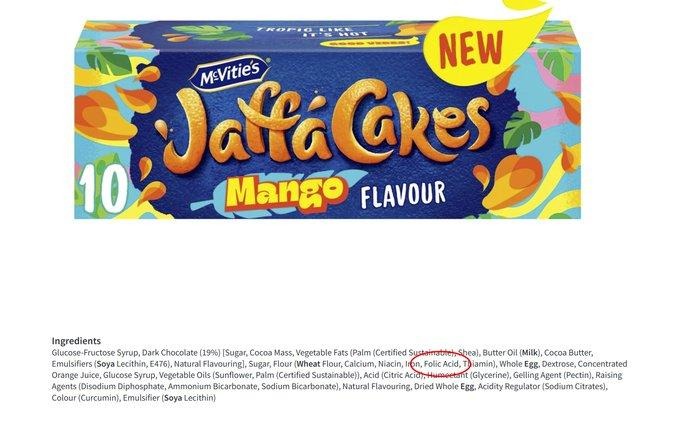
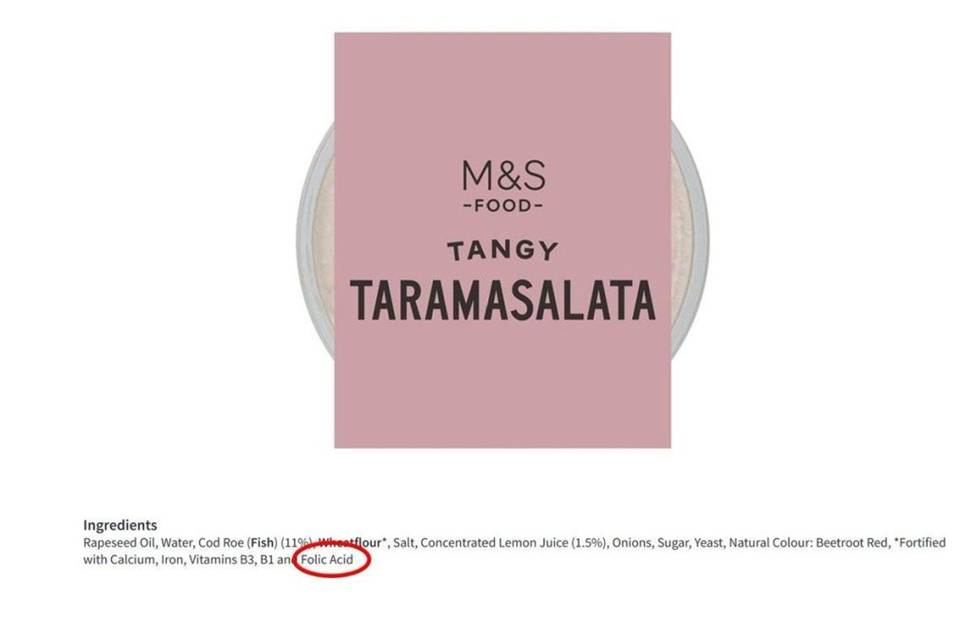
Jaffa Cakes. Taramasalata.
The exemptions have failed to provide the promised consumer escape route. Someone trying to avoid folic acid now has a very restricted diet.
Breakfast and Bedtime
There are multiple sources of exposure that existed before the mandate. It is surprising how much is being added.
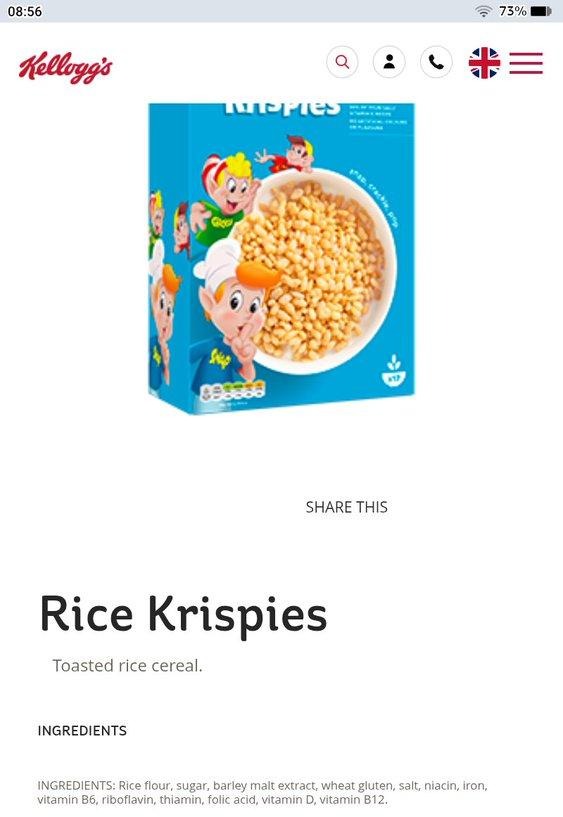
Rice Krispies is eaten overwhelmingly by children. The upper limits used for children were not derived from studies in children. They were extrapolated from adult data, and no upper limit has been set for children under one.
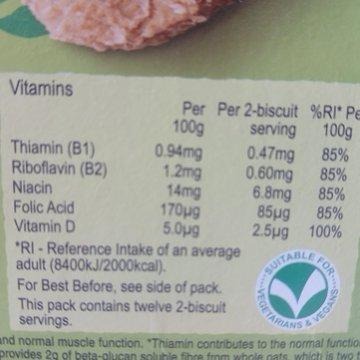
Oatibix contains 170 microgrammes of folic acid per 100 grammes, and 85 microgrammes in a two-biscuit serving. The daily upper limit estimated for a one- to three-year-old is 200 microgrammes. Children are starting the day at 40 per cent of their estimated safe upper limit.
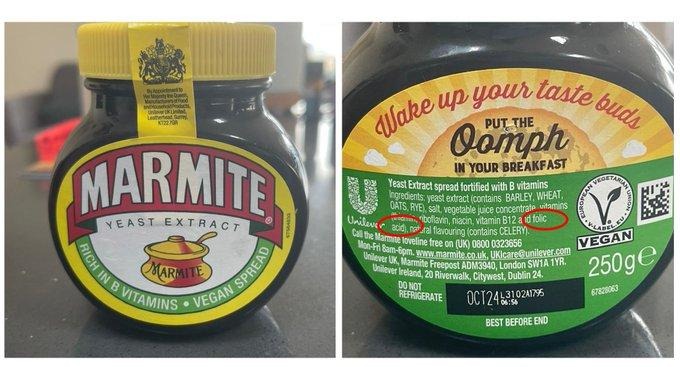
Marmite contains plenty of natural folate. Lucy Wills in 1938 showed that anaemia of pregnancy could be treated using Marmite. For some reason, the manufacturers are adding 1,250 microgrammes of synthetic folic acid per 100 grammes. One serving of 8 grammes is 100 microgrammes, or half a toddler’s limit for the day – before anything else is eaten.
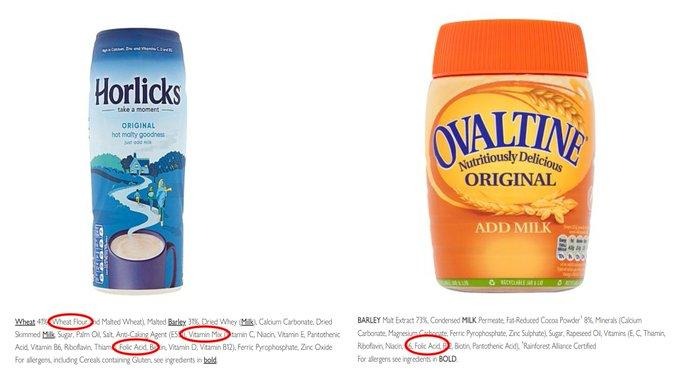
Horlicks and Ovaltine both contain it. Ovaltine is made from barley malt extract and contains no wheat flour at all. These drinks are traditionally consumed by older people. Around a fifth of people over 60 have low vitamin B12, often undiagnosed. High folic acid intake can correct the anaemia of B12 deficiency while the neurological damage continues, delaying diagnosis. That is the harm on which the adult upper limit was decided.
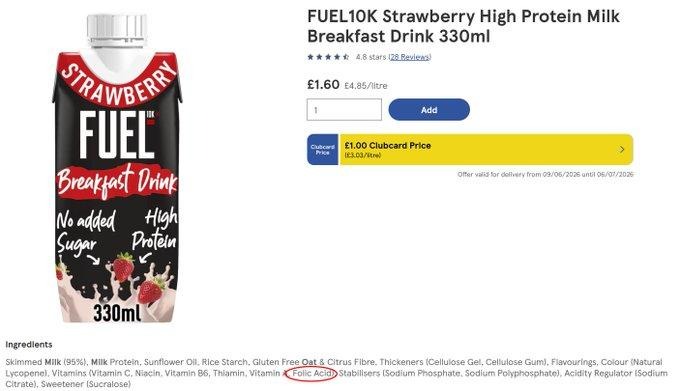
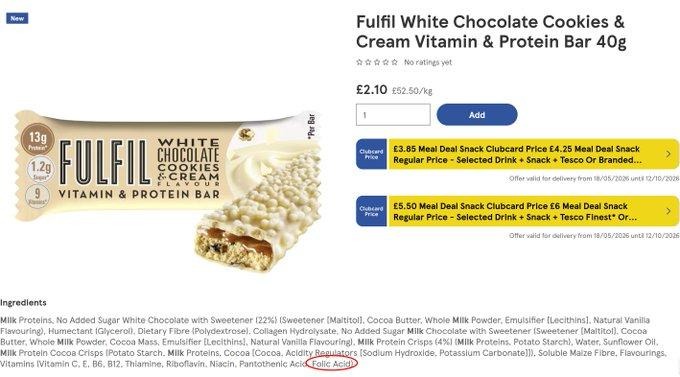
If grabbing breakfast on the go, look out for the flavoured milk drinks and protein bars. Neither contains flour. Both have folic acid added directly.
The Baby Aisle
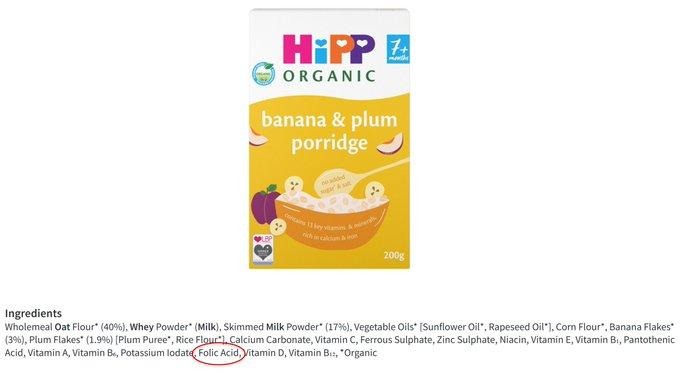
This is an organic baby oat porridge to which folic acid has been added.
The Government’s own modelling estimates that 4.37 per cent, or 1 in 23, of one- to three-year-olds will exceed their upper limit once flour is fortified and nothing else is capped, compared to 0.63 per cent of the population overall. That calculation excludes children under 18 months altogether, on the stated assumption that they “eat very little flour.”
For children under one, no upper limit for folic acid has ever been set.
Conclusion
The Government claims people who choose or need to avoid folic acid can do so. Looking only at what was exempted, that might sound plausible, but in the supermarket the reality is very different.
Wholemeal products, gluten-free products and ancient grain products all contain folic acid. Organic flour is even fortified. Even someone who managed to avoid our staple food altogether would be faced with folic acid that has snuck into sauces, sausages, stock cubes, noodles, oven chips, breakfast cereals, drinks and even baby food.
Technically, it may still be possible to avoid folic acid. You can cook largely from scratch and carefully examine every ingredient list. But that is not the easy choice the Government described.
The Government’s own modelling assumed that other sources of folic acid would be restricted, not increased. The dosage implications are obvious.
If the millions that the NHS warns to take care with folic acid are to be told that they can avoid it “if they choose to or need to,” then that choice needs to exist in practice, not just on paper.
Related: Folic acid is in the food but not on the label
About the Author
Dr. Clare Craig is a British Diagnostic Pathologist and medical researcher who worked in the NHS for 15 years before becoming a Consultant Pathologist in 2009. She is best known for her covid-19 research. She has worked pro bono since May 2020 to analyse covid pandemic data and distil evidence for lay audiences.
She is the author of two books: ‘Expired: Covid the untold story’ (2023) and ‘Spiked: A shot in the dark’ (2025).
Since January 2021, she has co-chaired the Health ethics Advisory and Research Team (“HART”) with Dr. Jonathan Engler, providing independent expert information on covid issues. She contributes to HART in a personal capacity.
The Expose Urgently Needs Your Help…
Can you please help to keep the lights on with The Expose’s honest, reliable, powerful and truthful journalism?
Your Government & Big Tech organisations
try to silence & shut down The Expose.
So we need your help to ensure
we can continue to bring you the
facts the mainstream refuses to.
The government does not fund us
to publish lies and propaganda on their
behalf like the Mainstream Media.
Instead, we rely solely on your support. So
please support us in our efforts to bring
you honest, reliable, investigative journalism
today. It’s secure, quick and easy.
Please choose your preferred method below to show your support.

Categories: Breaking News, Latest News, UK News
People can now order their own countertop mill to make their own flour, which is better than getting it from mills, at least here in the USA, because mills take lots of nutrients out of the flour
In the US you have to bake your own bread, and you have to take a magnifying glass to read all the ingredients of everything, because otherwise you get poisoned. I hope ALL the ingredients are on the few things that I buy. Back in the old country there was still a mill, where every other week we could buy freshly milled single or multi grain flour. And as to the argentina meat – I do not know when the poison is added. But the cows there graze in the sun, on real green grass. American cows get fed corn and kibble in a closed stable, the lucky ones now and then catch a glimpse of sky, before deported to a feed lot, where they stand with 2000 on a space for 100, knee deep in mud and their own poop, and they are injected with everything possible… when opening the Argentina meat, it smells like fresh meat and it tastes like it. when opening American meat it smells like dung and I fed it to the dog.
Thank you for sharing this. Companies like M&S who charge a lot for their products need shaming on the crap they put in their food. Rapeseed oil, chemical additives like folic acid – shame on them.
It’s almost like they WANT everyone to get bowel cancer isn’t it ? It’s known that the incidence of bowel cancer goes through the roof when people take in high levels of synthetic folic acid. Is that why they’re sending out all the testing kits ? After all, the treatment is very lucrative.