














At the end of last month, Dr. Leonard G. Horowitz submitted a policy review to the CDC for publishing. In his brief review, he pointed out that previous Ebola outbreaks were linked to viruses taken from monkey tissues and added to human vaccines.
HIV/AIDS is also linked to the contents of vaccines.
Investigations should be conducted to ensure that dual-use laboratory research is not the real origin of the current Ebola outbreak, he says.
Let’s not lose touch…Your Government and Big Tech are actively trying to censor the information reported by The Exposé to serve their own needs. Subscribe to our emails now to make sure you receive the latest uncensored news in your inbox…
The lady in the video below says that she is reporting from the Democratic Republic of Congo (“DRC”). The video doesn’t state where in the DRC she is or the date the video was made. She has been in the DRC for a couple of months, she says, and “there is no Ebola here.”
It seems that the World Health Organisation (“WHO”) has a crystal ball because, as the tweet below notes, four weeks before the Ebola outbreak was announced, WHO approved an Ebola vaccine.
Is it any wonder that people are not able to take WHO chief Dr. Tedros Adhanom Ghebreyesus’ trip to the DRC seriously? His presence in the DRC is reminiscent of a criminal returning to the scene of the crime, like an arsonist who starts the fire and then joins the crowd feigning “what’s happening, what’s going on” while secretly gloating over his handiwork.
In the following, Dr. Leonard G. Horowitz highlights that previous Ebola outbreaks and HIV/AIDS have followed a pattern, and that there are indications that the current Ebola outbreak is following the same pattern.
Ebola and Dual-Use Research
Dr. Leonard G. Horowitz is an award-winning author, filmmaker, whistle-blower, music industry evolutionary and natural medicine pioneer, and author of several books, including ‘Emerging Viruses: AIDs and Ebola – Nature, Accident or Intentional?’. He is a retired dentist and oral surgeon with a post-doctoral degree in public health. He currently serves as the editor-in-chief at Medical Veritas, a publication which aims to discover and disclose the truth in health science.
At the end of last month, he published a 5-page policy review titled ‘Ebola Outbreaks, Dual-Use Research, Reservoir Gaps, and Institutional Conflicts: Critical Analysis of Filovirus Emergence Patterns and Accountability in High-Risk Pathogen Surveillance’ that he had sent to the Centres for Disease Control and Prevention (“CDC”) in Atlanta, USA, for publishing in the medical journal Emerging Infectious Diseases.
It is important to note that dual-use research refers to research that can be used in biodefence as well as in biowarfare (i.e. bioweapons). Bioweapon research is also called gain-of-function research.
“This manuscript critically examines recurring patterns in filovirus emergence, with particular focus on the 2026 Bundibugyo ebolavirus (BDBV) outbreak, historical lab amplification events, persistent reservoir identification gaps, dual-use research activities (including wildlife pathogen surveillance programmes), and institutional conflicts of interest. It argues for enhanced independent scrutiny, transparency, and governance reforms to better protect public health in an era of advanced reverse genetics and expansive pathogen sampling,” the covering letter to the CDC states.
Dr. Horowitz used the Grok AI program to assist in the synthesis and analysis of his review, which required some corrections of the AI program along the way. You can read about his method and corrections of the computer program HERE.
The following are some of the highlights from Dr. Horowitz’s review. You can read the full review HERE.
The Special Virus Cancer Programme and Filovirus Emergence
Filoviruses are a family of single-stranded, negative-sense RNA viruses in the order Mononegavirales, named for their distinctive filamentous or thread-like morphology. The family Filoviridae is currently classified into six genera, two of which are Ebolavirus and Marburgvirus.
Evidence from the US Special Virus Cancer Programme (“SVCP”) demonstrates that early filovirus emergence was primarily driven by laboratory amplification and human-mediated transmission from primate tissues, rather than independent de novo zoonotic spillovers. This was a clear laboratory amplification event and challenges the dominant “natural zoonotic spillover” hypothesis.
The 1967 Marburg outbreak, the first known filovirus outbreak, is a documented example of a laboratory amplification event, where infections occurred in vaccine production laboratories in Germany and Yugoslavia due to the processing of kidney cell cultures and minced tissues from African green monkeys imported from Uganda.
The research involved in the Marburg outbreak was linked to the US Special Virus Cancer Programme, with Litton Bionetics – a subsidiary of major military contractor Litton Industries – playing a central role in primate research and tissue preparation in Northwest Uganda and US facilities.
Studies conducted under the programme involved inoculating rhesus and green monkeys with tumour materials and incubating viruses in tissue cultures. This raises the problem of disease transmission in humans through vaccines manufactured from non-human primate tissues.
As NIH veterinarian Dr. Robert Whitney stated in 1975 at a Fort Detrick biohazards symposium: “These are viruses which naturally occur in apes and monkeys which are apparently non-pathogenic, but might cause disease in human beings by being transmitted in biologics [vaccines] manufactured from non-human primate [monkey] tissues … Inoculation of the agents by parenteral route is necessary to establish infection in rhesus and cynomolgus monkeys.”
HIV/AIDS Origins and Research Overlaps
The origins of HIV/AIDS have also been linked to dual-use research.
Phylogenetics is the study of the evolutionary history and relationships among organisms or genes, inferred from observable characteristics such as DNA sequences, protein structures and morphology.
Phylogenetic timing overlaps large-scale hepatitis B vaccine trials and the Special Virus Cancer Programme’s primate research, indicating the lab-origins of HIV/AIDS.
However, like with early filovirus emergence, suggestions that vaccine components derived from primate tissues may have contributed to cross-species transmission have faced strong institutional resistance, Dr. Horowitz said.
The 2026 Bundibugyo Ebola Outbreak
The 2026 Bundibugyo ebolavirus (“BDBV”) outbreak in Ituri Province, DRC, follows prior events in 2007 and 2012. The BDBV genomic sequences cluster with previous lineages.
It is said that BDBV is a zoonotic disease, meaning it spreads from animals to humans, and that fruit bats are suspected to be the natural host. In other words, the claim is that there has somehow been a zoonotic spillover from bats to humans.
However, the definitive isolation of live BDBV from specific bat colonies matching outbreak strains remains absent, even though extensive bat sampling under USAID’s PREDICT programme (including Metabiota) occurred in the region, Dr. Horowitz pointed out.
[Related: US Company Metabiota Links Biolabs in Africa and Ukraine to the Pentagon’s DTRA]
Additionally, historical records show primate-based research as the dominant early interface.
So, the lack of isolation of the virus in bats and previous outbreaks being linked to primate-based research raises questions about why the emphasis on bats as the origin of the virus.
“The emphasis on bats as the primary reservoir appears inconsistent with the documented lab-primate transmission history of Marburg and early filovirus awareness. This gap, combined with SVCP-era concealment, weakens confidence in purely natural de novo zoonosis models,” Dr. Horowitz said.
Adding, “US military-industrial programmes (SVCP, Litton Bionetics, Fort Detrick) had strong incentives to minimise public knowledge of lab amplification risks to protect vaccine development and biodefence funding. The promotion of bat reservoir narratives, while partially supported by later ecology, may function in part as a diversion from historical primate research culpability. “
“The historical record from the Special Virus Cancer Programme, Litton Bionetics primate research and Dr. Whitney’s explicit warnings demonstrates that early filoviruses were lab-isolated and transmitted primarily through human activities involving primate tissues, not repeated independent de novo zoonotic spillovers from bats. The persistent emphasis on natural zoonosis despite this evidence is misleading and poses risks to public health and national security,” he concludes.
“Raw genomic data from recent outbreaks must be interpreted in light of this concealed history. Reservoir gaps, dual-use research overlaps, and institutional conflicts justify equal scrutiny of all hypotheses.”
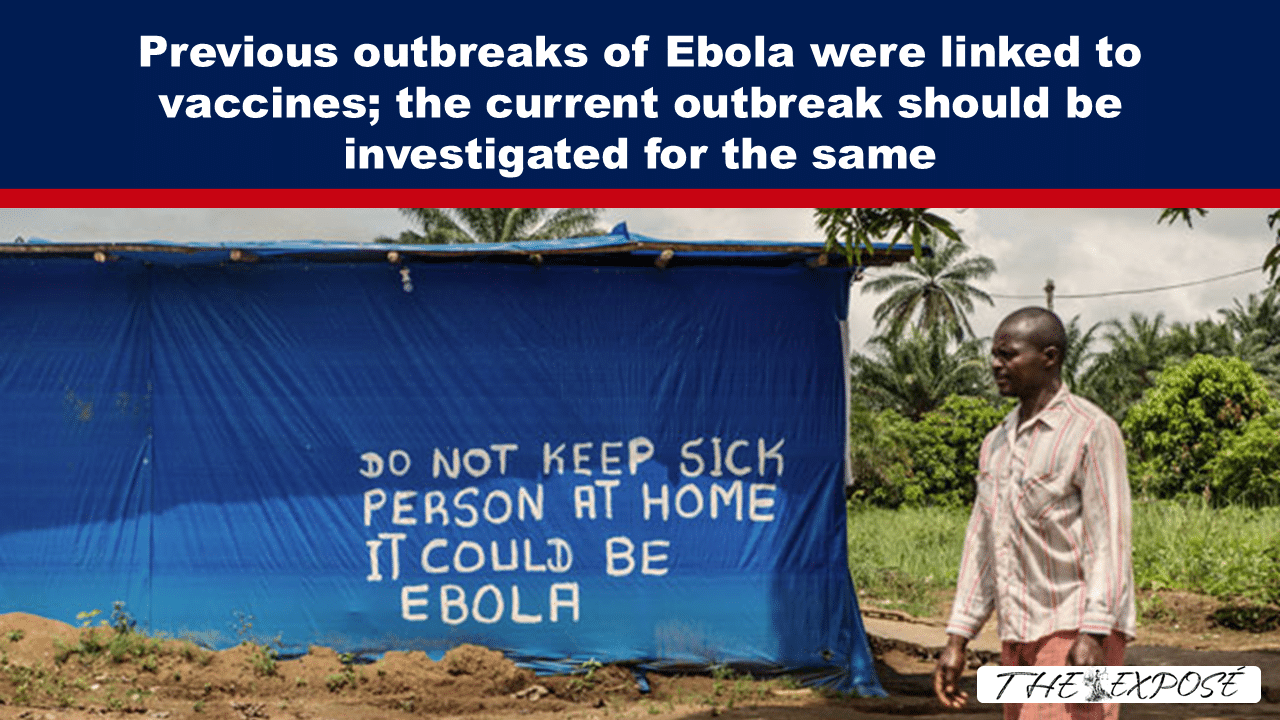
Featured image taken from ‘Sierra Leone’s Ebola crisis in pictures’, Caritas, 10 November 2014

Categories: Breaking News, World News
So thankful I do not allow needles to be shoved into my skin and administer the poison throughout my body. No spike proteins in my vessel. I will fight to the death when it comes mRNA jabs.
mRNA means modified RNA, wherein pseudoUridine is substituted for Uridine in order to prevent its breakdown, which also produces a kink in the RNA which cannot be broken down by usual mechanisms. This instead creates peroxide-caused areas that appear like a sponge (see spongiform encephalopathy in prion dz).
Yeah, I know all about m RNA. I done a lot of research on it when covid 19 arrived. Nope, no jabs for me. And if you are a wise person you will stay far far away from all jabs.
This looks more like the virus was introduced by those promoting a vaccine for it!
So you’re saying that Covid was created for the vax, not vice-versa? Sounds correct to me..
Exellent reporting RW!
I always struggled with just taking Judy Mikovit’s word ,what with her PTSD ,and everything .She specifically referred to the SV40 Vero green monkey kidney cell line – but the heniousness is far beyond false science ,even towards involuntary euthanasia , planned for decades by Cold Harbor .
No ,its time to strip Gates of any credability – as 10June looms over his ,and his fellow golem’s heads’ Senate Hearing’ .
Sayer Ji has exellent analysis of the financials of Gate’s help ,where noone seems to ever benefit ,but himself .
https://sayerji.substack.com/p/the-end-of-only-good-press-for-bill?publication_id=2878303&post_id=200072094&isFreemail=true&token=eyJ1c2VyX2lkIjoxMDc3OTUzNTYsInBvc3RfaWQiOjIwMDA3MjA5NCwiaWF0IjoxNzgwMzMzNDQ3LCJleHAiOjE3ODI5MjU0NDcsImlzcyI6InB1Yi0yODc4MzAzIiwic3ViIjoicG9zdC1yZWFjdGlvbiJ9.bak4rHvzolGtFdrcdHvb2BvXAYjXTay-16mNI125wUM&r=1s6ffg&triedRedirect=true
Hi Kilquor, You say, “Excellent reporting RW!” Thank you.
Judy Mikovitz has been a true warrior. Not enough people appreciate what she has been through to tell the world what she has witnessed.
And the crimes do go far beyond using and abusing science.
“HIV/AIDS is also linked to the contents of vaccines.”
False.
There is much evidence that AIDS – that conglomerate of dozens of well known diseases – can substantially be explained by the intake of poisonous drugs (nitrite inhalants) and medications (antivirals, antibiotics, etc.) and by malnutrition. Around 80 percent of all children declared to be AIDS patients are born to mothers who have taken intravenous drugs that destroy the immune system.
AIDS was made-up in the 1980s and, like covid-19, was a product of a fraudulent PCR test, disease re-classification (Kaposi’s sarcoma or tuberculosis) and toxic interventions (AZT).
There’s also zero evidence of the direct isolation of HIV.
The MRNA Covid vaccine has been proven to cause HIV/AIDS as it weakens the immune system.
No viruses have been proven to exist. The pictures they claim is a virus, is dead cell debris. If toxins are in these vaccines, it makes logic sense that many cells are going to die and break down, more than usual.
100% true, AIDS disease actually immune system collapsed due to malnutrition of an addiction to drug use.
Human immunodeficiency viruses (HIV) does not exist. Only immunodeficient & malnutrition was real cause.
HIV fraud already exposed by PCR inventor, Kary Bank Mullis & he was silenced for that. Kary Mullis refused to allowed Anthony Fauci request to use his invention (PCR) for misleading use as testing for con-vid19 & he was killed after that.
He said, his invention CANNOT cultured RNA, only able to cultured DNA for enough sample in testing & cannot be used to test or determined sick cause. PCR only cultured DNA sample for CSI case.
Polio and measles vax are live attenuated virus vaccines, and the viruses are cultured on monkey kidneys – it is well known that HIV likes kidneys. In the ’60s rich Americans got the more expensive sugar pill polio vax, while Africa continued getting the injectable for decades. HIV is inactivated by stomach acid and requires direct transmission of bodily fluids, hence the Public Health mantra of, “If it’s wet and not yours, don’t touch it.” Monkeys have long been known to have retroviruses like SIV and SV40, which jumped to humans through these vax, then were amplified by the breakdown of societal values. HIV spread along trucker routes, where sex workers had ten or more contacts per day, and often had mucosal breaks from trauma, dry sex, or STDs. The identification of HIV by wildly inaccurate PCR tests was always confirmed by Western blot tests. The PCR VERY rarely also was positive from HTLV 1. AZT was fast-tracked by the demographic at risk for HIV, and it does have some effect, but the virus develops resistance unless other anti-retrovirals are also used. Because adequate testing was not performed, this was not realized until tens of thousands died as a result. In the 20 page UCSF survey of affected individuals, inhaling poppers was identified as a risk factors, but so was fisting, or having 100 partners in a year of 300 lifetime. Paul Carini first identified PJP (ne PCP) in starving orphans, and conversely, HIV and its manifestations cause malnutrition. Measles vax were given in India, resulting in 30k vax-type infections, not wild-type. All vax tweak and weaken (tweaken?) the immune system, especially with the explosion in the number given as the immune system is developing during childhood.
How do you have a “live attenuated virus vaccine”, if no virus has ever been isolated?…
SAME WITH MEASLES OUTBREAKS. ITS THE VACCINES.
Viruses do not exist. Germ Theory is obsolete and has been disproven. All vaccines are poison. Proof,
cvhoaxdotwixsitedotcomslashmysite
Surprise, surprise. The culprit is vaccines. Sneaky depopulaters are trying o trick the world again. The logical question: why are the perps sill breathing?