













Throughout history, scientists have discovered that water has a variety of largely unrecognised properties that are necessary for life to function. Many of these result from water having a fourth phase, in between a solid and a liquid, where it behaves like a liquid crystal and is essential for biology.
Liquid crystalline water provides strength and stability to the body, alongside creating barriers that protect the blood vessels and joints from wear. It also continually expands, creating the energy source that drives the muscles and nerves. It also spontaneously generates flows within the body and is responsible for many minute circulations within the body that otherwise cannot be explained.
The formation of liquid crystalline water goes hand in hand with zeta potential, the electrical charge that allows substances within fluids (e.g., blood cells) to remain separated, which, when disrupted, triggers a wide range of diseases (e.g., vaccines frequently cause micro strokes).
Related: Fourth Phase Water and Sunshine Is Good for Your Heart, The Exposé, 24 April 2022
Let’s not lose touch…Your Government and Big Tech are actively trying to censor the information reported by The Exposé to serve their own needs. Subscribe to our emails now to make sure you receive the latest uncensored news in your inbox…
What Is the Forgotten Side of Water?
By A Midwestern Doctor, as published by Mercola on 15 August 2026
Table of Contents
Introduction
To maintain the illusion of knowing everything, science will often choose to simply ignore phenomena which are too complex for its existing models to explain. So, despite water having a myriad of remarkable properties necessary for life, few are recognised by science and the many scientists who’ve recognised the hidden side of water are largely forgotten.
For example, German naturalist Viktor Schauberger (1885 to 1958)1 discovered that much of what water accomplishes in nature arises from its travel not in a linear manner2 but rather in constant spirals and vortices, and created many revolutionary devices.
In parallel, a team of Russian physiologists discovered the heart causes blood to travel in spiralling vortices, which drastically increases blood’s momentum and allows the heart to precisely direct where each type of blood goes within the body.
In short, water is thought of as a uniform, evenly mixed (homogeneous) substance that exists to facilitate random mixing of biochemical reactants needed for life, despite abundant data (e.g., the Russian research) showing it often is highly structured.
Liquid Crystalline Water
Classically, we are taught water exists in three states: solid, liquid and gas. However, throughout history, many researchers have observed that water (e.g., the “protoplasm” surrounding cells) assumes a gel-like state, behaving like a liquid crystal.
In 2009,3 after noticing that microspheres placed in water would be repelled by seemingly “empty” surfaces within the water, Gerald Pollack was eventually able to explain how this seemingly impossible state of water was emerging.4 Once a few critical factors were present, water would assemble into a lattice on that surface, which prevented anything from passing through it, thereby creating an “exclusion zone” of water.
For exclusion zone water to form, it requires a hydrophilic surface, usually negatively charged.5 Once this condition is met, and electromagnetic energy is present6 (particularly infrared light, which exists everywhere),7 water will store that ambient energy by assembling into many layers of offset hexagonal sheets with the formula H₃O₂, often reaching 0.1 mm in depth (which, molecularly, is massive).8
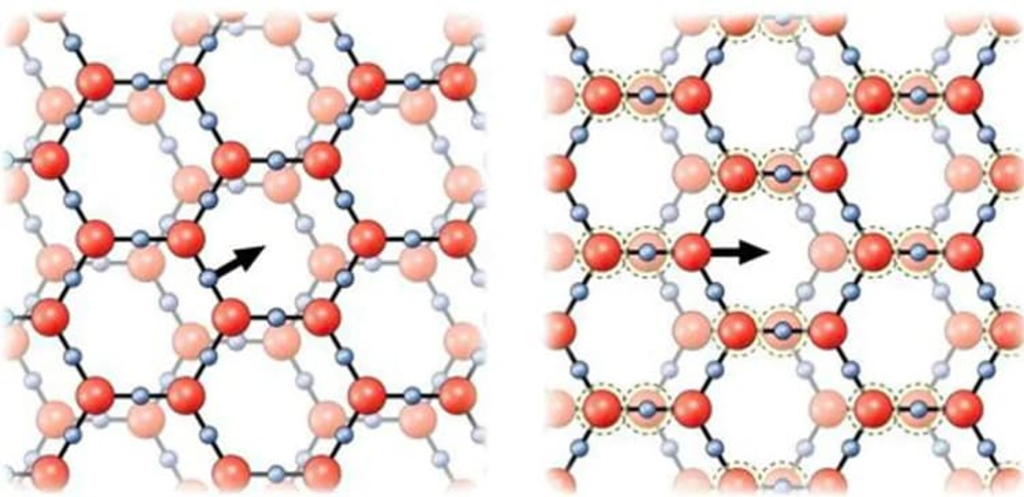
As Pollack describes: “This model yields a stable structure that sticks together naturally. This model yields predictable mechanical behaviour: semisolid when left alone, yet able to flow in response to an imposed shear force. Its behaviour should resemble gelatinous egg white.”
Due to this lattice shape, each plane can easily slide past adjacent layers, allowing electrons to travel through the lattice with ease (resulting in conductivity approximately 100,000 times that of surrounding unstructured water).9
Since this structure is “missing” protons (it’s H₁.₅O rather than H₂O), those protons go immediately outside the exclusion zone (“EZ”). Therefore, a negatively charged region exists within the EZ, while a positively charged region (which is acidic due to protons present) exists outside it. This, in turn, has been corroborated by numerous researchers who have both demonstrated a persistent pH change there and successfully harnessed its charge separation to power small electronics.10
Since the negatively charged region exists in the crystalline structure, it prevents most substances and ions from existing within it. This separating quality has many uses including economical water purification and allowing cells to create the sodium-potassium gradient which is necessary for life but far beyond what membrane pumps alone could accomplish (i.e., cells will continue to concentrate potassium after their membrane pumps are disabled).
Likewise, the EZ has increased viscosity, slowing substance diffusion, and can be directly observed by resonance imaging technologies detecting molecular restrictions (e.g., NMR11 and MRI12).
Author’s Note: Liquid crystalline water absorbs ultraviolet light (270 nm wavelength), radiates less infrared radiation than surrounding water and has approximately 10% greater refractive index than bulk water. By each metric, EZ water has a higher density than normal water. It comprises the greatest water percentage at 4 degrees Celsius – the same temperature Viktor Schauberger identified as providing water’s greatest density.
This form of water is all around us in nature. For example, it forms the surface layer of water we typically associate with “surface tension,” which is strong enough for water striders13 and certain lizards14 to stand upon. That layer, in turn, often behaves like a large connected sheet (best seen by observing large bodies of water from above) and, when carefully examined, is actually a complex lattice that weaves through the body of water.
Author’s Note: Pollack has also made a strong case that liquid crystalline water facilitates different phase changes (e.g., freezing, water boiling, or water vapour becoming clouds).15
Cellular Structural Integrity
Typically, cells are thought to be liquid bags whose contents are dictated by membrane lipids and proteins and held together by a cytoskeleton. However, liquid crystalline water (which forms along the cell membrane and the structures within cells) plays an equally pivotal structural role as it:
• Creates the gel-like stability of cells and tissue (which prevents them from suddenly leaking and spilling out once a puncture occurs).
• Creates a (continually regenerating) protective barrier which prevents things from entering the cells (and likewise protects the lining of blood vessels from being damaged by what flows past them or the load-bearing pivot point within joints from wearing down).
• Lubricates many surfaces, allowing them to slide past each other (e.g., the tendons and fascia are covered with a layer of this water). Conversely, as it disappears, tissues start to stick together (creating problematic adhesions), arthritis onsets and the blood vessels become vulnerable to injury and atherosclerosis begins.
Author’s Note: This lubrication can also be observed outside the body (e.g., ice skating is possible because a layer of liquid crystalline water forms between the water and ice).
• Creates non-compressible pockets throughout the body, which are essential for biomechanics (e.g., joints have a layer of liquid crystalline water in the centre which bears the force and weight of movement without becoming damaged or resisting the motion).
• These non-compressible structures allow the body to utilise a tensegrity based structure where elastic lines of tissue tension throughout the body can allow any force to be equally distributed throughout the body, both protecting any single area from buckling if exposed to excessive force and allowing free motion throughout the structure (rather than being like a typical building with a largely static one which relies on a single static core).
While many of these concepts initially appear quite abstract, one French hand surgeon found a way to visualise them through magnifying images obtained during surgery:
Author’s Note: The liquid crystalline water model has been embraced by bodyworkers as it puts into words what they observe within the body.
Mysteries of Microcirculation
All of the above raises many questions, one of which is how the fourth phase of water functions inside the body. I will present some of the findings below.
A consistent pattern emerges when examining each circulatory pathway in the body. Tiny spaces with no extrinsic force driving their flow simultaneously require regular movement through them, and without that flow, life cannot function.
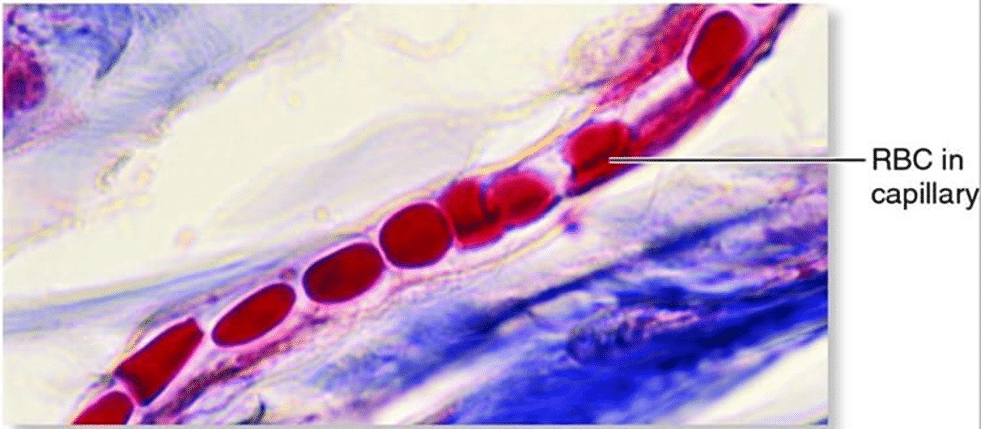
Author’s Note: In many cases, the blood vessels through which red blood cells travel are smaller than the red blood cell, requiring the blood cell to deform to fit – something which could not occur without substantial force pushing the blood cell forward.
As the hydrostatic pumping force of the heart is largely absent at the capillary bed, many have wondered if an alternate driver of circulation exists. For example, spontaneous circulation can be observed in a developing embryo before heart development,16 while flow and pressures observed throughout the body are frequently inconsistent with heart-generated pressure being the driving force behind blood circulation.17
When I’ve thought this question over at length, it does not seem realistic that the heart could provide enough force to move the red blood cells through every capillary in the body. What then could be causing the fluids inside the body to move?
Proton-Induced Motion
Pollack and his team happened upon a chance discovery in their laboratory18 which provided an answer to the mysteries of circulation:
Fluid commonly flows in response to an external pressure gradient. However, when a tunnel-containing hydrogel [which contains liquid crystalline water] is immersed in water, spontaneous flow occurs through the tunnel without any pressure gradient. We confirmed this flow in a wide range of plant- and animal-derived hydrogels.
As stated above, liquid crystalline water requires ambient infrared energy and a polar surface to form. A curious phenomenon occurs when that surface lines the inside of a tube – the liquid crystalline water lining the tube causes water to flow spontaneously through it.
EZs [regions of liquid crystalline water] were studied previously by immersing sections of tubes made of strongly hydrophilic material, Nafion, in aqueous microsphere suspensions. A microsphere-free EZ developed adjacent to the tube surface.
In the central core of the tube, movement of microspheres demonstrated a flow, continuously sustaining itself at a velocity of ~10 μm/s in the axial direction … On the other hand, flow was not observed in tubes built of hydrophobic materials such as Teflon, which do not generate EZs.
Since liquid crystalline water’s formation requires ambient radiant energy, its presence influences observed flow:
We found that increased infrared energy substantially increased the flow velocity … application of ultraviolet-containing white light could boost flow velocity by up to 500%. Thus, the self-driven flow mechanism can convert radiant energy into kinetic energy.
Pollack theorised that this flow was generated by mutual repulsion between positively charged protons expelled as water (H₂O) transitions to liquid-crystalline water (H₃O₂). Several observations support this hypothesis. First, protons are continually added to water passing through:
We found that the exiting water had a lower pH value than the entering water; the pH difference exceeded one unit and never diminished — even after 30 minutes of continuous flow.
Second, flow was greatest in narrow tubes:
Another prediction of the proton-gradient hypothesis is that the flow should be faster in narrower tunnels … a narrower tunnel should lead to a higher proton concentration in the core … which should lead to faster flow in the narrower tunnels.
Author’s Note: Narrow blood vessels are the most vulnerable to their blood flow being disrupted by an impaired zeta potential, and hence where the initial subtle signs of illness often appear.
Third, flow direction was always from the narrower end to the wider end:
A common feature shared among the various flows was the direction – always toward the region with a larger cross-section or volume.
Each fluid conduit in the body is lined with a material recognised to create liquid crystalline water. For example, all blood vessels are lined with a protective glycocalyx, which is remarkably well-suited for creating liquid crystalline water on its surface.
Likewise, liquid crystalline water-generating biomolecules divide cells into compartments and simultaneously, by lining the gaps with liquid crystalline water, create a primitive circulatory system, facilitating the exchange of metabolites necessary to sustain life. The biological flow of fluids independent of a central pump has also been explored in animals:
Blood can apparently flow without a beating heart. After the heart had been arrested, postmortem blood flow was confirmed in mice, rats, dogs and chick embryos. The flow persisted from 15 minutes to several hours. Furthermore, some amphibian larvae could live up to 15 days following surgical removal of the heart, implying an alternative means for propelling blood.
In short, the human vascular system is structured so that expelled protons can drive circulation, something that hydrostatic pumping alone is not sufficient to do.
Author’s Note: Other organisms also utilise this mechanism. Plants require significant internal water transportation, but they have no pumping organs. In the lab, Pollack demonstrated that the xylem creates liquid crystalline water19 and that this flow allows water to overcome gravity’s resistance and climb up tubes.20
Colloidal Stability
When a substance is mixed into water, it can fail to mix, dissolve or form a colloidal suspension. When repelling forces overcome attractive forces, particles become suspended and a colloid forms. The behaviour of chia seeds in water illustrates this concept:
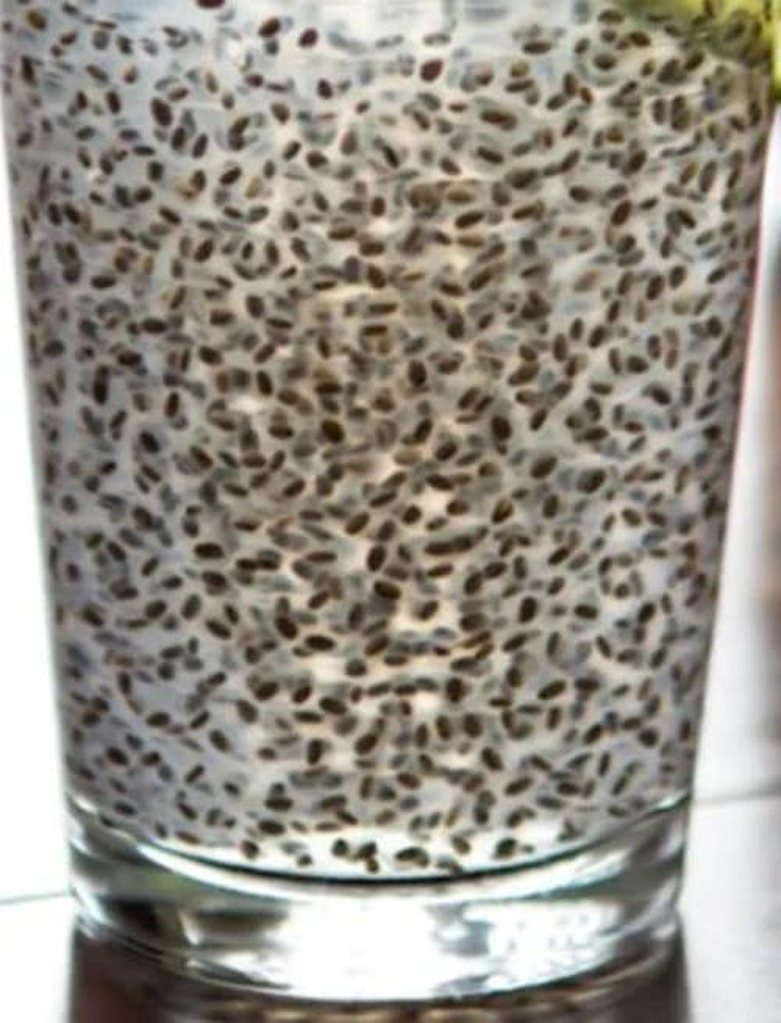
In the image above, a hydrophilic gel (composed of a large amount of liquid crystalline water) forms around each seed, creating a barrier that prevents seeds from coming together and separating by gravity. However, when this gel doesn’t form sufficiently, gravity separates the seeds from the water.
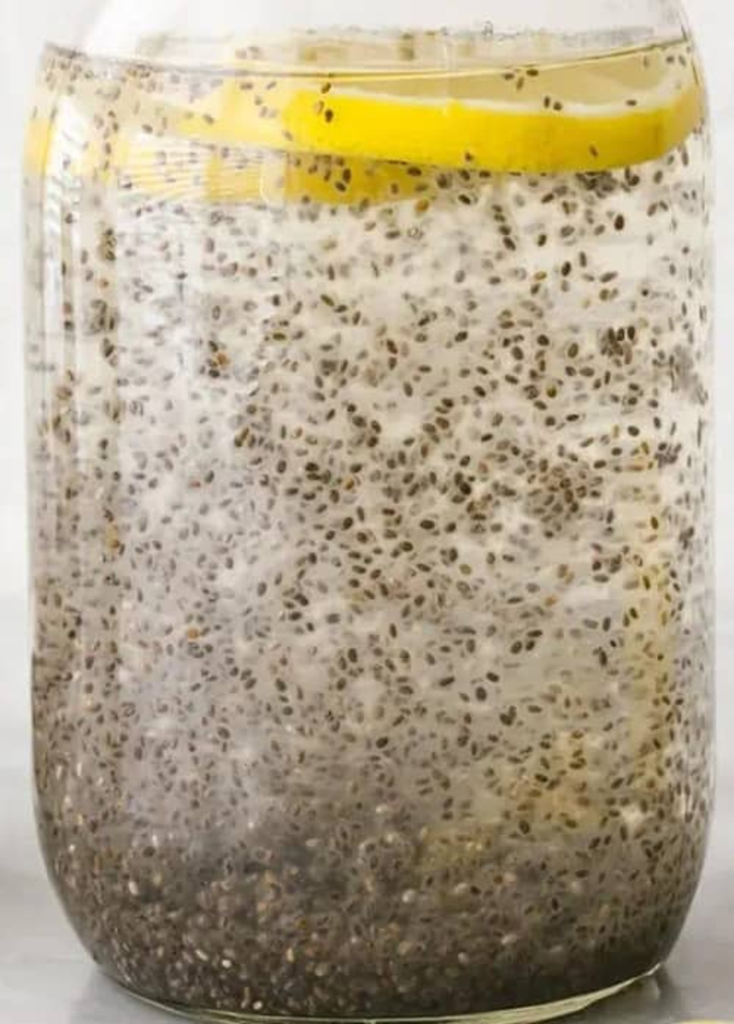
Chia seeds hence provide one of the best ways to observe liquid crystalline water directly and to conceptually understand colloidal stability (as something similar to this also occurs with particles much smaller than chia seeds).
Most biological systems, in turn, are colloidal suspensions that depend on mutual negative charges (or various types of minute barriers) to remain dispersed. In health, the disperse forces outweigh the attractive ones, but once this reverses (e.g., due to a vaccine or severe infection), fluids will begin to clump together, impairing the microcirculation, eliminating metabolic waste products and, once severe enough, giving rise to small or large strokes.
Author’s Note: The heart also struggles to pump thickened blood, and many have observed restoring the physiologic zeta potential treats arrhythmias (e.g., atrial fibrillation).
In turn, a major problem with vaccinations (due to their aluminium content) and covid-19 along with its vaccines (due to their spike proteins), is that both of these carry a very high positive charge density which overpowers the negatively charged dispersive forces within the body. As such, many childhood vaccine injuries can be traced to aluminium-induced micro strokes and, likewise, one of the primary issues with the covid vaccines is the clots they create throughout the body.
Author’s Note: Once you know how to look for them, you can often find signs of a micro stroke in covid-19 vaccine recipients.
Liquid Crystalline Water and Zeta Potential
Zeta potential quantifies the negative charge maintaining colloidal stability and, since unobstructed microcirculation is so vital to health, a key part of my medical practice revolves around ways to restore the physiologic zeta potential (discussed further HERE). Because of this, I am always looking at how the factors in a patient’s life influence their zeta potential and, due to their many overlaps, have extensively explored the relationship between liquid crystalline water and zeta potential.
For example, virtually all colloidal systems in nature rely upon mutual negative charges for dispersion, rather than mutual positive charges, which could also create the same effect. I now believe this is due to liquid crystalline water creating a negatively charged (H₃O₂-) coating around polar particles in water, hence necessitating another negative charge to create repulsion.
Likewise, many of the same factors that increase one (e.g., alkalinity) also increase the other. As such, I believe many factors attributed to enhancing one may, in fact, enhance the other (e.g., something that increases the amount of negatively charged liquid crystalline water around a particle will also increase its negative charge and colloidal dispersion, hence also increasing the zeta potential).
Similarly, a disruption in one can often affect the other (e.g., in the smallest vessels, a loss of zeta potential which causes blood cells to clump together can obstruct the vessel and negate the blood flow generated from liquid crystalline water).
Phase Changes
Colloidal solutions can exist either as a thickened “gel” (with significant amounts of liquid crystalline water) or a fully fluid colloidal solution (a “sol”). A key innovation Gerald Pollack made is that, through releasing specific ions, the body can rapidly cycle between having its colloids in a “sol” or “gel” state, creating another way the body can harvest the energy accumulated by liquid crystalline water.
For example, in Pollack’s model, muscles produce liquid crystalline water that stretches their proteins. To contract, calcium (a zeta potential collapsing ion) is released and rapidly breaks apart the liquid crystalline water within the muscle protein, causing the stretched muscle fibre to rapidly shorten (as nothing remains to push it open). Conversely, [adenosine triphosphate or] ATP (which restores zeta potential) is used to rebuild that liquid crystalline water and “relax” the muscle by stretching it back to its resting state.
Likewise, many other cellular processes also depend upon this phase shift, such as nerve cells firing (supported by the fact that local anaesthetics eliminate the liquid crystalline water in their vicinity) and the rapid expulsion and expansion of vesicles by cells (all of which is discussed further HERE).
Author’s Note: We frequently find local anaesthetics are very useful for dispersing pockets of “clumped fluid” within the body, and, due to the trauma release that often follows, we now suspect those fluid agglomerations (e.g., within the fascia) are a way the body stores trauma.
Conclusion
America’s scientific apparatus has the capacity to produce extraordinary innovations for humanity, but as independent scientists like Pollack have shown, that pioneering spirit has been replaced with a drive to secure future funding and maintain the status quo:
Until the modern era, scientists focused on seeking foundational mechanisms. They tried to understand how the world works … The pursuit of simplicity seems to have largely evaporated from the scientific scene. In four decades of doing science, I have seen this noble culture yield to one less audacious and more pragmatic.
The chutzpah has vanished. Scientists content themselves with short-term gains in narrowly focused areas rather than seeking fundamental truths that may explain broad areas of nature.
Water occupies a place central to so many natural processes that few people can conceive that the basics could remain open to question … A third reason for the slow emergence of such fundamental principles plagues all of science: intellectual timidity.
Relying on received wisdom feels safer than dealing with the uncertainties of revolutionary disruption … A fourth reason is outright fear. Challenging received wisdom means stepping on the toes of scientists who have built careers on that wisdom.
Making America Healthy Again (“MAHA”), thus, is much more than just a question of eliminating a few harmful toxins from our environment. Rather, it is a question of revisiting how the science our decisions revolve around is conducted to begin with.
For that reason, a major push from the MAHA leadership has been to reform how research is conducted so that discoveries that can transform science are incentivised, and longstanding dogmas (e.g., the necessity of fluoride or vaccines) can be challenged rather than censored from every platform.
As such, RFK Jr. and National Institutes of Health (“NIH”) director Jay Bhattacharya have begun enacting a series of vital and long overdue policies to facilitate it. I believe it is critical that we support this endeavour, particularly since it is only through a new form of science that our society can begin to give a serious look at ‘The Forgotten Sides of Medicine’, which can allow us to realise the health each of us has been searching for.
Of these, I believe the forgotten side of water to be particularly important, as beyond it explaining many mysteries within physiology, the loss of the body’s liquid crystalline water and zeta potential (and the accompanying tissue dehydration) is one of the key degenerative processes that underlie ageing.
Author’s Note: This is an abridged version of a longer article which goes into greater detail on how to increase liquid crystalline water and zeta potential within the body (which can be read HERE), an article on how the zeta potential concept underlies a wide range of diseases (which can be read HERE) and a five part series on liquid crystalline water (which can be read HERE, HERE, HERE, HERE and HERE).
A Note from Dr. Mercola About the Author
A Midwestern Doctor (“AMD”) is a board-certified physician from the Midwest, USA, and a longtime reader of Mercola.com. I appreciate AMD’s exceptional insight on a wide range of topics and am grateful to share it. I also respect AMD’s desire to remain anonymous since AMD is still on the front lines treating patients. To find more of AMD’s work, be sure to check out ‘The Forgotten Side of Medicine’ on Substack.
Sources and References
- 1 YouTube, wocomoDOCS, Viktor Schauberger – Comprehend and Copy Nature (Documentary of 2008), April 25, 2016
- 2 Wikipedia, Laminar flow, Accessed July 2025
- 3 Phys. Rev. E 79, 036117, March 30, 2009
- 4 Proc SPIE Int Soc Opt Eng. 2010;7376:73761C-1–73761C-13
- 5 Wikipedia, Hydrophile, Accessed July 2025
- 6, 7, 10 Phys Chem B. 2009 Oct 22;113(42):13953-13958
- 8 Colloid and Interface Science Communications, Volume 42, May 2021, 100397
- 9 Science. 1994 Dec 2;266(5190):1538-40
- 11 J Phys Chem Lett. 2011 Feb 18;2(6):532-536
- 12, 19, 20 Amazon, Ebner and Sons Publishers, The Fourth Phase of Water: Beyond Solid, Liquid, and Vapour, May 1, 2013
- 13 Wikipedia, Gerridae, Accessed July 2025
- 14 YouTube, National Geographic, July 23, 2013
- 15 A Midwestern Doctor, March 4, 2023
- 16, 17 The Rudolf Steiner Archive, Accessed July 2025
- 18 Sci Adv. 2020 May 8;6(19):eaba0941
Featured image taken from ‘Blood flow & ‘EZ’ water’, Karyn Forsyth Duggan
The Expose Urgently Needs Your Help…
Can you please help to keep the lights on with The Expose’s honest, reliable, powerful and truthful journalism?
Your Government & Big Tech organisations
try to silence & shut down The Expose.
So we need your help to ensure
we can continue to bring you the
facts the mainstream refuses to.
The government does not fund us
to publish lies and propaganda on their
behalf like the Mainstream Media.
Instead, we rely solely on your support. So
please support us in our efforts to bring
you honest, reliable, investigative journalism
today. It’s secure, quick and easy.
Please choose your preferred method below to show your support.

Categories: Breaking News, Latest News, World News
Midwestern Doctor ‘s Substack is well worth the subscription. It is a gold mine. After his articles I bought the Pollack book and it is very readable, even for someone without any scientific background. Thank you for sharing this on your site!
I know that water has remarkable properties like the memory of it.
However the Pollack book made no sense to me and I dropped reading it. Gravity? There is no such thing, but there is density and electrical charges.
What everyone failed to explain. What happens with the poisons in your mug if you ‘structure’ the water? Even if you divide it with different ‘zones’ they are still in the mug, aren’t they?
Some more problems with water – water is not H2O, water is an element on its own right. The only experiment demonstrating that it is H2O is dividing it to ‘atoms’ – allegedly – but there is a problem, during the experiment there are not only water there but electrodes also. No one ever made water from just H and O. Ever.
Then, to eliminate poisons the best way is using electron donors, C vitamin is an electron-donor – can it be all about discharging?
There was a much better scientist than Pollack, even if the later can be called as scientist… Louis Claude Vincent (father of bioelectronics) discovering than it certain areas the water caused certain illnesses.
“Mortality rates due to serious diseases (tuberculosis, cancer, cardiovascular disease) are directly related to the quality of water delivered to populations. These rates increase when the water is highly mineralized and made “potable” after treatment and addition of oxidizing chemicals.“
Based on this he made his research and established the parameters of the healthy water and came out with a formula you can use to measure your own water quality.
If you use a measuring tool with Ag/AgCl electrodes this is the formula, example:
ORP value – 150 mV = – 0,15 V. Water’ PH: 7,5. In this case the rH2 value:
rH2 = 33,8 E + 2 pH = 33,8(0,2 – 0,15) + 2×7,5 = 16,7
Healthy water must be slightly acidic! just a bit under PH 7 and rH2 value should be under 25 if I recall well.
Then the other misconception because people are tend to drink highly mineralized water for higher PH (not healthy) is that nowadays they say, the body is acidic. NO! Not the body is acidic, this acidity stuff came from the acidity of the urine which is an entirely different thing.
Even with an osmosis filter which give back energy and some minerals the water is better but not the best (measured by us). But if I sprinkle a very tiny amount of sodium-ascorbate into it the rh2 value will drop to a healthy level.
HOWEVER, USING A SUPER-EXPENSIVE ANALEMA WARD TO STRUCTURE THE WATER – nothing will happen, the values remain the same.
Damn, you’re good & fully versed in this.
True that water not molecule based H2O as modern science chanted. Modern science changed all esoteric knowledge into “soulless” entity.
Water actually celestial (spiritual) energy. All around us was spiritual energy that we can’t see but exist. Example: Wind (air).
Once we understand about souls, spirits, energy & protection of celestial dome above us, we all will understand about…
Who are we, where are we & what purpose of our existence.
Hint: It’s all about energy harvesting.
I agree. Considering the cruelty of life – we have to eat each other to survive – only the loosh or something very similar harvesting method makes sense.
Water the only medium-energy existed to help Sol-Energy & Lun-Energy.
Water capable to be formed in all stages, solid, liquid or gas. Water also a mediator between sol-energy & Lun-Energy during the process of lung respiratory (energy-transfer) & photosynthesis (energy-converter).
Energy cannot be destroyed, only can be transferred from one medium into next & converted (re-charged) back to original state.
Solid <-> Liquid (middle) <-> gas <-> Liguid <-> Solid = endlessly..
Modern science never teaches you that water-energy was a memory-energy just like a computer RAM that could power-up entire computer programs. Our dome-earth is water medium-based inside another super charged salt-water.
Sun (SOL) is the ‘life-battery’ charging energy source.
Reminder: Water (memory) also telling us an early warning about certain catastrophe. Right now, Indonesia having major earthquakes one after another. Once all the volcanoes at “ring of fire” chained-eruption at Philippine, Japan, America and others will marked the end of 12,000 cycle & start a new cycle.
The end is nigh.
Sure sun has an effect on water. In the animal kingdom they know it well. Dogs or cats, among many type of waters they will choose the one in the puddle, irradiated by the sun. They absolutely will refuse water with high mineral content, refuse distilled (dead) water, among mineral waters only Volvic works – so we drink only that, too.
Malvern also worked but the place is just too far to carry water home.
Dr Ana Mihalcea recommends taking EDTA and vitamin C if you have had the vaccines or been to the Dentist and received a shot that numbs the gums. I think Dr Ana has a web page.
Maybe… vitamin C is a good idea, always, it is an electron donor and the best working form of it is the liposomal type.
I don’t know EDTA, but I remember that Mihalcea she suggested to use methylene blue. Since then another doc tested its effect on the blood under microscope, it literally killed the red blood cells. People felt better, at least they thought because it had an euphoric effect but the red blood cells around it still died…