














2025 was described as the toughest year for the UK North Sea oil industry since the 1960s.
It was the first year since 1960 without a single exploration well drilled in the UK waters, investment collapsed to historic lows and companies froze or cancelled projects, focusing only on essential maintenance and decommissioning.
Some government advisers and climate activists claim that the UK has run out of oil and gas, but this is not true. All of the destruction to the UK’s oil and gas industry is due to government regulations and taxes, and “climate change” activists.
Britain is one of only 40 countries with ample hydrocarbon reserves: coal, oil and gas. From being a net exporter of oil and gas from the 1980s until 2004 (gas) and 2013 (oil), the UK has become a net importer. Norway profits from the North Sea resources while the UK pays.
Let’s not lose touch…Your Government and Big Tech are actively trying to censor the information reported by The Exposé to serve their own needs. Subscribe to our emails now to make sure you receive the latest uncensored news in your inbox…
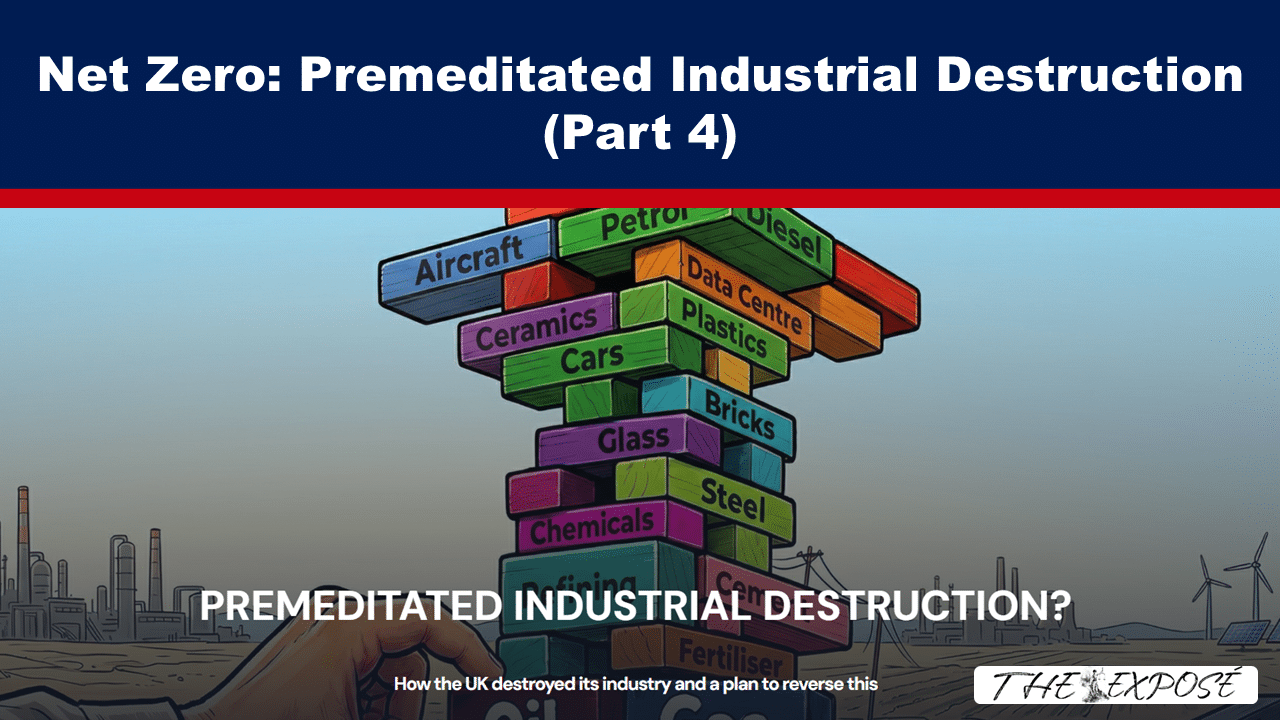
On 1 April, the Great British Business Council (“GBBC”), a newly formed think tank, published a paper titled ‘Premeditated Industrial Destruction: How the UK Destroyed Its Industry and A Plan To Reverse This’.
The paper is authored by economist Catherine McBride, retired engineer and consultant David Turver and public relations consultant Brian Monteith. It demonstrates how the Government’s Net Zero policies are destroying the foundations of the UK economy and provides recommendations on how Net Zero could be reversed.
Because this paper is important in revealing some home truths, we are reproducing it in a series of articles, more manageable chunks if you will, so that, hopefully, more will read it, or at least read part of it. We have made some minor edits for readability purposes. For those who choose to read the paper in one sitting, you can do so HERE.
Chapter 2: The UK’s bountiful natural resources
By Great British Business Council, 1 April 2026
Table of Contents
- Economics of UK’s hydrocarbon industry
- Offshore oil production
- Oil and gas reserves
- The available wealth and prosperity from UK onshore oil and gas potential
- International pricing of oil and gas
- Coal production, reserves and potential
- There is still a future for UK coal
- Making the case for new Coal-fired power stations
- About The Great British Business Council
Economics of UK’s hydrocarbon industry
Britain is one of only 40 countries with ample hydrocarbon reserves: coal, oil and gas. There are over 100 countries with no hydrocarbons and another 75 with very small hydrocarbon reserves. Japan, for instance, is a G7 country with little to no hydrocarbon reserves; its biggest imports are oil, liquified natural gas (“LNG”) and coal. Germany has some hydrocarbons, mainly low-quality coal, but must import crude oil, natural gas, refined oil and coal.
Revenue
In 2024/25, the UK government earned £4.5 billion in taxes from the North Sea oil and gas sector: £2.0 billion in Offshore Corporate taxes, £0.4 billion in repayments from the Petroleum Revenue Tax and £2.9 billion from the Energy Profits Levy (Windfall tax). Total tax revenue from the sector fell from £6.1 billion in 2023 to £ 4.5 billion in 2024, a reduction of £1.6 billion (27%).
Offshore Corporation Tax receipts, comprising Ring Fence Corporation Tax and Supplementary Charge, were down £1.0 billion (34%) from £3.0 billion in 2023/4 while the Energy Profits Levy receipts were down £0.7 billion (20%) from £3.6 billion in 2023/24.
For comparison, Norway will collect NOK 373.1 billion in oil and gas taxes in 2025, equivalent to around £28.8 billion. If we include Norway’s States Direct Financial Interest (“SDFI”) income, environment fees and Equinor dividends, the total Net Norwegian government petroleum cash flow in 2025 was NOK 655.8 billion (£50.7 billion). We discuss Norway’s more favourable approach to oil and gas taxation and regulations later in this chapter.
UK Offshore oil and gas is taxed at 78%, comprising 30% Ring Fenced Corporation Tax (set separately from the main rate of Corporation Tax at 25%), 10% Supplementary Charge and 38% Energy Profits Levy. The ring fence prevents taxable profits from oil and gas extraction in the UK and UK Continental Shelf from being reduced by losses from other activities or excessive interest payments.
Gross Value Added (“GVA”)
Offshore Energies UK estimates the industry adds £25 billion in gross value annually, implying several hundred million pounds in employee-related tax receipts. Unlocking additional resources from waters around the coast of Britain could add £150 billion of gross value to the UK economy, on top of the £200 billion of economic value expected from current plans. Oil and gas continue to account for over three-quarters of UK energy use, underscoring the industry’s continuing importance even as the transition to alternative sources accelerates.
Employment
According to Offshore Energies UK, in 2024, the offshore oil and gas sector supported 206,000 jobs, with 26,000 direct jobs within the oil and gas sector itself and a further 94,500 indirect jobs and 85,100 induced jobs spread across the country. These 200,000 jobs provide an estimated gross value added (“GVA”) of £25 billion per year. Based on salaries of between £50,000 and £80,000, their Pay As You Earn (“PAYE”) and National Insurance Contributions (“NIC”) contributions were likely to exceed £1 billion annually.
In the third quarter of 2025, the Mining, Energy and Water Supply workforce was 582,000, representing 1.7% of the total UK workforce of 34,216,000. Although this accounts for less than 2% of the UK workforce, it is one of the most productive sectors of the economy and also provides the raw materials needed by other industries.
The UK oil and gas workforce is forecast to decline sharply to 57,000–71,000 by the early 2030s due to reduced exploration and production. Historically, the sector supported 220,000 jobs across the UK (including direct, indirect and induced employment), but this figure has been falling steadily since its peak in 2014. It is estimated that the oil and gas mining sector loses 400 jobs every fortnight.
Regional employment
Scotland accounts for the majority of UK oil and gas jobs, particularly in Aberdeen and the Northeast. In 2022, approximately 93,600 jobs in Scotland were supported by the oil and gas industry, including direct and supply-chain roles. More recent estimates suggest 75,000 jobs in 2024, with projections of 45,000–63,000 by the early 2030s if the decline continues.
Exports and Imports
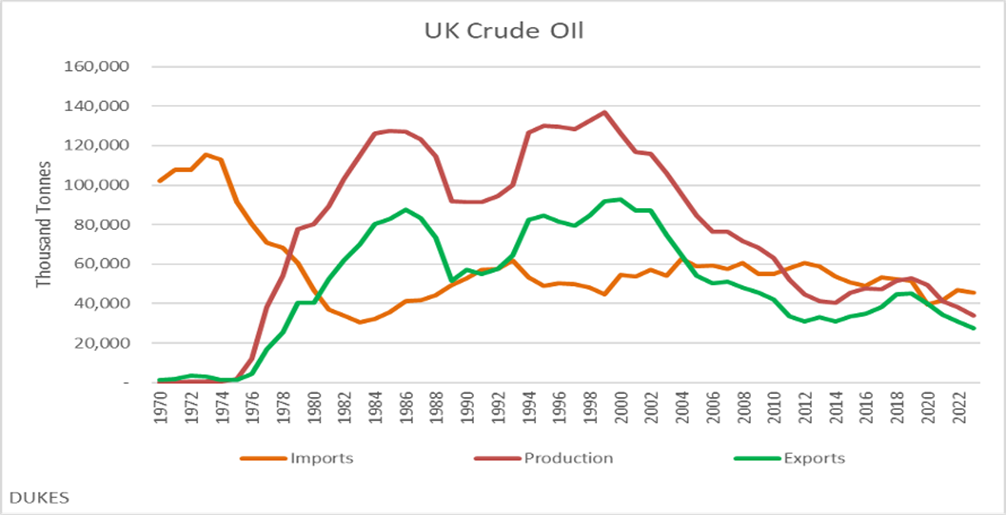
Despite the UK’s devotion to “green” policies, the UK has not stopped using oil and gas; between November 2019, when the fracking moratorium was imposed, and Dec 2025, the UK imported gas worth £125 billion, crude oil worth £136 billion and refined oil worth £132 billion over the same period, according to the Office for National Statistics (“ONS”). In 2025, the UK had a trade deficit in Standard International Trade Classification (“SITC”) 3 Fuels of £32.3 billion; prior to 2003, the UK fuel trade was in surplus.
SITC 3 Fuels (“Fuels”) are the UK’s fourth-largest goods exports. However, since 2019, using ONS Chained Volume Measures (“CVM”) to account for inflation, Fuel exports have fallen by 23%, and the UK trade deficit has continued to grow. The UK’s trade deficit in Fuels continues to grow, now amounting to £32.3 billion. Yet in 2019, the UK’s fuel trade deficit was just £9.4 billion. This fuel deficit is not due to “Brexit,” as many commentators claim, but to successive UK governments’ policies towards oil and gas.
Having once been a net exporter of oil and gas, the UK is now a net importer of both. Net imports of primary oils increased by 12% in 2024, to reach 20 million tonnes, and net imports of natural gas increased by 4.9% to 335 TWh due to declining domestic production. According to the Digest of United Kingdom Energy Statistics (“DUKES”), UK fuel import dependency in 2024 increased to 43.8%, up from 40.3% in 2023. (DUKES published 31 July)
Decommissioning
In July 2025, the North Sea Transition Authority estimated that total industry costs for decommissioning all UK upstream oil and gas infrastructure from 2023 onwards would be £41 billion at 2021 prices. His Majesty’s Revenue and Customs (“HMRC”) estimates it will make £5.8 billion in tax repayments associated with this decommissioning expenditure, in present value terms, as set out in HMRC’s Annual Report and Accounts. In addition, there is an estimated £5.9 billion of foregone Offshore Corporation Tax revenue. This is because decommissioning expenditure reduces company profits, thereby lowering the overall tax take. Combined, the total cost to the Exchequer from this expenditure is estimated to be £11.7 billion in present value terms.
Moreover, significant technical expertise in the exploration and production of oil and gas resources, including drilling techniques, reservoir management and production optimisation, is being lost. Losing this expertise will disadvantage the United Kingdom and make reopening the North Sea more difficult and expensive in the Future. Additionally, drilling rigs and exploration equipment are being moved to countries with a more welcoming attitude to the industry.
The Energy Profits Levy (Windfall Tax) has prompted many companies to halt investment in the UK and to move or reduce their UK workforce. Harbour Energy, an independent producer, announced in December 2025 that it expects to reduce its UK workforce by another 100, in addition to 600 jobs eliminated since 2023.
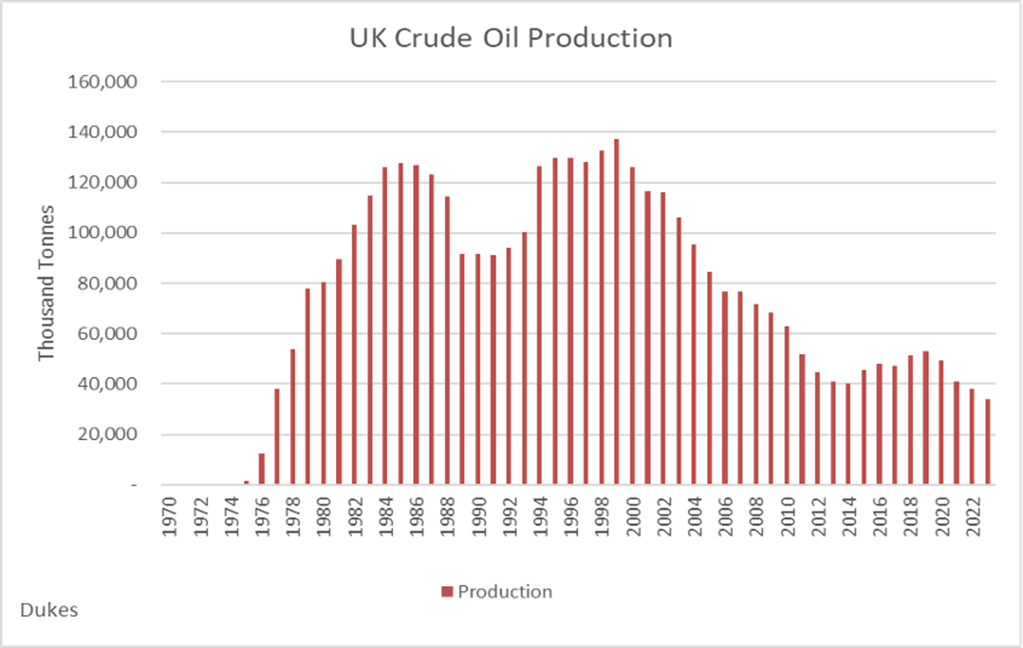
According to the World Energy Statistical Review, the United Kingdom produced 778 thousand barrels per day of crude oil in 2022, a decrease of almost 11% from 2021. The primary reasons for this decline are reduced exploration and development in the North Sea due to regulatory, taxation and other financial costs associated with developing new fields.
The UK oil and gas market is dominated by large multinationals, including Shell PLC, BP PLC, TotalEnergies SE, Chevron Corporation and Cadent Gas Ltd. These companies have other, less physically and regulatorily onerous fields to develop. Another hurdle the review identifies for new UK oil and gas developments is competition for capital investment from the UK renewables industry.
In 2024, operators spent a record £2.4 billion on decommissioning, with total spending projected at £27 billion between 2023 and 2032. BDO reported that decommissioning expenditures are expected to exceed capital expenditures by 2029, reflecting a structural shift in priorities.
Offshore oil production
The UK’s remaining proven and probable North Sea oil and gas reserves were estimated at 2.9 billion barrels of oil equivalent (boe) at the end of 2024. This figure represents the combined oil and gas, with approximately 70% oil and 30% gas. Discovered but undeveloped petroleum resources amount to 6.2 billion boe and could be developed through investment.
Working oil and gas sites include
• Abigail Field: This field, located off the east coast of Scotland, was approved by the UK government’s Oil and Gas Authority in January 2022. The field is estimated to contain 5.5 million boe, with the oil and gas split evenly. Despite complaints from Uplift and Friends of the Earth Scotland, the field is in production, producing 15.17 million m3/year in 2022 and 0.26-1.1 million barrels of oil per year.
• Brent oil field: This is located east of the Shetland Basin, about 186 km northeast of Lerwick. It was discovered in 1971 and was in production by 1976. It is operated by Shell and was one of the largest hydrocarbon accumulations in the UK North Sea. It has produced around 4 billion barrels of oil equivalent (boe). Many of the platforms have been decommissioned.
• Clair: The largest oilfield on the UK Continental Shelf, with an estimated 8 billion barrels of oil-in-place. It is located 75 km west of Shetland and operates in phases, including the Clair Ridge development, which began producing in 2018.
• Forties oil field: The UK’s second-largest North Sea oil field, located about 110 miles off the coast of Aberdeen. Discovered in 1970, it began production in 1975, and its total estimated resources are 5 billion barrels of oil, with a proven, recoverable reserve of about 175 million barrels. In 2025, current production was about 10,000 boe per day.
• Magnus Field: 160 km northeast of the Shetland Islands, it is one of the UK’s most northerly and active fields. Run by EnQuest, it produced 16,800 barrels/day in April 2025. Additional infill wells are planned to come online. It was discovered in 1974, began production in 1983, and is estimated to contain a total of 1.54 billion barrels, of which 869 million are thought to be recoverable.
• Kraken: Is a rare North Sea oil field that produces heavy sour crude. It is operated by EnQuest. It began production in 2017, its estimated reserves are 137 million barrels of heavy oil, and it is expected to produce 50,000 barrels/day at its peak. Karen oil is very heavy with an API gravity of 14o to 16o, with high viscosity and high sulphur. Karen has to be exported to Europe, Asia or the US Gulf Coast to be refined as the UK’s refineries are set up to handle Light Sweet Brent Crude (API 38o to 40o).
• Nelson Field: is in the Central North Sea, 200 km east northeast of Aberdeen. It is operated by Shell, produces a light sweet crude, and is still in production, but is decommissioning some topside equipment.
• Ninian Field: is about 100 miles northeast of the Shetland Islands. Operated by Canadian Natural Resources, it produces both oil and gas, with a production of about 3.9 million cubic feet/day in 2019. The field was originally a major oil producer.
• Schiehallion Area (Schiehallion, Loyal, Alligin): Located 175 km west of Shetland, this area is redeveloped and serviced by the Glen Lyon floating production, storage, and offloading (“FPSO”) vessel.
Oil and gas reserves
Some government advisers and climate activists claim that the UK has run out of oil and gas, but this is not true. The North Sea Transition Authority (NSTA) estimates that the UK has discovered but undeveloped resources of 6.2 billion boe, developed resources of 3.1 billion boe, and prospective resources in mapped leads of about 4.6 billion boe, as well as an additional 11.2 billion boe of prospective unmapped resources. However, oil companies have been deterred from exploring additional sites by the successive UK governments’ extortionate tax rates and irrational attitudes toward new oil and gas developments. The UK’s court system is an additional deterrent, as activist groups have been able to hold up production even after fields have received government approval. The Cambo, Rosebank and Jackdaw sites are examples.
In contrast to the Office for Budget Responsibility’s (“OBR’s”) pessimistic predictions, a report by Mordor Intelligence estimates the United Kingdom’s oil and gas market at USD 323.83 billion in 2025 and projects it could reach USD 346.29 billion by 2030, at a Compound Annual Growth Rate (“CAGR”) of 1.35% over the forecast period (2025-2030).
The report notes that although reserves have declined, they still constitute a substantial resource base that requires ongoing exploration and production. The well-developed infrastructure for offshore exploration and production, including offshore platforms, pipelines and storage facilities, provides a competitive advantage for upstream companies, enabling efficient extraction and transportation of oil and gas resources.
Unfortunately, when the Labour Government extended the Energy Profits Levy (“EPL”) to 2030, it also scrapped Investment allowances from the EPL, including the levy’s main 29% investment allowance for qualifying expenditure incurred after November 2024. This reduced the incentive for reinvestment in oil and gas projects. Instead, UK North Sea operators are resorting to mergers and acquisitions rather than new developments. Business groups warned that the EPL is a barrier to investment and growth, accelerating job losses and deterring capital.
Due to the fiscal turmoil in recent years, 2025 was the first year since 1960 without a single exploration well drilled in the UK waters, according to the energy consultancy Wood Mackenzie. 2025 was described as the toughest year for the UK North Sea since the 1960s, with investment collapsing to historic lows. Companies froze or cancelled projects, focusing only on essential maintenance and decommissioning. Field life extension dominated the remaining investment. Offshore Energies UK warned that the government’s decision to maintain the EPL unchanged until 2030 effectively turned down £50 billion of potential investment.
Meanwhile, forecasts suggest capital expenditure will decline by 26% over the forecast period, with production projected to fall by 6–9% annually. The lack of fiscal predictability and a high tax burden have driven companies to redirect investment to more favourable jurisdictions, such as Norway, on the other side of the North Sea. Norway continues to attract exploration capital, unlike the UK, where decommissioning expenditure is rising sharply.
Major UK oil and gas reserves
Undiscovered, potentially recoverable UK resources are estimated at 4.6 billion boe, reflecting the potential for future exploration. Proven oil reserves alone are approximately 192 million metric tonnes (equivalent to approximately 1.4 billion barrels). However, several projects were ready to start before their approval was withdrawn:
• Rosebank: Currently the largest untapped oil field in the UK, located 80 miles west of Shetland. It is estimated to contain 300–500 million barrels of oil. It was discovered in 2004, but it was not granted development approval until September 2023, only for that approval to be ruled unlawful by the Scottish Court of Session in January 2025, because the Government had not considered the climate impact of downstream (Scope 3) emissions from burning the extracted oil and gas.
If the Rosebank oil and gas field had been permitted to commence as planned, it would have employed approximately 1,200 UK jobs at its peak and an average of about 450 ongoing jobs. Rosebank’s estimated contribution to the UK economy in Gross Added Value was expected to be over £24 billion, and the production was expected to account for 8% of the UK’s oil production as well as an average of 21 million standard cubic feet of natural gas.
• Cambo: A large field also located northwest of Shetland and 20 miles southwest of Rosebank. Estimated to contain over 150 million barrels of oil. Shell withdrew from the project in 2021, but it remains a significant potential resource. The Licence expired in 2022 and was granted a two-year extension to 2024, followed by another extension to 2026. The field is now owned 100% by Ithica.
• Jackdaw: situated 150 miles off Aberdeen in a water depth of only 78 metres, it is southeast of Shell’s Shearwater platform and will be tied back to this. Jackdaw is a gas-condensate field and is estimated to hold 38 billion cubic metres, with a production capacity of around 5.7 million cubic metres of gas per day. The field was discovered in 2005, approved in the summer of 2022 and was expected to be in production by 2025, but its development has been delayed by the Finch Case ruling that new oil and gas developments must take Scope 3 emissions into consideration.
The Jackdaw site could make a significant contribution to UK domestic gas supplies. Global Scope 3 emissions will be the same whether the UK drills its own gas or imports it from Norway, and they will be much higher if imported LNG replaces domestic production. However, UK employment and tax revenue will be much lower.
While the three stalled projects mentioned above are well known, according to the OEUK, there are 51 known new fields in British waters that could be producing oil and gas but are considered unviable under the current government’s tax regime and its ban on new licences. As well as 60 extensions to existing fields that are being held back because of current tax policies.
Energy benefits of using UK natural gas
Besides the obvious financial benefits of using natural gas from the North Sea – increased tax revenue, increased regional employment and an improved Balance of Payments – there is also an energy bonus.
The highest Energy Return on Energy Invested (“ERoEI”) is achieved from a conventional gas field. The ERoEI is between 20:1 and 28:1. That means we get over 20 times as much energy out of a natural gas field as we put in to extract the gas.
However, imported LNG has a dramatically lower ERoEI. The liquefaction process consumes about 10% of the gas’s energy, and the shipping fuel and regasification further reduce the energy returned. Imported LNG has an ERoEI of less than 10:1. Importing LNG from the US only makes financial sense because fracking in the US has lowered the US gas prices so much that there is still a financial gain after converting it to LNG and transporting it across the Atlantic.
The oil industry does not regard the UK side of the North Sea as a spent resource, as evidenced by the North Sea Transition Authority (“NSTA”) offering a further 31 licences in the latest phase of the 33rd oil and gas licensing round in 2024. These licences attracted 115 bids from 76 companies. The licences offered in the round were expected to add an estimated 600 mmboe by 2060, or 545 by 2050.[1]
The first tranche offered 27 licences in October 2023, and the second offered 24 in January 2024. The 31 offers in the final tranche comprise 29 new licences and 2 mergers. Of the 29 new licences, 23 are Initial Term Phase A or B, two are Initial Term Phase C (firm wells), and the remaining four go directly to Second Term, meaning they can theoretically enter production more quickly.
Phase A is a period for carrying out geotechnical studies and geophysical data reprocessing; Phase B is a period for undertaking seismic surveys and acquiring other geophysical data; and Phase C is for drilling.
The number of awards in the current round is broadly similar to that of the most recent predecessors. The 32nd Offshore Licensing Round offered 113 licences over 260 blocks or part-blocks to 65 companies; the 31st Round, which focused on frontier areas, offered 37 areas over 141 blocks or part-blocks to 30 companies; and the 30th Round offered 123 licences over 229 blocks or part-blocks to 61 companies.
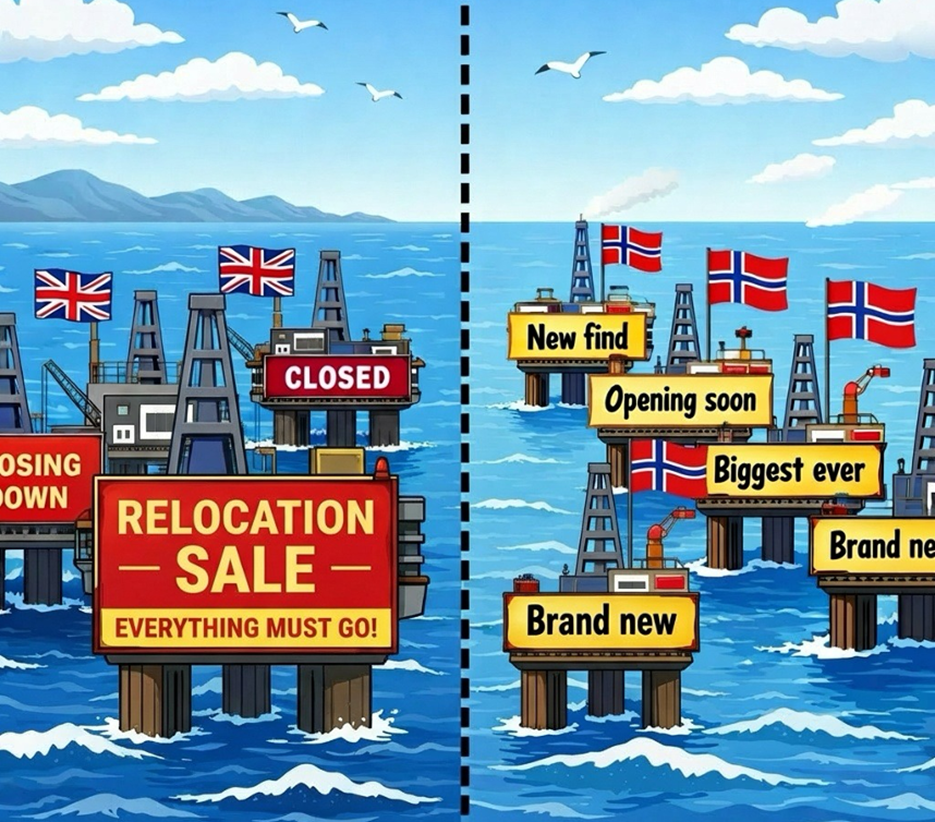
The UK is likely to have even greater oil and gas resources in the North Sea as the Norwegians exploring in the same area have continued to find new fields. In 2025, Norwegian exploration activity was slightly higher than in 2024. A total of 49 exploration wells were completed, and 21 discoveries were made on the Norwegian continental shelf. The discoveries have a preliminary total estimate of 67 million standard cubic metres of recoverable oil equivalents.
In 2025, Aker BP found one of the largest commercial oil discoveries on the Norwegian Continental Shelf. In December 2025, Equinor made two new discoveries of gas and condensate in Norway’s Sleipner area of the North Sea. These were Equinor’s largest discoveries in 2025 and can be developed using existing infrastructure. Preliminary estimates indicate that the reservoirs may contain between 5 and 18 million standard cubic meters of recoverable oil equivalents, corresponding to 30 to 110 million barrels. There is no reason to believe that exploration on the UK side of the line would not also result in major new finds, including fields west of Gullfaks within the UK zone. The Norwegians have found another large field near their major Gullfaks oil/gas field, which is just inside Norway’s maritime border.
In contrast to the UK, where few companies are continuing to explore and develop new fields, exploration has continued on the Norwegian side of the North Sea. Two new discoveries have been announced to date in 2026. Equinor, Norway’s majority state-owned energy company, together with its partners – Petoro, ConocoPhillips Skandinavia and Vår Energi – announced their new find, with preliminary estimates of 0.15-2 million standard cubic meters of recoverable oil equivalent, corresponding to 0.95–12.6 million barrels of recoverable oil equivalent.
On 20 January 2026, the Norwegian Offshore Directorate (“NOD”) revealed that Equinor and its partner, Orlen, had discovered gas and condensate in the Sissel prospect in production license 1137, which was awarded in 2022 as part of the awards in predefined areas 2021. The preliminary estimate of the size of the discovery is 1–4.5 million standard cubic meters of recoverable oil equivalent, corresponding to 6.3–28.3 million barrels of recoverable oil equivalent. The licensees will consider the opportunities to develop the discovery as a tie-back to existing infrastructure in the area, according to the Norwegian Offshore Directorate. Later this year, Orlen Upstream Norway plans to launch Eirin, another field in this area, to be developed using the Gina Krog and Sleipner infrastructure. President of the Orlen Management Board, Ireneusz Fafara, commented: “The Sissel discovery, from which we expect to obtain approximately 1 billion cubic meters of gas, strengthens our asset portfolio in Norway and represents another step toward achieving the Orlen Group’s strategic objectives. Norwegian gas plays a crucial role in ensuring stable supplies for our customers.”
Norway has a stable and predictable attitude towards oil and gas exploration
Although oil and gas companies in both Norway and the UK face a total marginal tax rate of 78%, and new oil and gas developments in Norway must also assess Scope 3 emissions as part of their Environmental Impact Assessments, oil and gas companies are not leaving Norway primarily because Norway’s attitude to oil and gas production is the opposite of the UK’s. Norway’s corporate tax rate is 22% and its 56% special petroleum tax is applied after deducting corporate tax. Both taxes allow deductions for all relevant costs, including exploration, operations, decommissioning and financing. Losses can be carried forward indefinitely and the tax value of losses is refunded in cash the following year. More importantly, Norway’s tax regime and political attitude toward the industry are considered stable and predictable. This is extremely important for companies investing in capital-intensive, multi-decade projects.
Norway recognises the important contribution oil and gas make to its economy and has created a predictable investment environment. They reward investment with upfront deductions and refunds. They have invested in electrifying offshore platforms to reduce upstream carbon emissions. The Norwegian government owns 67% of Equinor, which operates internationally, including in the UK, and is the largest operator on the Norwegian Continental Shelf. Unsurprisingly, unlike the UK, Norway has maintained a substantial fuel trade surplus since 1989. Fuels make up two-thirds of Norwegian exports, and the United Kingdom is its largest export market, buying a quarter of Norway’s fuel exports.
Norway has fast-track approvals for new fields.
Norway allows new fields to be connected to the existing pipeline and platform network, and the government actively invests in offshore energy, with petroleum accounting for one-fifth of all capital investment in the country. Companies can deduct 100% of the investment costs upfront, including exploration, research and development, financing, operations and decommissioning. Companies can consolidate revenue, investment and losses between fields. Companies with no taxable income can receive cash refunds for losses, helping new and small operators to get started. And most importantly, Norway continues to issue new licences and encourage drilling, with 42 exploration wells completed in 2024, resulting in 16 new discoveries.
The available wealth and prosperity from UK onshore oil and gas potential
As well as North Sea oil and gas, the UK has onshore oil and gas, including a giant gas field discovered under Lincolnshire that could meet the UK’s entire needs for a decade, reducing dependence on imports and generating tens of thousands of jobs. Egdon Resources, the energy company behind the discovery, believes the field, centred on the market town of Gainsborough, is so large that it could benefit the whole UK economy, boosting growth through more jobs, increased tax revenue and cheaper energy.
Deloitte estimated that exploiting the Gainsborough Trough field could add up to $140 billion (£112 billion) to GDP, yield $34 billion in direct taxation and create tens of thousands of jobs. Using domestic UK gas would also reduce the UK’s CO2 emissions by 218 million tonnes compared with imported LNG. The area already supports two dozen small onshore oil wells, but Egdon drilled into different strata, ancient mudstones lying about 2km deep, to find the gas. The field holds at least 480 billion cubic metres of recoverable gas – about seven times the UK’s current annual consumption. However, UK gas usage is expected to decline in the future; the reserve is likely to last a decade. This indicates that the Gainsborough field may be substantially larger than Shell’s North Sea Jackdaw development, which is estimated to hold 38 billion cubic metres, but its development has been delayed by regulations and additional approvals governing Scope 3 emissions.
Hydraulic Fracturing (fracking) and the madness of crowds
The UK also has the potential to frack for gas. The British Geological Survey’s early assessment suggested that UK shale formations might contain enough gas to supply up to 50 years of current UK demand. Another study by the University of Nottingham estimates that the realistically recoverable resource is only enough to meet 10 years of current demand. The British Geological Survey identifies four main shale basins: the Bowland–Hodder Basin (North‑West England, Midlands) – the largest – the Midland Valley (Scotland), the Weald Basin (Southern England) and the Wessex Basin (Southern England).
There are known shale gas fields in the UK, including the Cuadrilla Resources sites in Lancashire. In 2019, INEOS announced successful results from recent tests in the Bowland shale at Tinker Lane, Nottinghamshire. Together with partner iGas, INEOS found very high gas concentrations, comparable to (and in some tests exceeding) the average levels in the Barnett Shale in Texas. The tests found an average level of 60.7 standard cubic feet (scf) per tonne of gas. For comparison, the average for the Barnett shale is 39 scf per tonne.
Fracking should not be viewed as anti-“green.” Natural gas is a much cleaner fuel than coal. It is inconsistent with environmental principles for the UK to consider leaving its shale gas in the ground while importing LNG that has been frozen and then transported thousands of miles from the US or Qatar, or importing goods produced using coal in China or India.
It is also worth noting that although fracking trials in the UK were shut down because the process caused slight earth tremors with magnitudes between 0.5 and 2.9 on the Local Magnitude (“ML”) scale. However, there is a geothermal project in Cornwall, United Downs Deep Geothermal Project, that uses fracking techniques to extract hot water from deep granite to generate electricity. This process has caused 232 induced seismic events so far, two of which exceeded 1.5 ML. Yet no one is trying to close the Geothermal Project. Earth tremors caused by fracking for hot water aren’t seen as a problem, unlike those caused by fracking for gas, which could produce the same amount of energy.
Fracking success for the US economy
The US Henry Hub natural gas price has fallen significantly since the fracking boom in the 2010s, due to the massive increase in domestic gas supply from shale gas extraction. Before then, the US natural gas price was between $6 and $8 per MMBtu (million British Thermal Units); now it is about half that amount. In January 2008, immediately before the fracking boom, the US gas price was $7.68 MMBtu; by March 2012, it had dropped to $2.27 MMBtu, as fracking increased production by 36%. The US Producer Price Index for natural gas declined 56.8% from 2007 to 2012.
Before the US shale boom, UK natural gas was cheaper than US Henry Hub gas prices. However, this has not been the case since 2010. As US production increased and prices fell, UK gas production was restricted by limiting new offshore well development, preventing onshore fracking and imposing massive additional taxes on oil and gas companies.
Lower US gas prices reduced costs for US households and manufacturing industries and fuelled economic growth. Cheap gas is credited with the creation of 725,000 jobs by 2014 and a 0.7% increase in US GDP by 2015. Cheap gas lowered US electricity prices and encouraged a shift from coal to gas, which also cut associated CO2 emissions in half. Fracking also helped the US trade deficit: The US went from being a net gas importer, importing gas from Canada and LNG from Qatar, to becoming the world’s largest exporter in 2023, surpassing Russia, Qatar and Australia with exports of 91.2 million metric tonnes. This is in stark contrast to 2007, when the US imported 4.6 trillion cubic feet, approximately 88.6 million metric tonnes of gas, assuming a standard methane density.
China is also fracking
China has recently made major new shale gas discoveries in Xinjiang, adding to its reserves in Sichuan, and is expanding hydraulic fracturing (fracking), primarily in the Sichuan Basin. Although these new finds are important, they will not significantly reduce China’s dependence on imported gas, as gas demand is growing faster than domestic supply.
China is the world’s largest importer of LNG and a major importer of natural gas by pipeline. China consumes over 400 billion m3 of natural gas per year, of which 230-240 billion m3 is produced domestically and 160-180 billion m3 is imported. Over half of China’s imported natural gas comes via pipelines from Turkmenistan, Russia, Kazakhstan and Myanmar, and 40%-45% is imported as LNG from Australia, Qatar, the US and Malaysia.
China’s shale gas reserves are deeper than those in the US and are expected to be more expensive to frack. The reserves are in mountainous regions far from China’s main population centres, so they will need to build a pipeline to transport the gas to the demand centre. China has also signed long-term contracts with its LNG suppliers, but it effectively ceased importing US LNG in retaliation for the US increase in tariffs on Chinese goods.
International pricing of oil and gas
Oil prices vary by grade and location. Refineries usually specialise in refining certain grades of oil. Light sweet crude oil, such as North Sea Brent, is usually more expensive than heavy sour crude as it is easier and cheaper to refine. In general, oil prices move in parallel; however, when there is trouble in the Middle East, such as the current Iranian blockade of oil tankers passing through the Strait of Hormuz, the price of Middle Eastern crudes will increase by more than similar sour crudes from Northwestern and Central America. Transporting oil by tanker is cheaper than purifying, freezing and transporting gas by LNG Carrier, but both require insurance and freight, which adds to the price of imported oil and gas.
The chemical composition of natural gas and its energy content vary from one reservoir to another. Methane content can vary from 65% to over 95%, but natural gases also contain various levels of higher-chain hydrocarbons known as Natural Gas Liquids (“NGLs”) (ethane, propane, butane and pentane), and various quantities of other gases such as nitrogen, helium and hydrogen sulphide. However, gas prices vary with demand at the supply location, unless there is a pipeline delivering the gas to a demand point or to a facility that converts the gas into liquid form (LNG) for transport by sea in specially designed tankers.
Converting gas to LNG involves purifying it, cooling it to -162 degrees Celsius, which also reduces its volume by about 600 times, and storing it cryogenically. Cooling the gas is very energy-intensive, consuming approximately 280 kWh to produce one metric tonne of LNG. About 7% to 15% of the gas delivered to an LNG plant is used to power the compressors and refrigeration process. Converting gas to LNG adds about $3.50 per MMBtu to the price, assuming this is done at a large-scale facility on the US Gulf Coast. Shipping the LNG to the UK adds $2 and regasification at a UK terminal incurs $0.8.
Coal production, reserves and potential
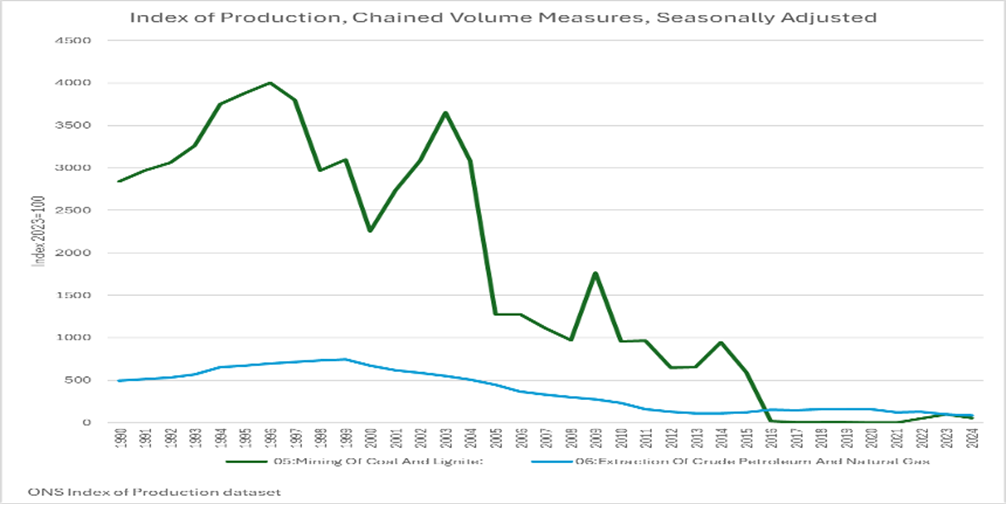
Global coal consumption, at 45,850 TWh, is still higher than gas consumption, at 41,278 TWh. Each year, approximately 1.4 billion tonnes of coal are exported internationally. If coal is eventually phased out internationally, leaving UK coal in the ground would represent a missed opportunity to benefit from the export revenue potential of the UK’s natural resource.
The UK has almost entirely phased out coal mining, but one coal mine still operates in Wales: Aberpergwm Colliery near Port Talbot. Another Welsh mine, Ffos-y-fran at Merthyr Tydfil, was recently closed. However, the UK still has approximately 77 million tonnes of proven, economically recoverable coal reserves that could be profitably mined. There are an additional 4 billion tonnes of known hard coal deposits, though not all are currently economically viable.
The UK consumed 2.1 million tonnes of coal in 2024 (2.5 million tonnes of oil equivalent) for industrial processes that require temperatures above 1,400 °C, such as cement, glass and ceramic production.
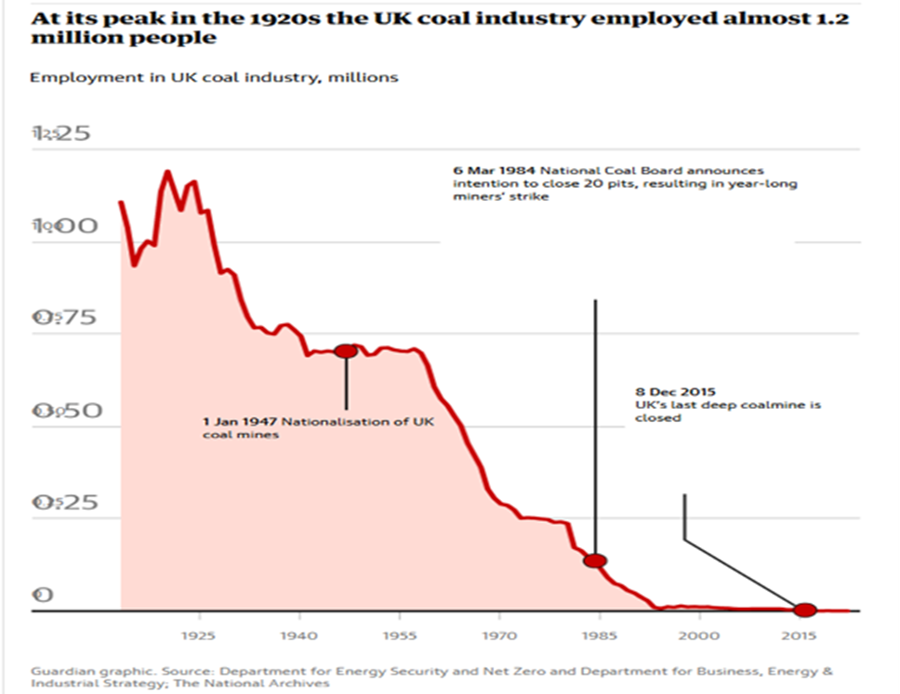
Legislation applicable to coal production in the UK
Coal mining is legal in the UK provided the mine has a licence from the Coal Authority, planning permission, environmental permits and complies with strict Health and Safety regulations. Mine Regulations 2014 require mine design and risk assessment, ventilation and dust control, electrical safety, explosives handling, emergency planning and the provision of escape routes. The Coal Mining Act 1994 created the Coal Authority, which issues coal mining licences, manages coal resources and oversees safety and environmental responsibilities. Obtaining planning permission requires approval for a change of land use, land access and surface rights, an environmental impact assessment, a community impact assessment and a water management plan. The environment permits covering water pollution, mine water discharge, mine waste management and emissions management. All new mines must now assess their Scope 3 emissions.
All of this is included in this chapter to emphasise that coal mining in the UK is not a fly-by-night activity. It is highly regulated and should be encouraged as an industry. UK coal mining is more tightly regulated than many of the mines that provide the UK’s coal for industrial heat and the mines that provide the inputs and energy for the goods the UK imports from Asia.
Types of coal in the UK
Coal is a dense energy source with considerable uses beyond electricity production. Coal can burn at up to 3,500°F (1,900°C) and provide industrial heat to produce glass, ceramics, cement and other chemicals. Anthracite contains about 90% carbon and burns at 1,100 to 1,400 °C and typically produces 30 to 33 MJ/kg. Anthracite is the most efficient type of coal; it has the highest carbon content, the lowest moisture content and burns longer, hotter and cleaner than other types of coal. Bituminous coal, the most prevalent in the UK, is 45% to 85% carbon, burns at 900 to 1,300 °C, and is generally used for power generation, producing 24 to 30 MJ/kg. Metallurgical (coking) coal is a grade of bituminous coal with low ash, low sulphur, low moisture and high carbon with the ability to liquefy and resolidify into coke when heated in an anaerobic environment (without oxygen). It burns at 900 to 1,300°C but can reach higher temperatures when converted into coke, which burns at 1,500 to 2,000°C. It typically produces 24-30 MJ/kg.
Lignite (Brown coal) is only 25% to 35% Carbon, burns at 600 to 800°C to produce 10-20 MJ/kg and is the least efficient type of coal, releasing the highest CO2 emissions, as well as particulates, sulphur dioxide, nitrogen oxides and ash. Germany currently burns lignite to generate electricity. Reopening UK bituminous coal mines and exporting the coal to German power stations would revive a valuable Welsh industry, create jobs, improve the UK’s balance of trade with the EU and lower global CO2 emissions. Coal is equally essential to UK cement production, supplying approximately 80% of the energy used to produce this critical infrastructure product. Coal’s contributions to the UK economy extend to agriculture through ammonia fertilisers and soil improvers.
There is still a future for UK coal
Material science, critical minerals and Rare Earth elements
Coal is no longer just a fuel; it is becoming a source of critical minerals, rare earths and advanced materials like graphene, carbon fibres and the building blocks of the next industrial era. The US Department of Energy, China and several European research groups, including the Universities of Exeter and Nottingham and the British Geological Survey, are actively developing extraction technologies from waste coal tailings because it’s cheaper and cleaner than opening new mines. The UK has hundreds of millions of tonnes of coal spoil heaps and Acid Mine Drainage sites. This could be another growth industry for South Wales and County Durham.
Coal and its by‑products – especially coal ash, coal refuse and acid‑mine drainage precipitates – contain measurable concentrations of rare earth elements (“REEs”): Neodymium, Dysprosium, Yttrium, Lanthanum, Critical minerals, Cobalt, Lithium, Germanium, Gallium, Scandium and Vanadium. These elements are essential for: electric vehicle (“EV”) motors, wind turbine magnets, semiconductors, fibre‑optic systems, batteries and aerospace alloys.
UK coal waste streams are enormous, already mined and often concentrated by natural processes. For example, acid mine drainage forms precipitates rich in rare earths and coal ash can contain REE concentrations comparable to low‑grade conventional ores. Coal seams themselves can be rich in germanium, gallium and other high‑value elements.
Anthracite can be converted into industrial-grade graphene, which is used for energy storage, composites, coatings and sensors. Carbon fibres are a by-product of coking and are used in aerospace, wind turbine blades, sporting goods and lightweight vehicles. Coal can also be used to produce synthetic graphite and hard carbon for lithium-ion and sodium-ion batteries. The UK should be encouraging the exploitation of this resource.
Aberpergwm – Anthracite
Aberpergwm produces high-grade anthracite used in water filtration, industrial carbon products and high-temperature processes. The mine has a long-term licence allowing extraction of up to 40 million tonnes over 18 years. A large proportion of the anthracite it produces is exported. Aberpergwm is a deep coal mine producing anthracite, owned by Energybuild and employing 100 to 130 workers. Despite being located at Port Talbot, it did not supply the coking coal needed for the nearby blast furnaces. Instead, the metallurgical coal they needed was imported from Australia and the US, and occasionally from Canada and Russia (before its invasion of Ukraine in 2022).
Ffos-y-fran – Thermal Coal
About 25 miles away from Port Talbot, the Ffos-y-fran mine was an opencast thermal coal producer that supplied the Port Talbot steelworks with coal for steam and heat. It employed about 180 workers but is now effectively closed, as its licence expired in 2022. Thermal coal is mainly used to produce heat for cement works, industrial heating and heritage railways.
Whitehaven – Metallurgical coal
There was also a proposal to open a new metallurgical coal mine in Whitehaven, Cumbria, called the Woodhouse Colliery. The mine was approved by the government in 2022 and was expected to produce 2.78 million tonnes of coal annually through to 2049. This would have been used in blast furnaces in the steel industry. Unfortunately, the High Court overturned its planning permission in September 2024, preventing the project from proceeding.
As with opposition to the new offshore oil and gas fields, the removal of planning permission followed the Supreme Court’s Finch judgment, which requires consideration of Scope 3 downstream emissions in environmental impact assessments. The Labour government has also withdrawn its support from the project. This was done by Angela Rayner in July 2024 when she was the minister for local government. The proposed Cumbrian mine would have employed about 500 people directly, with another 100 indirect supply-chain jobs. These would have been skilled, well-paid jobs in a region that could use more high-productivity employment. The largest source of employment in Cumbria is tourism, which is generally low-skilled and low-paid. The area around Workington and Whitehaven had been a major coal-mining area; the first pit was established in 1552, and the last pit in Whitehaven closed in 1986; therefore, the opening of a new coal mine would not have been out of character.
UK Coal imports for steel production and industrial heat
The UK government intervened last year to prevent the closure of the last two blast furnaces in the UK, at Scunthorpe, owned by Chinese steelmakers, Jingye, while at the same time preventing the opening of a new metallurgical coal mine in Cumbria. The UK currently imports metallurgical coal, a key ingredient in steel production, from as far away as Australia.
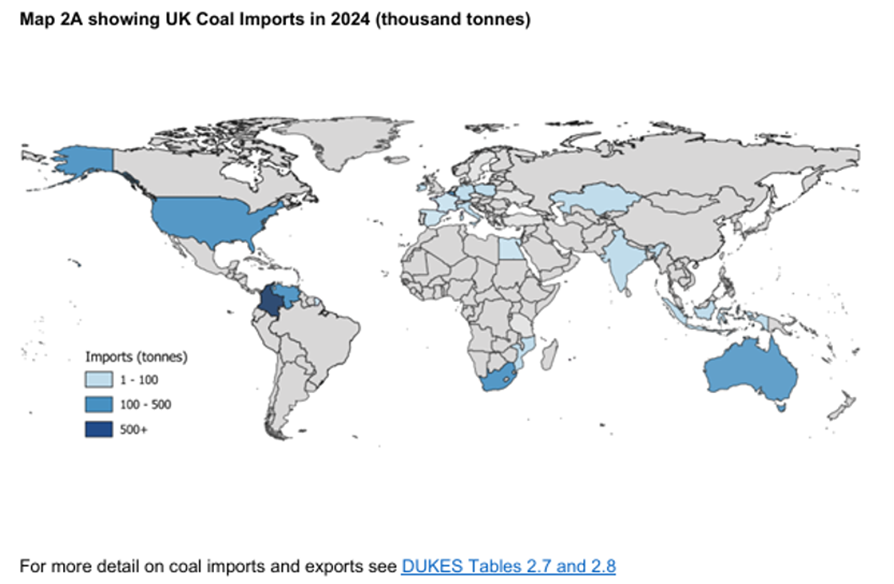
Coal fired electricity production and Carbon Capture and Storage (“CCS”)
The closure of the UK’s last coal-fired electricity plant, Ratcliffe-on-Soar, in Nottinghamshire, in October 2024, ended Britain’s 142-year reliance on coal for generating electricity. The plant was one of the cleanest, extracting all pollutants except for CO2 emissions. But it was still too expensive to continue operating. Coal is a dense store of energy and the cheapest, most reliable way to produce electricity. Coal prices are less variable than oil prices, and, more importantly, the UK has large thermal coal reserves.
Other countries are developing coal-fired electricity plants that also capture CO2 emissions as well as all other particulates. The Canadians (Boundary Dam 3, 2014), the US (Petra Nova, Texas) and China (Zhengning Power Plant) have built coal-fired power stations that also collect CO2 emissions. China’s Zhengning Power Plant was launched in September 2025 and is expected to capture 1.5 million tonnes of CO2 annually. This would have been a preferable solution towards lowering Britain’s CO2 emissions than closing all coal plants. Technology is producing High-Efficiency, Low-Emissions plants that cut CO₂ by up to 40%. Carbon Capture and Storage (“CCS”) enables reductions above 90%, with Chinese projects targeting 99.9%.
China added 78 GW of new coal-fired power capacity in 2025, including more than 50 large coal units, each producing approximately 1 GW of electricity. This was 87% of the new global coal-fired capacity added in 2025. However, None of China’s new coal plants has Carbon Capture and Storage (“CCS”).
The International Energy Agency (“IEA”) calculates that CCS increases the levelised cost of electricity from coal by 70% to 100% and consumes over 20% of the plant’s output. The low cost of coal-fired electricity is one of its main benefits. Ironically, China is building the new coal-fired plants as backup for its renewable electricity production. China’s renewables appear to be a token effort, given that China’s coal-fired electricity production emits 4 billion tonnes of CO2 annually.
China isn’t the only country building new coal-fired power plants, although it accounted for two-thirds of the world’s new coal plants in 2023. Indonesia, India, Vietnam, Japan, Bangladesh, Pakistan and South Korea have also built new coal-fired plants. Developing and industrially competitive countries prefer coal because it is cheap. Both China and India plan to continue building coal plants because they have large coal reserves (as does the UK). 80% of India’s electricity comes from coal.
Germany has been able to restart its coal-fired electricity plants after the destruction of the Nord Stream pipelines. This has been a blessing for German energy security. Unfortunately, the Conservative Energy Minister, Alok Sharma, took delight in blowing up decommissioned coal-fired electricity plants, so the UK does not have this energy security to fall back on, even to provide backup for the UK’s ever-increasing wind turbines.
Building new coal plants as backup dispatchable electricity providers would lower UK electricity costs, as coal is cheaper than gas, and would keep the UK’s coal industry going. However, this would require the UK to abolish its Carbon Support Price tax.
Making the case for new Coal-fired power stations
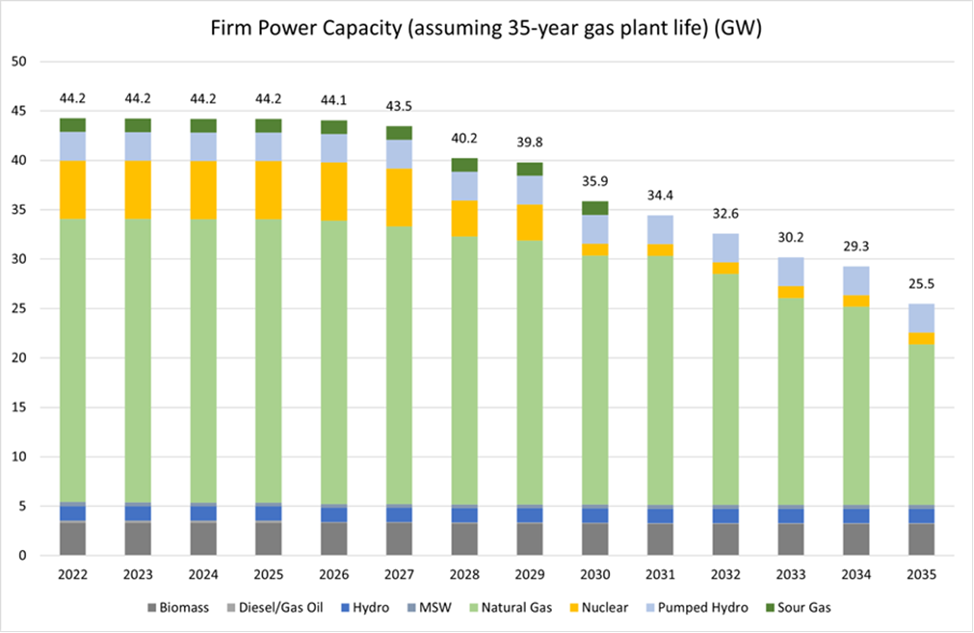
The case for reopening coal mines is made stronger when the state of our electricity generation system is considered. Our gas fleet is ageing, and, of course, the last coal power plant was shut down in 2024. The typical operational life for a gas plant is 25–30 years. With careful maintenance, this could possibly be extended up to 40 years. However, intermittent operation can also reduce component life. Using plant data from the Digest of UK Energy Statistics (“DUKES”) and assuming a 35-year life for our gas fleet, we can see in Figure 14, below, that firm power capacity starts to fall in 2028 and by 2035 is down to just 25.5GW (or 28.8GW if Hinkley Point C is online by then).
National Energy System Operator (“NESO”) expects both total electricity demand and peak demand to rise over the period to 2030 and beyond. We will become increasingly reliant on intermittent renewables, and on dark, cold and calm winter evenings, the output from wind and solar can fall to almost zero. This means we will need firm power capacity available to meet the shortfall.
As Figure 14 shows, the UK will become increasingly short of firm power capacity, and it is therefore critical that new firm capacity is built quickly. One answer might be to build new gas-fired generators. However, there is an eight-year lead time on new gas-fired power plants, meaning that if we started building today, we would not get new capacity online until 2034. This leaves coal as a viable alternative because it should be possible to build quicker, with construction times in China as low as 20 months.
The other advantages of coal-fired generation are:
• Coal-fired generation is cheap – cheaper than gas and intermittent renewables – if carbon costs through the Emissions Trading Scheme and Carbon Price Support mechanism are removed.
• Coal-fired generation is secure, especially if domestic fuel is used. As recent events in the Middle East remind us, the security of LNG supply is subject to the whims of Middle Eastern politics. Moreover, the security of supply of intermittent renewables is subject to the whims of the weather.
• Coal-fired generation is reliable and flexible. Of course, coal-fired power plants are not subject to the vagaries of the weather, which is why most coal is used as a constant baseload power source. However, newer plants can operate at lower minimum loads and flex up and down in response to changes in demand and the output of intermittent renewables.
• Storage is cheap and easy. One problem with intermittent renewables is that they sometimes produce more power than demand and at other times produce less. This problem can be partially solved by adding battery storage. However, such storage is very expensive. By contrast, coal can be stored in stockpiles near the power plant at very low cost.
The main objections to new coal power plants relate to emissions. If CO2 emissions are discounted due to the US removal of the greenhouse gas endangerment finding, that leaves real pollutants such as particulates, sulphur oxides (SOx) and nitrogen oxides (NOx) to deal with. Fortunately, modern super-critical (“SC”) and ultra-super-critical (“USC”) plants in China have proven very effective at removing these pollutants.
First SC and USC plants operate at higher thermal efficiencies than conventional plants, reducing coal use and raw pollutant emissions per MWh of electricity produced.
Studies have shown that modern Ultra Low Emissions plants in China remove over 99.9% of all particulate matter and over 99.8% of PM2.5 particulates. Other studies show sulphur dioxide removal rates of 97.8-99.7% in high-efficiency, low-emissions power plants in China. NOx removal efficiencies of 90% can also be achieved.
The benefits of coal-fired power plants are obvious, and the downsides of coal have been largely eliminated through technological enhancements. The case for coal is becoming increasingly hard to ignore.
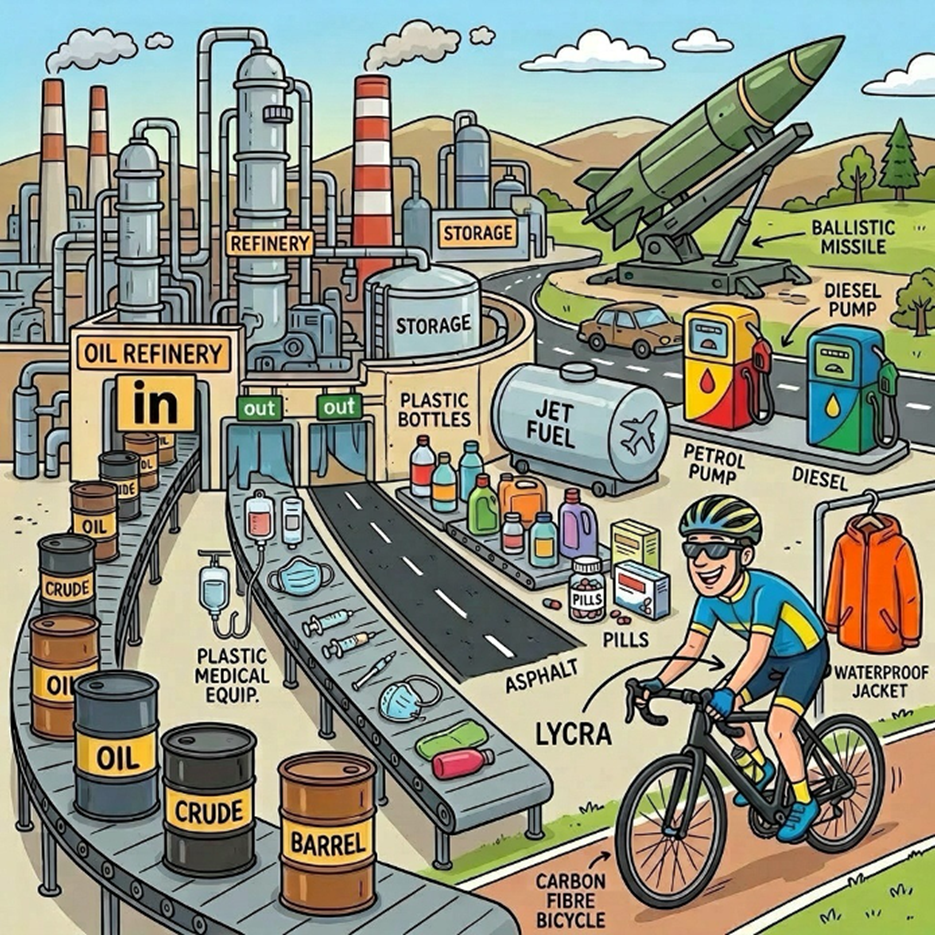
About The Great British Business Council
The Great British Business Council (“GBBC”) was established to enhance public and political understanding of the advantages a thriving business community provides to local security, standard of living and wellbeing. It aims to support British firms and small businesses by promoting well-crafted, practical, evidence-based policy reforms that foster enterprise and innovation. It is independent of any political party, as it hopes that all parties will consider adopting the straightforward, practical policy suggestions it proposes.
The GBBC is funded by private donations from concerned citizens who want the UK to thrive economically as it once did. If you would like to join us or donate to their cause, please contact in**@**BC.UK or follow them on LinkedIn, X (Twitter), Facebook, YouTube, TikTok and Bluesky.
Featured image: Cover of the GBBC paper, ‘Premeditated Industrial Destruction: How the UK Destroyed Its Industry and A Plan To Reverse This’
The Expose Urgently Needs Your Help…
Can you please help to keep the lights on with The Expose’s honest, reliable, powerful and truthful journalism?
Your Government & Big Tech organisations
try to silence & shut down The Expose.
So we need your help to ensure
we can continue to bring you the
facts the mainstream refuses to.
The government does not fund us
to publish lies and propaganda on their
behalf like the Mainstream Media.
Instead, we rely solely on your support. So
please support us in our efforts to bring
you honest, reliable, investigative journalism
today. It’s secure, quick and easy.
Please choose your preferred method below to show your support.

Categories: Breaking News, UK News
After 3 decades ending my career as an Offshore Installation Manager for Shell at the North Sea in 2020, it deeply saddens me to read this. But it was all predictable and one of the reasons I left.
Europe destroys itself from within.